Michael Vandi
Turning mortgage leads into closed loans starts with what happens after the click.
Even when the lead generation process brings in a steady stream of traffic, converting that interest into applications remains difficult.
Many lenders, mortgage brokers, and loan officers attract prospects through social media, referral partnerships, paid ads, and their websites. The real issue is that leads often go cold before anyone reaches out.
When high-intent borrowers actively compare mortgage options and rates, a quick response can help keep their interest. Delayed or inconsistent follow-up can send those prospects elsewhere.
This guide covers mortgage lead management, common process gaps, and practical ways to improve follow-up.
TL;DR
Mortgage lead management organizes borrower inquiries, follow-up, qualification, tracking, and conversion from first contact through closing.
Effective programs prioritize timely responses, relevant outreach, accurate CRM records, and assigned ownership for every lead.
Lead capture, qualification, nurturing, tracking, and conversion form the core stages of the process.
Common problems include slow replies, generic messages, duplicate records, and inconsistent follow-up.
Addy complements CRM and LOS tools with borrower follow-up, document review, and pre-underwriting automation after qualification.
What Is Mortgage Lead Management?
Mortgage lead management is the process of organizing, tracking, and following up with potential borrowers after they’ve shown interest in your mortgage services.
It starts after lead generation, when someone fills out a form, clicks an ad, or gets referred by a real estate agent. That moment is your opportunity to build trust, share the right information, and guide them through the next steps of the mortgage process.
Lead generation brings people in. Lead management keeps them moving.
In the mortgage industry, timing and structure matter. If your team doesn’t respond quickly, organize lead data properly, or follow up with the right message, qualified prospects can lose interest.
A lead generation strategy can still fall short without a reliable system that tracks each lead source and manages follow-up effectively.
Why Mortgage Lead Management Matters
Leads are expensive. Every click, referral, and form submission takes time, budget, or both. Without a reliable process for what happens next, those acquisition costs can quickly add up.
Most borrowers compare rates and mortgage companies before choosing where to apply. According to J.D. Power, customer satisfaction was 32 points higher when lenders connected with borrowers early in their home-buying journey. An immediate response can help your team connect while borrowers are still weighing their options.
That’s why speed-to-lead is one of the most important parts of the process.
But speed alone isn’t enough. Many deals fall through after the first touch. Common drop-offs happen when teams forget to follow up, send generic responses, or lose track of where leads stand.
Without a system in place, even high-quality leads can disappear.
A mortgage lead management process helps you avoid those gaps. It gives your sales team a way to respond quickly, maintain consistent communication, and stay organized from the first message to the final signature.
5 Key Stages of the Mortgage Lead Management Process
Managing mortgage leads isn’t just about follow-up. Each stage gives your team a way to organize inquiries and guide qualified leads toward an application.
Here's how that process typically works:
1. Lead Capture
The first step is collecting accurate information from potential clients. Mortgage brokers and loan officers often use landing pages, lead capture forms, and social media engagement to attract potential borrowers.
What matters is how easy it is for someone to contact you and how quickly that data reaches your system. As lead volume grows, reliable capture helps keep inquiries from getting lost or routed incorrectly.
Make sure your capture process collects what you need: contact details, loan type, credit score range, and timeframe. This sets up the next step in the lead funnel.
2. Lead Qualification
Lead qualification helps you decide which prospects need attention first. A lead management system can help you identify quality leads based on financial readiness, interest level, and timing.
You can use lead scoring to prioritize who needs a call right away and who may need more time. This gives loan officers a practical way to focus follow-up on prospects who are ready for the next step.
AI can also help with early qualification work. Addy’s ChatGPT app for mortgage pre-underwriting lets borrowers and loan officers turn early questions into a more complete loan file.
The AI reviews borrower information and documents, flags missing items, and prepares pre-underwriting findings before a licensed professional makes the formal decision.
This is where lead quality matters most. Spending too much time on unqualified leads slows everything down.
3. Lead Nurturing
Leads who aren’t ready today may still close in the coming weeks or months. Staying in touch is how you build trust and stay top of mind.
That’s where lead nurturing comes in. Emails, text messages, and scheduled check-ins can provide helpful information about the mortgage process. A plan for consistent follow-up keeps the conversation active without overwhelming the borrower.
Automation tools can handle reminders and routine check-ins, while targeted outreach keeps messages relevant to each borrower’s needs.
Templates can help, but it’s important to make messages feel human. A quick follow-up with a relevant resource can be more useful than a long sales pitch.
4. Lead Tracking and Management
Once a lead enters your system, you need a reliable way to track every step. That includes notes, call history, emails, and where they are in the buying journey.
This is where a mortgage CRM becomes useful. It can centralize lead activity, assign follow-up tasks, and give your team a record of previous interactions.
Tracking this information also helps you review lead performance and spot where prospects drop out of the process. Those records give your team the context needed for the next interaction.
5. Conversion and Closing
The final step is helping the lead take action. That could be a pre-approval, a loan application, or a referral to a real estate agent.
This part of the sales process moves faster when everything before it has been handled properly. Timely updates and accessible information help borrowers understand what they need to do next.
When your lead management system works as intended, qualified prospects move into the application process through a documented handoff.
Best Practices for Mortgage Lead Management
Practical changes in how you manage leads can improve your conversion rates. These proven strategies help mortgage professionals set reliable processes for response, personalization, ownership, and recordkeeping.
Respond to New Leads Quickly
Borrowers may contact multiple lenders, so set a response target for every new lead. Delays can give another lender a competitive advantage.
Use instant alerts so your team sees each inquiry quickly. Connect marketing platforms and referral partnerships to your CRM, so each lead reaches the appropriate loan officer without unnecessary handoffs.
Automate Follow-Up Without Losing Personalization
Automation in the mortgage industry helps you respond faster, but it should still feel personal. Use tools that send messages based on what the lead asked for or where they are in the process.
For example, a borrower looking for FHA loan options shouldn’t get the same email as someone already pre-approved. Tailoring messages to your target audience builds trust and keeps them engaged.
Build a Consistent Follow-Up Schedule
Set a follow-up cadence before leads need it. A simple schedule might include a text on day one, an email on day three, and a phone call later.
Use templates that save time but still sound like you. When several loan officers can access shared leads, assign one owner for each conversation to avoid repeated outreach.
This is also where content marketing helps. A quick article or FAQ about mortgage rates can give someone the information they need to take the next step.
Keep Lead Records Accurate and Organized
Accurate records make it easier to tell who owns each lead and what has already happened. Your CRM should show each lead’s status, source, activity, and assigned owner.
It can also help you distribute leads and flag duplicate leads before they result in conflicting outreach. Regular record checks can reveal missing information before it affects follow-up.
For loan officers, that history also provides useful context before the next borrower conversation.
Common Mortgage Lead Management Mistakes and How to Avoid Them
Many mortgage professionals lose deals because of minor breakdowns in their lead management process. Here are the most common mistakes and how to fix them before they cost you business:
Slow Response Times
Late replies are especially costly when you’re buying mortgage leads or working from paid lead lists.
By the time you make contact, another mortgage lender may already be helping the borrower.
Make sure alerts for new inquiries also reach mobile devices when loan officers are away from their desks. Automated marketing tools or CRM triggers can send an initial message until someone follows up personally.
Before contacting purchased leads, confirm the provider’s consent language, sharing terms, and permitted communication channels.
Poor Lead Tracking
Without clear tracking, it’s hard to know what’s been done and what’s next. You risk sending the same message twice, missing follow-ups, or losing track of promising leads.
Problems often appear when teams don’t use key features such as ownership fields, activity histories, and task records consistently. Missing information can leave the next person without enough context to continue the conversation.
Lack of Personalization
Generic messages don’t build trust. Leads want answers that fit their situation and timeline, not a broad pitch.
Segment leads by loan type, urgency, or referral source to make personalization easier. Templates help save time, but always include a detail that shows you’re paying attention.
Inconsistent Follow-Up
Some leads are ready to act quickly. Others need more time to decide. If follow-up stops too early, you risk missing prospects who weren’t ready after the first conversation.
Build simple follow-up schedules that mix email, text, and phone calls. A steady flow of relevant check-ins can keep the conversation active without overwhelming the borrower.
How Addy Helps You Manage Mortgage Leads and Close Loans Faster
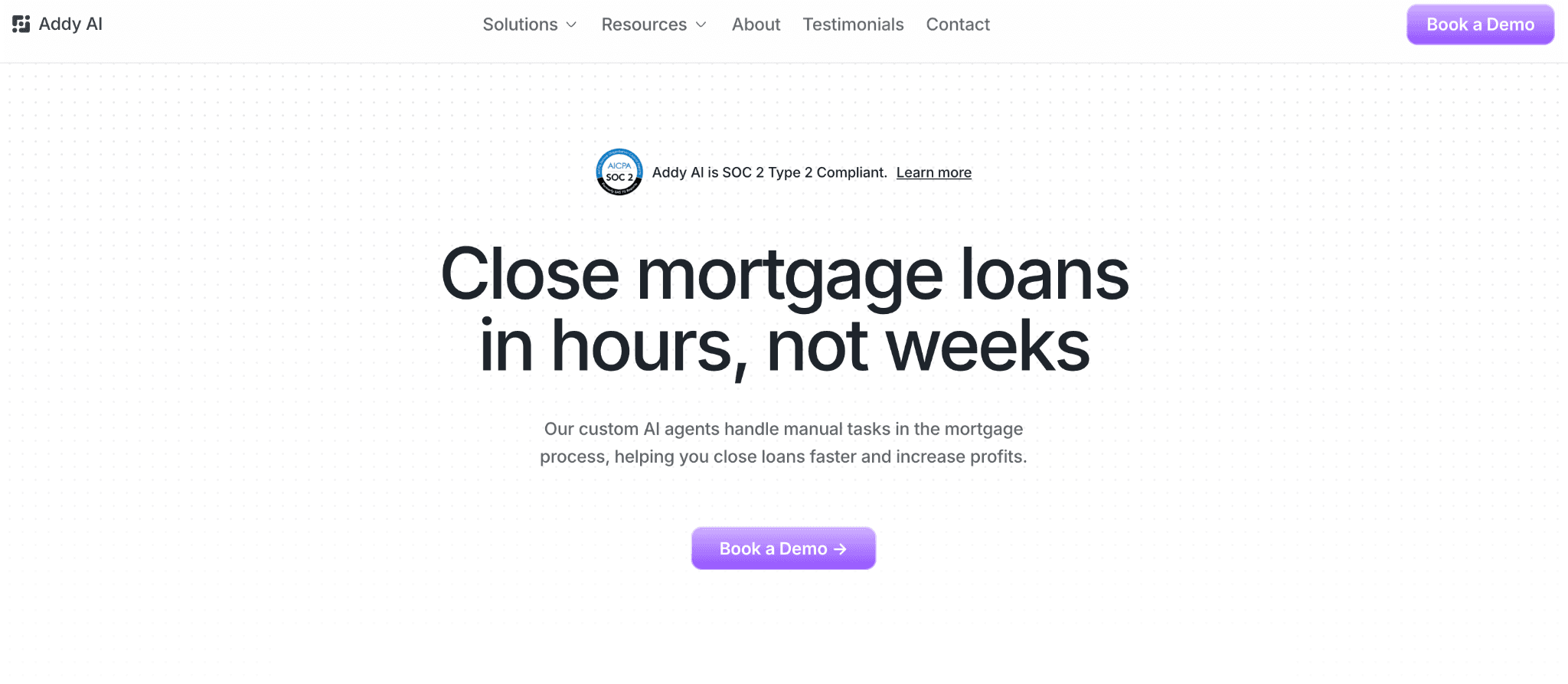
Addy was built specifically for mortgage professionals who want a simpler way to manage borrower follow-ups and loan processing tasks.
Once your marketing channels generate mortgage leads, Addy can help with the work that follows qualification. Its mortgage-focused AI agents review borrower documents, check files against mortgage lending guidelines, flag missing items, and help prepare loans for underwriting.
Addy's AI agents can prepare CTC-ready loans in about five minutes and help lenders close loans up to 90% faster. That speed can also carry into specific loan-file tasks.
According to Lance Stukaloff, CEO of Sphinx Capital, "It really enhances what a loan officer can do, turning your originators into superheroes."

Here’s how Addy helps mortgage organizations move qualified prospects through loan processing:
Lead routing handoff - After your CRM handles lead routing, Addy can automate borrower follow-up and document requests.
Loan-file review - AI reviews borrower information and identifies missing documents or open conditions that need attention.
Pre-underwriting assessments - Addy checks loan files against lender guidelines and prepares findings for professional review.
Automated document extraction - AI extracts borrower details from bank statements, tax forms, and other documents without repetitive manual entry.
File-based client follow-ups - Specialized AI agents can request missing documents by email, text, or phone based on file status and lender rules.
CRM and LOS integrations - Connect Addy to your existing CRM and loan origination systems so loan-file activity stays connected to your existing workflow.
For mortgage sales teams, automating repetitive file work gives loan officers more time for active borrower conversations. That extra capacity can help drive business growth as teams handle more opportunities.
Addy is also SOC 2 Type 2 compliant, which helps mortgage teams meet security requirements when handling borrower data.
The Smarter Way to Manage Mortgage Leads Starts With Addy!
Turning inquiries into closed loans takes more than just generating leads. It requires consistent, organized, and timely follow-up after the first click.
A mortgage lead management process helps your team respond faster, keep conversations organized, and guide qualified borrowers toward the next step. It can also help you attract potential customers, stay connected with past clients, and encourage repeat business.
Addy helps mortgage professionals handle the borrower and loan-file work that follows lead qualification. Its AI agents can manage follow-ups, review documents, identify missing items, and prepare files for underwriting.
For teams in the mortgage sector, Addy can automate manual work between initial interest and a completed loan file. Loan officers can spend more time with borrowers while Addy handles repetitive processing tasks.
FAQs About Mortgage Lead Management
What does a mortgage lead mean?
A mortgage lead is someone who has shown interest in getting a home loan. They may come through a website form, direct mail, financial advisors, or real estate partners.
Mortgage lead generation helps lenders connect with these prospects before they apply.
How much does a mortgage lead cost?
Mortgage lead costs vary by source, market, exclusivity, and borrower intent, so there is no standard price. Buying leads can cost more when they are exclusive leads rather than shared with several lenders.
Organic channels such as search engine optimization (SEO) may take longer to produce results but don’t rely on per-lead fees.
Are mortgage leads paid at closing?
Most purchased lead programs charge before a loan closes. Depending on the provider, you may pay per lead, click, call, or another agreed action.
Before you purchase leads, check when charges apply and whether the same inquiry is sold to other lenders.
How can mortgage professionals generate high-quality leads more consistently?
Combine mortgage marketing with data from the channels that produce qualified prospects. Track which sources lead to applications, then adjust your messaging and landing pages accordingly.
For loan officers based in specific service areas, local SEO, referrals, and relationships with past clients can also bring in relevant prospects.
Start closing more loans – Book your demo today
Stay ahead of the competition and discover how AI can accelerate your loan origination process, reduce manual work, and help you close more deals in less time. Book a demo today and start experiencing the future of lending.