Michael Vandi
Collecting mortgage paperwork should be simple, but files often arrive through email, portals, and disconnected systems. A lender may receive bank statements in one place, loan documents in another, then spend time checking what hasn’t arrived yet.
Mortgage document collection software gives borrowers one place to submit files and helps lenders track outstanding items. Depending on the platform, lenders may also get tools for validation, data processing, or loan condition review.
This guide compares the top six options by workflow, so you can see which type best matches how you collect documents.
TL;DR
These six tools cover different parts of mortgage document collection and processing:
Addy for AI document processing and condition resolution
Floify for POS intake and borrower applications
Maxwell for task-based collection
File Request Pro for lightweight file requests
nCino for enterprise document management
ICE Mortgage Technology for standardized intake and data validation
What Is Mortgage Document Collection Software?
Mortgage document collection software helps lenders request, receive, organize, and track borrower files electronically. It replaces manual document collection, such as mailed paperwork and scattered email attachments, with one place for submissions.
Borrowers can upload documents through portals, online applications, forms, or connected financial accounts. Lenders may request pay stubs and W-2s for income, bank statements for assets, tax returns for additional income details, and a 1003 for application information.
Some platforms extend beyond collection into post-upload processing before underwriting.
6 Best Mortgage Document Collection Software Options in 2026
Mortgage document collection platforms don’t all solve the same problem. The right option depends on whether you need easier borrower uploads or help processing what arrives.
This comparison focuses on the main workflow each option handles.
1. Addy for AI Document Processing and Condition Resolution
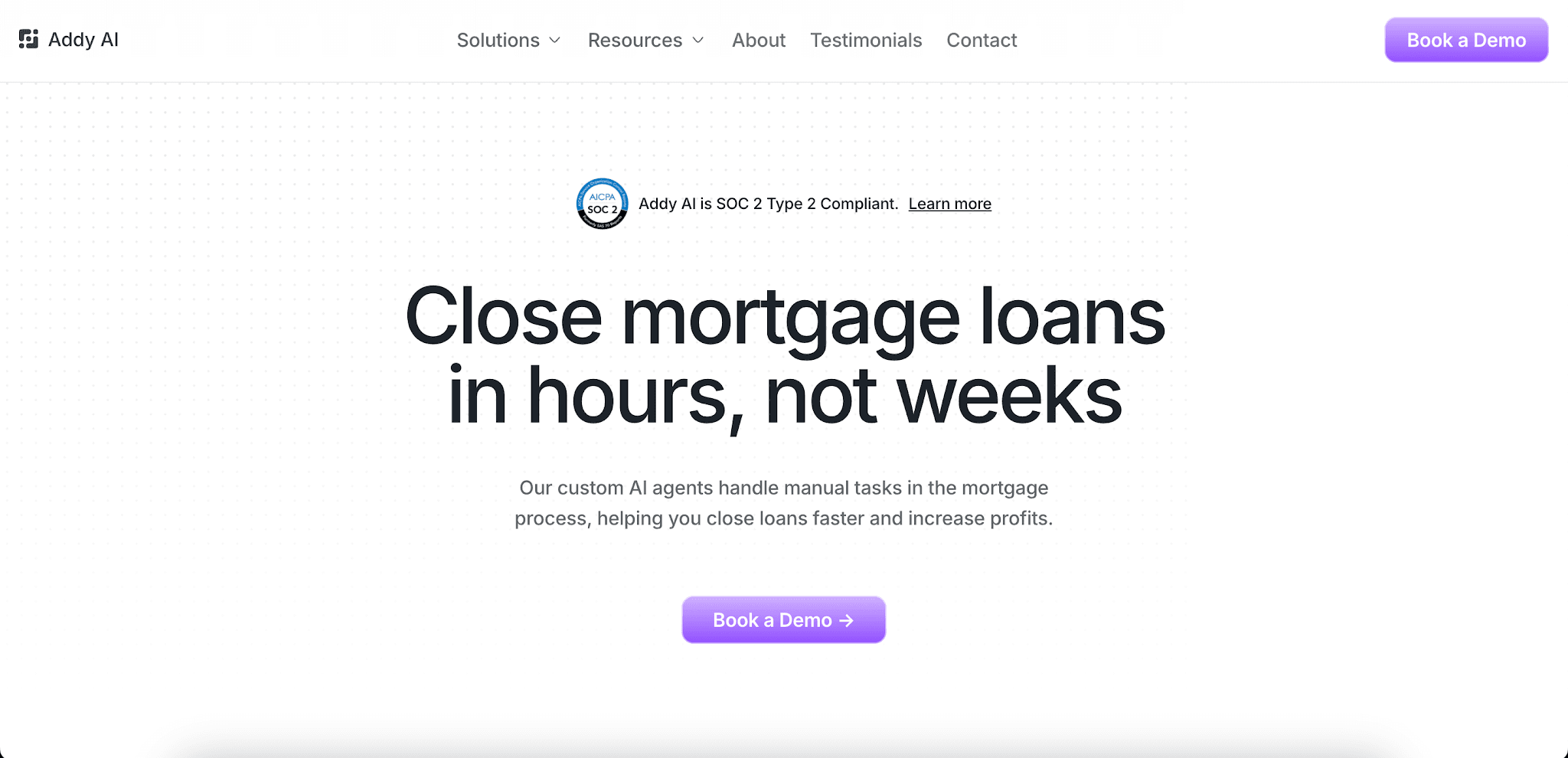
Addy helps lenders that already receive files digitally but still spend time preparing them for underwriting. It pulls attachments from borrower email and connected systems, uses document classification, and links each item to the correct loan.
Addy uses data extraction to read income and asset documents such as W-2s, 1099s, pay stubs, tax returns, and bank statements. Addy turns those details into structured data for income verification and other pre-underwriting checks, so processors don’t have to retype each field.
Addy also reviews the loan file, including relevant credit reports, against automated underwriting system (AUS) findings and lender requirements. This helps teams find missing information and unresolved conditions before submission.
Key Features
Processing checklist: Runs product-specific conditions and returns findings in under five minutes, giving loan processors a faster way to see what still requires attention.
Automated document requests: AI agents contact borrowers through email, text, or phone when more paperwork is needed. Follow-ups continue until the requested items arrive.
LOS integration: Addy connects with loan origination systems (LOS), customer relationship management (CRM) platforms, point-of-sale (POS) systems, and communication platforms. This keeps mortgage document automation connected with the lender’s core systems.
Addy focuses on the processing that follows digital collection, including file preparation and condition resolution.
2. Floify for Mortgage POS and Borrower Application Workflows
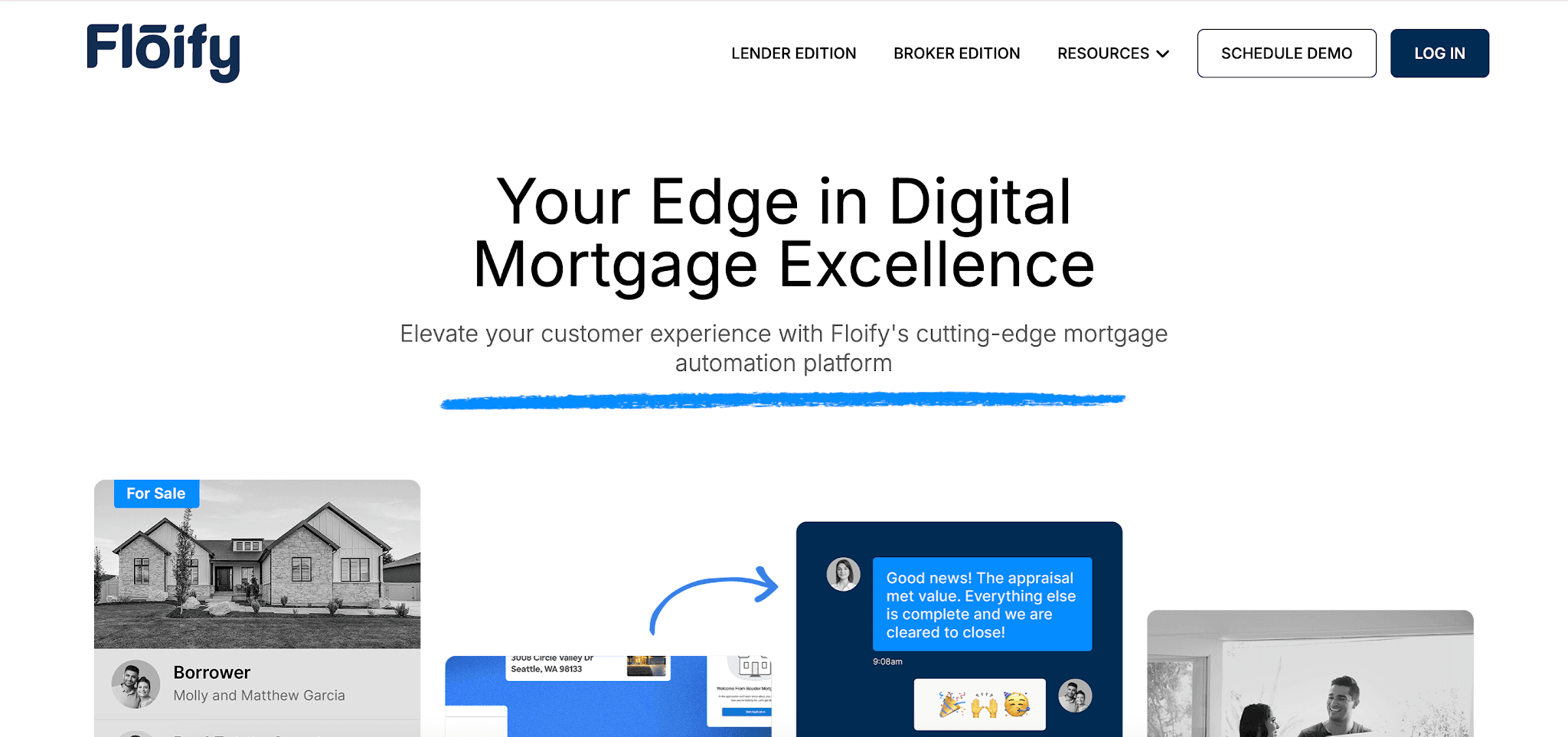
Image source: floify.com
Floify places the document collection process inside its digital POS experience. Borrowers can complete a web-based loan application, upload required documents, eSign authorizations, and track their loan status from one portal.
For mortgage brokers, Floify also provides branding controls around the 1003 and borrower portal. This lets firms present the application experience under their own brand while applicants submit paperwork.
Key Features
AI-assisted application entry: Floify extracts information from uploaded files and uses it to prefill parts of the 1003. Applicants don’t have to enter details they’ve already provided in their paperwork.
Workflow automation: Configurable milestones trigger email and SMS updates for borrowers and referral partners. This replaces manual status messages as an application reaches different stages.
LOS integrations: Floify sends application details and submitted files into connected LOS. Lenders can add the portal to their existing tools instead of keeping intake separate from later processing.
Floify focuses on document management at the front end of origination, where borrowers apply and submit paperwork. That makes its role different from platforms centered on processing files after collection.
3. Maxwell for Task-Based Mortgage Document Collection
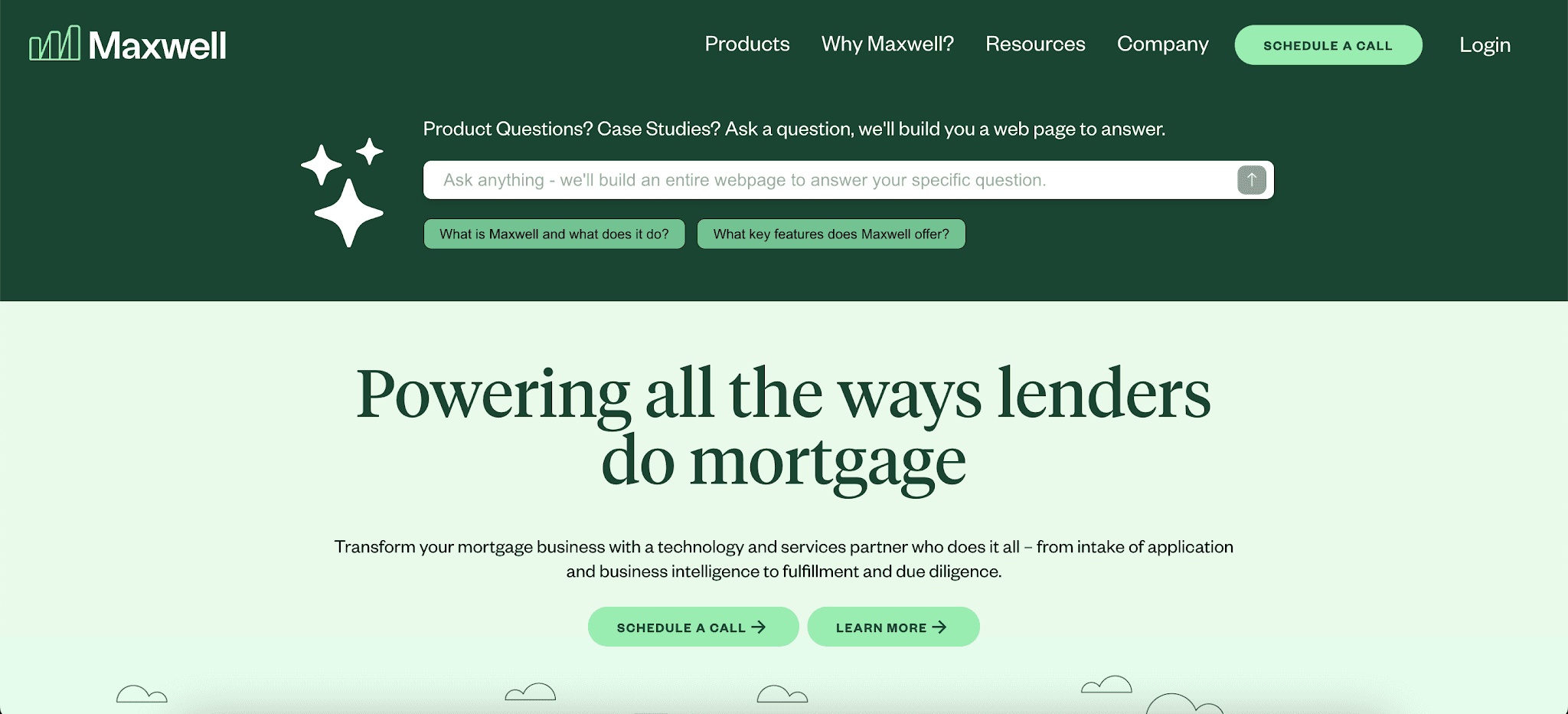
Image source: himaxwell.com
Maxwell gives mortgage lenders a task-based way to manage each document request. Teams can assign a Provide Documents task for common items or build custom requests for requirements outside the standard options.
That setup also covers wet signatures. Borrowers can download a form, sign it, and return it through the same task from a phone or tablet.
Key Features
FileFetch: Borrowers can connect eligible accounts and import official PDF statements. This removes manual processes such as downloading a statement and uploading the same file again.
Document Vault: Maxwell stores submitted files in one place and lets teams sort them by name, task type, status, or upload date. This makes document handling easier when several borrower requests are open at once.
Document statuses: Each submission receives a Received, Viewed, Accepted, or Rejected status. When teams reject an item, they can add a reason that Maxwell sends to the borrower by email.
AI-assisted checks: Maxwell uses AI for tasks such as legibility checks. Teams can catch unreadable submissions before passing them toward underwriting.
LOS connections: Accepted items can sync to a connected LOS. Teams can use the Viewed status when they want to inspect a file without triggering that transfer.
Within the mortgage workflow, Maxwell handles task-based collection before accepted submissions enter the LOS.
4. File Request Pro for Lightweight Document Collection
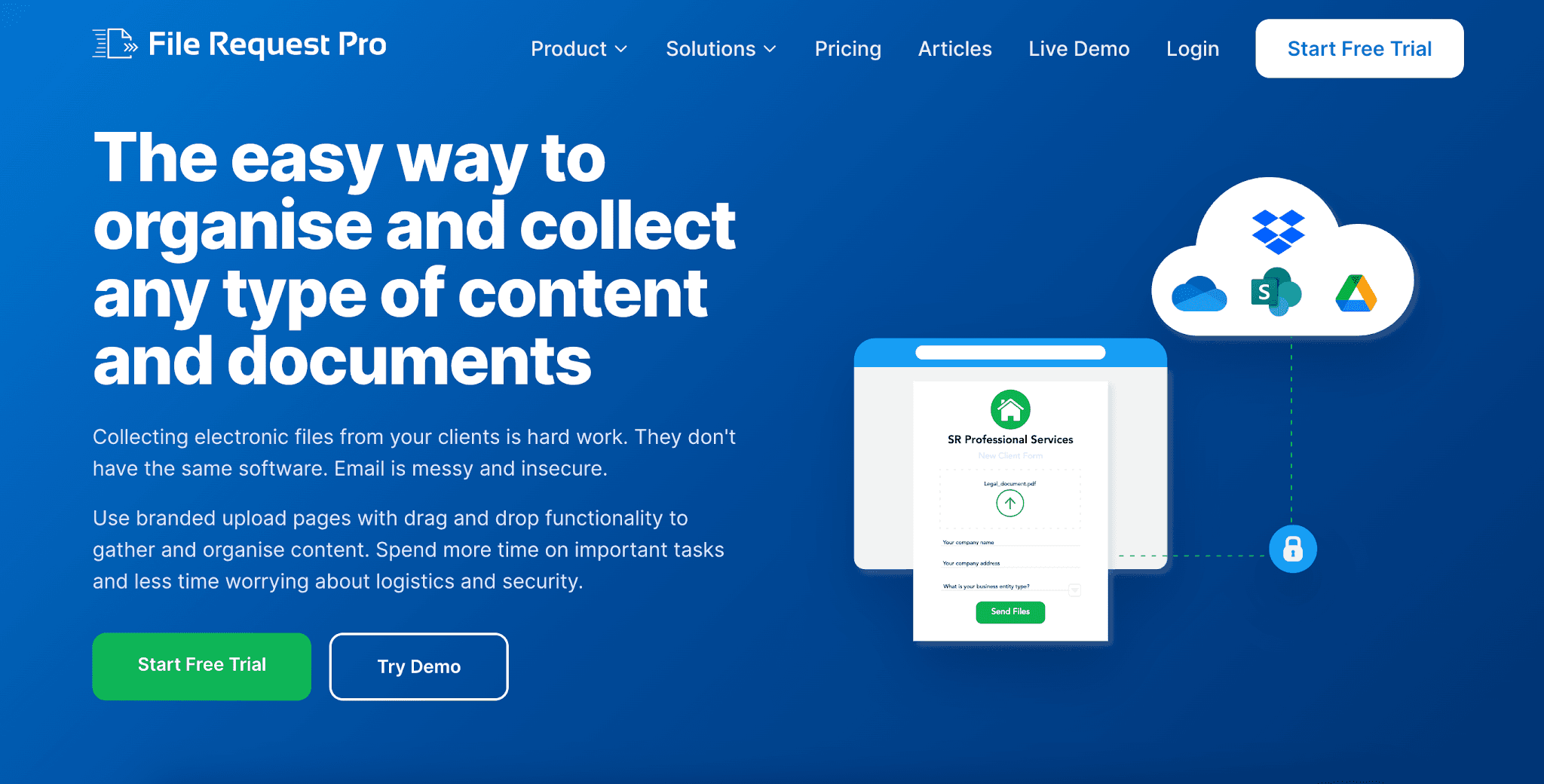
Image source: filerequestpro.com
File Request Pro is a general collection platform that can serve mortgage workflows. Clients don’t need an account, so they can send paperwork through a branded request page from any device.
Teams can build one-page or multi-page forms and use conditional logic to show questions based on the information a client provides. They can also customize the domain, colors, email copy, and page styling to match their client-facing brand.
Key Features
Automated reminders: Email sequences follow up on missing documents based on deadlines or client activity. Teams can set exact dates or schedule reminders a set number of days after the initial request.
Secure file routing: Bank-level encryption helps keep sensitive documents and client data out of regular email inboxes. Submissions go into designated Google Drive, OneDrive, SharePoint, or Dropbox folders, with Zapier available for additional app connections.
Activity records: Audit history and logs provide an audit trail for requests and submissions. Teams can trace collection activity without reconstructing what happened from separate email threads.
Within the mortgage lending process, File Request Pro stops at collection. Mortgage-specific analysis, data extraction, and underwriting preparation fall outside its main role.
5. nCino for Enterprise Mortgage Document Management
Image source: ncino.com
nCino gives banks and other financial institutions a central place to manage customer paperwork. Document Manager uses standardized naming and indexing, which helps employees locate records throughout loans, renewals, audits, and other activities.
Customers can upload files themselves, and permission settings determine which employees can access them. Institutions can also reuse applicable records throughout business lines instead of requesting the same paperwork again.
Virtual date and time stamps record file activity. This gives teams a traceable history for audits and regulatory compliance without relying on separate paper records.
Key Features
Doc validation: nCino applies data validation to details such as names, page counts, and expiration dates. Teams can catch incomplete or incorrect submissions before they lead to more back-and-forth.
AUS Smart Tasks: AI interprets automated underwriting findings and presents plain-language next steps. Loan officers can address individual tasks or apply templates to recurring conditions during mortgage origination.
Mortgage advisor: The mobile app provides 24/7 multilingual guidance from application through closing. Borrowers can get help understanding their next steps throughout the process, which may improve borrower satisfaction.
nCino is geared toward institutions that manage document collection as part of wider lending workflows, rather than as a standalone borrower upload process.
6. ICE Mortgage Technology for Data Validation
Image source: mortgagetech.ice
ICE Mortgage Technology uses Data & Document Automation to standardize the collection of loan information. It targets lenders, investors, and servicers that handle high document volume and want to replace repeated manual intake.
ICE organizes the process into Capture, Perfect, and Accelerate. Capture standardizes incoming information, while Perfect converts disparate files into organized data that teams can use in later stages.
Key Features
Data validation: ICE applies validation and calculations to collected information before it progresses further. This helps teams identify issues without manually comparing every submission.
Income and asset verification: Mortgage Analyzers evaluate income, credit, and assets as part of the review process. This extends mortgage automation into income and asset verification after information has been collected.
Exception-based handling: ICE flags cases that require human attention instead of routing every file through the same manual review. Teams can concentrate on exceptions rather than routine items.
ICE combines standardized intake with validation before routing exceptions for further analysis.
What to Consider Before Choosing Mortgage Document Software
Start with the part of the collection that takes the most time or creates the most follow-up. That makes it easier to compare platforms based on the problem you actually need to solve.
How are requests set up? Consider whether your team uses applications, custom requests, or standardized forms. Instructions should help applicants submit the correct documents the first time instead of creating another round of follow-up.
What needs to happen after submission? Determine whether your team needs storage alone or post-upload automation. If intelligent document processing (IDP) or validation rules are required, confirm the platform covers those requirements.
Where does the information go next? Check how the platform connects with your LOS, CRM, POS, email, and cloud storage. Useful integrations cut down on re-entry and manual transfers between systems.
How easy is it for borrowers to finish a request? Look at mobile access, login requirements, reminders, communication options, and data security. Complicated steps can increase document collection time, especially when borrowers need to respond more than once.
Use these questions to narrow the field around your actual workflow. The next step is identifying whether the main bottleneck happens during collection or after submission.
Document Collection or Processing: Which Workflow Are You Trying to Automate?
Collection gets borrower paperwork into the system. Processing takes over when a lender still has to interpret or prepare those submissions for underwriting.
A collection platform manages requests, reminders, uploads, and outstanding items. Processing goes deeper into complex mortgage documents once that paperwork arrives.
Software can read income statements, pull extracted data, and apply mortgage-specific logic to AUS conditions and lender guidelines.
It may also use cross-document validation to compare information between submissions and flag inconsistencies. When the system finds a gap, it can identify a condition or request additional paperwork from the borrower.
If getting paperwork from applicants causes delays, a dedicated collection tool may address the problem.
Teams already receiving paperwork may face a post-upload problem instead. Their priority becomes turning those submissions into complete loan packages ready for the next stage.
Automate Mortgage Documents Without Replacing Your Existing Software
Addy connects with the LOS, CRM, POS, and communication platforms lenders already use. Teams can add mortgage document automation software without moving applications and records to another core platform.
Borrower attachments and files from connected systems can flow into Addy for processing. Relevant information and file activity sync back to connected platforms, keeping processing updates tied to a single loan file.
Loan officers can also open Addy through its browser extension. The mortgage-focused ChatGPT app provides another entry point for pre-underwriting and file preparation.
Addy adds an AI layer between document collection and underwriting within the mortgage lifecycle. Teams can automate processing and condition handling without replacing their core mortgage technology.
FAQs About Mortgage Document Collection Software
What are the benefits of using mortgage document collection software?
Mortgage document collection software cuts down on email chasing, manual sorting, and repeated follow-up. In the mortgage industry, that can reduce operational costs and shorten turnaround times.
A simpler upload process may also improve customer satisfaction by making requests easier to complete.
What documents can mortgage lenders collect electronically?
Mortgage lenders can collect documents electronically throughout loan origination. Identity documents help confirm borrower details, while asset documentation helps record funds used for qualification.
Closing disclosures and other closing documents can remain with these personal documents in the digital loan record as the mortgage moves forward.
What is the difference between document collection and document processing?
Collection tracks document coverage, meaning whether required files have arrived and what is still missing. Processing examines the contents, extracts information, and checks for issues before underwriting.
It may also flag inconsistencies that could raise compliance risks or require further underwriting attention.
Start closing more loans – Book your demo today
Stay ahead of the competition and discover how AI can accelerate your loan origination process, reduce manual work, and help you close more deals in less time. Book a demo today and start experiencing the future of lending.