Michael Vandi
Before a loan reaches underwriting, someone has to find the missing pay stub, reply to the borrower, and update the file. Mortgage brokers and loan officers handle plenty of these tasks every day.
A mortgage virtual assistant (VA) can take on much of this administrative work remotely. AI mortgage assistants can also review documents, spot missing information, and send reminders.
So where does each one help most? We'll look at which mortgage tasks suit human assistants, which AI can automate, and when combining both is useful.
TL;DR
A mortgage virtual assistant remotely handles administrative duties, borrower communication, and loan preparation for brokers and loan officers.
Human VAs can schedule consultations and coordinate borrower requests, while licensed professionals handle lending advice.
AI assistants automate document processing and borrower reminders, leaving unusual requests and complex questions to people.
Assigning responsibility for outstanding tasks helps avoid processing delays, giving loan officers more time for closing deals.
Addy reviews files, requests missing paperwork, and synchronizes loan updates alongside human assistants.
What Is a Mortgage Virtual Assistant?
A mortgage virtual assistant is a remote professional who helps brokers and loan officers with administrative tasks and loan processing preparation. They can work part-time or full-time, using the lender's software to update borrower records and coordinate outstanding requests.
Unlike a general assistant, a mortgage broker virtual assistant understands how a file progresses from application to underwriting. They know when to update a record and when an issue requires the loan officer's attention.
An AI mortgage assistant serves a different purpose. It's software that automates selected parts of the process, rather than a person managing each assignment.
Key Responsibilities of a Mortgage Virtual Assistant
A mortgage virtual assistant manages different assignments as an application progresses from the initial inquiry through closing.
Lead Management and Administrative Tasks
When a new inquiry comes in, the assistant records the prospect's contact details, financing preferences, and referral source in a customer relationship management (CRM) system. These CRM updates give loan officers context before contacting potential borrowers.
When marketing support is part of the role, the VA can organize lead lists and schedule approved drip campaigns for prospects who haven't applied.
Through calendar management, they schedule consultations around the broker's availability and confirm appointment changes. They also maintain contact information for referral partners and gather current rate sheets before client meetings.
When requested, they can compile market trends for the broker to discuss with clients.
Borrower Communication and Status Updates
When borrowers ask about their applications, a VA looks up the latest milestone before sending status updates. They can explain that an appraisal is pending without promising an approval or closing date.
If schedules change, they notify real estate agents and other parties involved in the transaction. For questions about eligibility or financing terms, they refer borrowers to the loan officer for clarification.
Document Collection and Loan Setup
During document collection, the assistant sends borrowers instructions for uploading files through a secure portal. If bank statements arrive with missing pages, they request the remaining information before passing the file to the processor.
They also identify unanswered fields on Form 1003 and organize submissions in the loan origination system (LOS). This gives the processor an organized loan application to review instead of searching through scattered email attachments.
Underwriting Preparation and Condition Tracking
Before underwriting, a VA compares the submitted paperwork with the processor's checklist to identify outstanding conditions. When findings from an automated underwriting system (AUS) call for additional information, they record the request and monitor its completion.
As part of this underwriting support, the VA records who's responsible for each unresolved condition and when a response is due. The processor can use that information to prioritize outstanding requests before submission.
Closing and Post-Closing Support
As closing approaches, a VA confirms signing arrangements with the title or settlement team. They track the delivery of final paperwork and alert the closing coordinator if anything remains outstanding.
After funding, the assistant files signed agreements in the lender's document management system and records when each item arrives. These entries provide audit trails that help post-closing reviewers trace missing documents and verify completed transactions.
Which Mortgage Tasks Require Professional Oversight?
When a pay stub shows different earnings from the application, a VA can flag the discrepancy for underwriting review. However, qualified professionals decide whether the borrower meets eligibility requirements and whether to approve exceptions to lending guidelines.
The same distinction applies to borrower advice. An assistant can explain general application requirements, but questions about suitable loan options belong with a licensed loan officer.
A VA can also track disclosure deadlines and flag missing acknowledgments. Still, mortgage lenders remain responsible for regulatory adherence, whether a human assistant or AI handles these administrative activities.
Human vs. AI Mortgage Assistants: Which Is Better?
Human and AI assistants are suited to different responsibilities. Some situations call for personal judgment, while others follow established procedures that software can handle.
Human Virtual Assistants for Personalized Communication
A borrower might question why another income statement is required after submitting one. A human VA can listen, clarify the processor's request, and explain the next steps without offering lending advice. This timely communication helps maintain client trust when unexpected requests cause frustration.
Human assistants can also resolve last-minute scheduling conflicts when borrowers, agents, and settlement teams have different availability. However, their response times depend on business hours and workload. They also require training to follow the lender's procedures.
AI Mortgage Assistants for Repetitive Processing
AI is useful when teams receive similar submissions throughout the day. It can extract information from client documents, identify missing details, and complete data entry in connected systems. These repetitive tasks don't require someone to process every file manually.
According to AD Mortgage's 2026 broker survey, 55% of respondents use AI daily or regularly.
Still, automation can produce inaccurate results. Misread income figures or incorrect field mappings can affect borrower records, so questionable outputs require human document verification.
Hybrid Assistance for Shared Workflows
A hybrid mortgage processing model assigns routine activities to AI while people handle exceptions that require further discussion.
Consider a borrower who submits a pay stub with part of the employer's name cut off. AI flags the issue and prepares a request for a clearer copy. When the borrower explains that their payroll portal cannot generate one, a human VA contacts the processor about acceptable alternatives.
The assistant relays the approved instructions, while AI tracks whether the replacement arrives. This keeps lender requests from getting lost between automated follow-ups and human coordination.
How to Choose the Right Mortgage Virtual Assistant
Choosing between human assistance, AI, or both takes more than comparing prices. Start by identifying where your mortgage operations team spends the most time and what each arrangement would involve.
Assess Workload and Delegation Requirements
Track a week's worth of email management and client follow-ups. If lead generation brings in frequent inquiries, record how many require a loan officer's attention and how long each handoff takes.
Next, establish what counts as a completed assignment. For example, a borrower reminder isn't finished until someone records the contact and schedules another attempt if there's no response.
Compare Total Costs, Integrations, and Security
Quotes for virtual assistant services don't always reflect the full expense. Include training, supervision, and overhead costs for human assistance. With AI, account for setup charges, subscription fees, and usage-based pricing.
Confirm how each option accesses borrower records through your LOS, CRM, and point-of-sale (POS) platform. Use secure systems and restrict access to credit reports and other sensitive information through appropriate permissions in lender portals.
Measure Performance Before Expanding Responsibilities
Start with one activity, such as managing follow-up calls for outstanding borrower requests. Set a deadline for each contact and track whether the assistant records the outcome accurately.
Compare missed contacts, completion times, and borrower complaints with previous results. This helps determine whether the arrangement can save time without affecting client satisfaction. Address recurring problems before assigning additional responsibilities.
How Addy Works With Mortgage Virtual Assistants
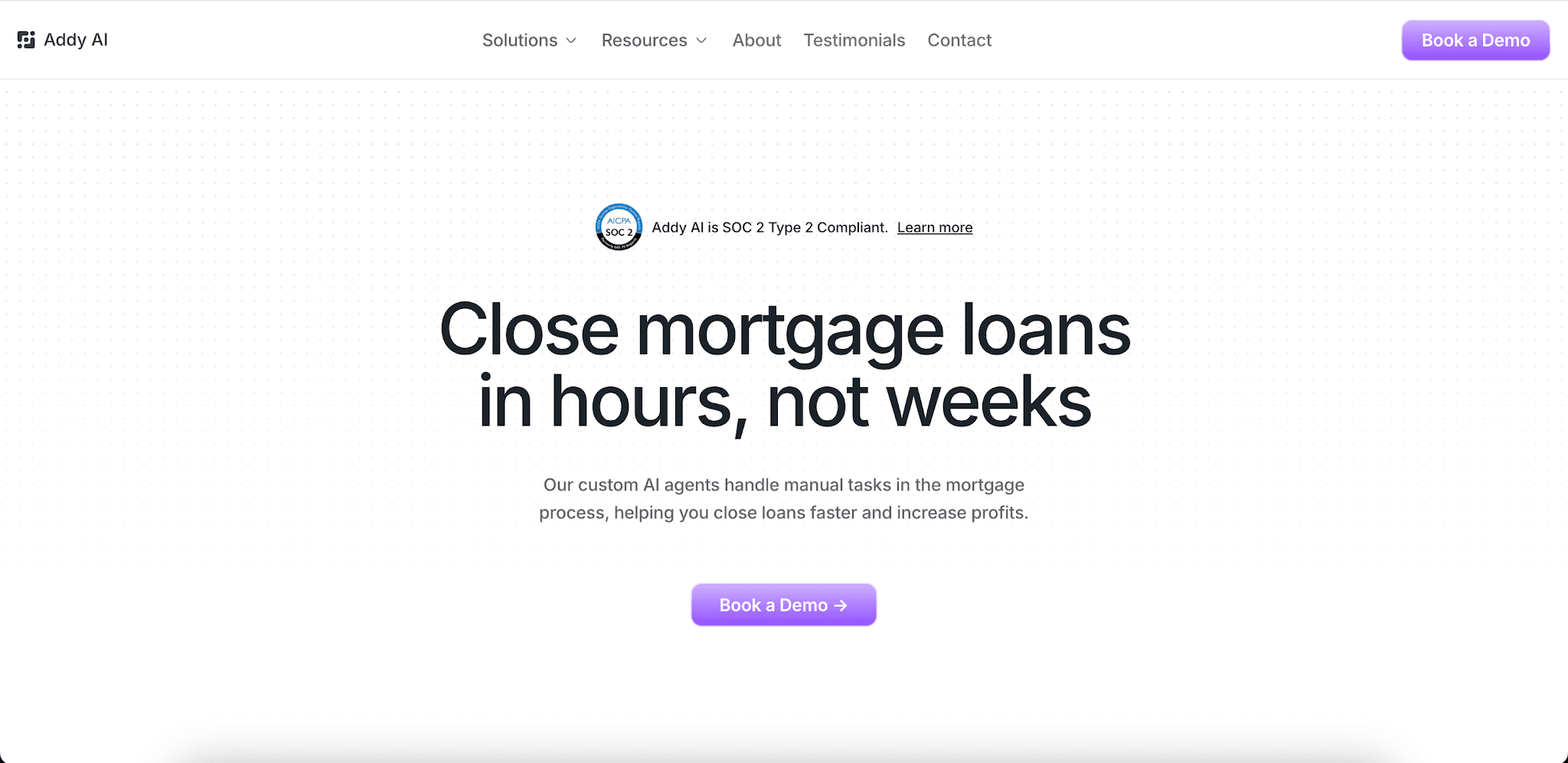
Addy handles file preparation that might otherwise occupy a mortgage broker VA for hours. The platform complements human assistants without providing staffing services or replacing an LOS, CRM, or POS.
Automate Document Review and Pre-Underwriting Preparation
Addy's Document AI extracts borrower details from bank statements, pay stubs, and tax returns, then sorts the files by type. Processors can also ask questions about their contents or generate loan summaries without searching through every page.
Instead of assembling a to-do list from separate records, processors can use Addy's AI Processing Checklist. It compares submitted information with AUS findings and lender guidelines to identify missing evidence and unresolved conditions.
Addy's agentic ChatGPT app can also produce pre-underwriting findings in about five minutes.
Handle Routine Borrower Document Requests
Once Addy identifies an outstanding requirement, its AI agents can contact borrowers by email, text, or phone with instructions on what to submit. If the requested paperwork hasn't arrived, automated reminders help keep the request from going unanswered.
The platform tracks incoming submissions, so processors can see which items are still pending. When someone can't provide what's required, a human assistant can coordinate with the processor about acceptable alternatives.
Connect AI Processing With Mortgage Platforms
Through its two-way integration with Arive, Addy synchronizes loan information so you don't have to enter the same details twice. The platform also connects with compatible CRM and communication tools.
Its browser extension provides an AI loan officer assistant in a sidebar. Users can compare financing scenarios for different loan types or consult underwriting guidelines without switching applications.
By taking routine preparation off their plates, Addy can increase productivity while mortgage broker virtual assistants devote more time to building client relationships.
Don't Let Unresolved Conditions Hold Up Underwriting
A borrower uploads the missing bank statement page, but the condition still appears unresolved two days later. The loan processor hasn't received an update. Meanwhile, applications from new clients keep arriving, leaving the nearly completed file waiting.
Assigning clear ownership of important tasks helps avoid these delays. Whether you use mortgage virtual assistant services or AI, someone has to handle the next step.
Human assistants can resolve unusual requests, while automation tracks submissions and alerts the appropriate person.
Addy helps by reviewing files, requesting missing paperwork from borrowers, and synchronizing status updates. Loan officers and underwriters still handle lending decisions.
FAQs About Mortgage Virtual Assistant
Is a mortgage virtual assistant the same as a loan processor?
No. Loan processors handle underwriting preparation and condition resolution, while virtual assistants manage delegated administrative duties for mortgage companies. A VA can track a missing item, but the processor determines whether the response satisfies the requirement.
What qualifications should a mortgage virtual assistant have?
A mortgage VA should understand the lending process and industry standards for handling borrower information, including secure uploads and restricted access. If the role includes social media management or marketing campaigns, ask for samples of their mortgage-related work.
Can one mortgage virtual assistant support multiple loan officers?
Yes, provided the assistant can meet each officer's deadlines and track requests separately. A shared remote VA can also handle new business inquiries without requiring additional office space. Each officer should share available calendar hours and agree on priorities when requests overlap.
Start closing more loans – Book your demo today
Stay ahead of the competition and discover how AI can accelerate your loan origination process, reduce manual work, and help you close more deals in less time. Book a demo today and start experiencing the future of lending.