Michael Vandi
Once a mortgage funds, the work shifts from loan origination to managing the account through repayment. Servicing teams need accurate account records and connected workflows without adding unnecessary manual effort.
The right mortgage servicing software helps organize that work as payment activity, borrower needs, and account requirements change. This guide compares five platforms by portfolio type, workflow depth, integrations, and operating model.
We’ll also look at Addy and how mortgage software can connect origination with ongoing loan management.
TL;DR
Here are five mortgage servicing software options worth comparing in 2026:
Mortgage Automator
Bryt Software
HES LoanBox
The Mortgage Office
ICE Mortgage Technology (MSP)
1. Mortgage Automator
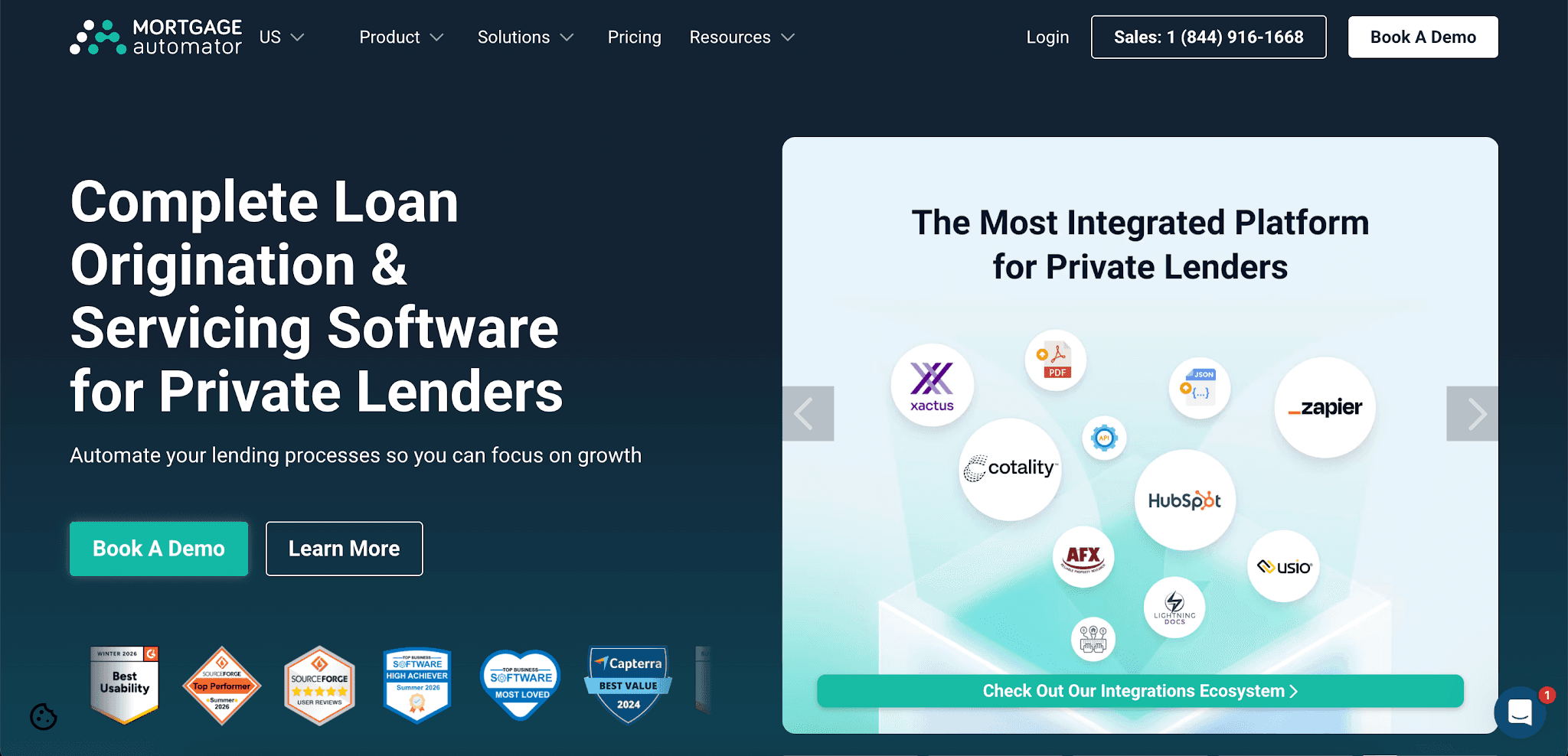
Image source: mortgageautomator.com
Mortgage Automator is a private lending platform that manages mortgages from loan origination through post-funding account management. It connects borrower activity with investor and fund workflows.
Key features include:
Automated Clearing House (ACH) payment automation
Real-time loan adjustments
Borrower portal
Automated statements and notices
Loan extensions
Investor reporting
Portfolio analytics
Connected private lending workflows
Payments and Borrower Servicing
Mortgage Automator handles payment processing through ACH workflows and records balances, fees, and payment activity. Administrators can see what has been paid and what remains outstanding without checking separate records.
Borrowers get a portal for online payments, account information, statements, and documents. This self-service access lets them handle routine account tasks without contacting the lender.
Defaults and Servicing Workflow Automation
Mortgage Automator tracks collections activity and missed payments so administrators can identify past-due mortgage accounts that require follow-up.
Its automated workflows handle borrower notices, extensions, and related servicing documents. Communication records stay with the relevant loan record, so administrators can follow what happened during each collection case.
Compliance, Reporting, and Private Lending Operations
Mortgage Automator keeps audit trails and compliance records that document servicing actions over time. Portfolio analytics help lenders track portfolio performance and changes in account activity without building reports from separate files.
For private lenders managing investor capital, the platform keeps investor reporting connected with the underlying mortgage accounts. This gives investors access to performance information while lenders keep reporting connected to the loans they administer.
Banking and payment integrations connect post-closing activity with the financial tools used for transactions. Mortgage Automator is relevant to private lenders managing bridge loans, construction financing, and fund-backed portfolios.
2. Bryt Software

Image source: brytsoftware.com
Bryt Software is a cloud-based, modular loan servicing platform for mortgage portfolios. It covers payment administration, escrow and impounds, borrower notices, account changes, and portfolio reporting.
Key features include:
Loan Payment Wizard
Payment waterfall rules
Interest accrual
Escrow and impound management
Borrower notices
Loan modifications
Portfolio dashboards
1098 and 1099 generation
Modular functionality
Mortgage Payments and Escrow Management
Bryt’s Loan Payment Wizard handles scheduled payments, unscheduled payments, and payoffs. Its waterfall rules apply each payment to principal, interest, late fees, and other charges according to preset rules.
The platform calculates interest using 30/360, Actual/365, Actual/360, and variations based on payment frequency and day-count methods. It also calculates late fees and handles non-sufficient funds (NSF) processing based on the account setup.
For escrow, Bryt lets lenders set up impound accounts for property taxes and insurance premiums. Administrators can record vendor payments and adjust those accounts during the mortgage term.
Bryt also handles changes to an existing mortgage. Users can update rates, principal, due dates, and amortization schedules through its payment processing tools.
Borrower Communication and Delinquency Workflows
Bryt creates payment requests, receipts, late notices, balloon-payment reminders, and periodic summaries from information already stored in the system. Lenders can customize each notice and save it with the borrower’s account.
When a mortgage becomes past due, due-date and payment information helps administrators identify accounts that require follow-up. They can also record extensions and loan-status changes as the situation develops.
Keeping notices and correspondence with the account cuts manual work during follow-up. Administrators don’t have to reconstruct the communication trail from separate inboxes or files.
Compliance, Reporting, and Portfolio Oversight
Bryt’s finance journal loan register records mortgage transactions and lets users export the information to Excel. That history gives lenders records for account reviews, reporting, and audits.
Its dashboard shows principal balances, upcoming installments, late payments, historical weighted interest, and loan status. These views turn loan data into a practical snapshot of portfolio performance without requiring separate spreadsheets.
Bryt also generates 1098 and 1099 forms for year-end reporting. Insurance and collateral information stays with the relevant mortgage account, while role-based permissions govern access to servicing records.
3. HES LoanBox
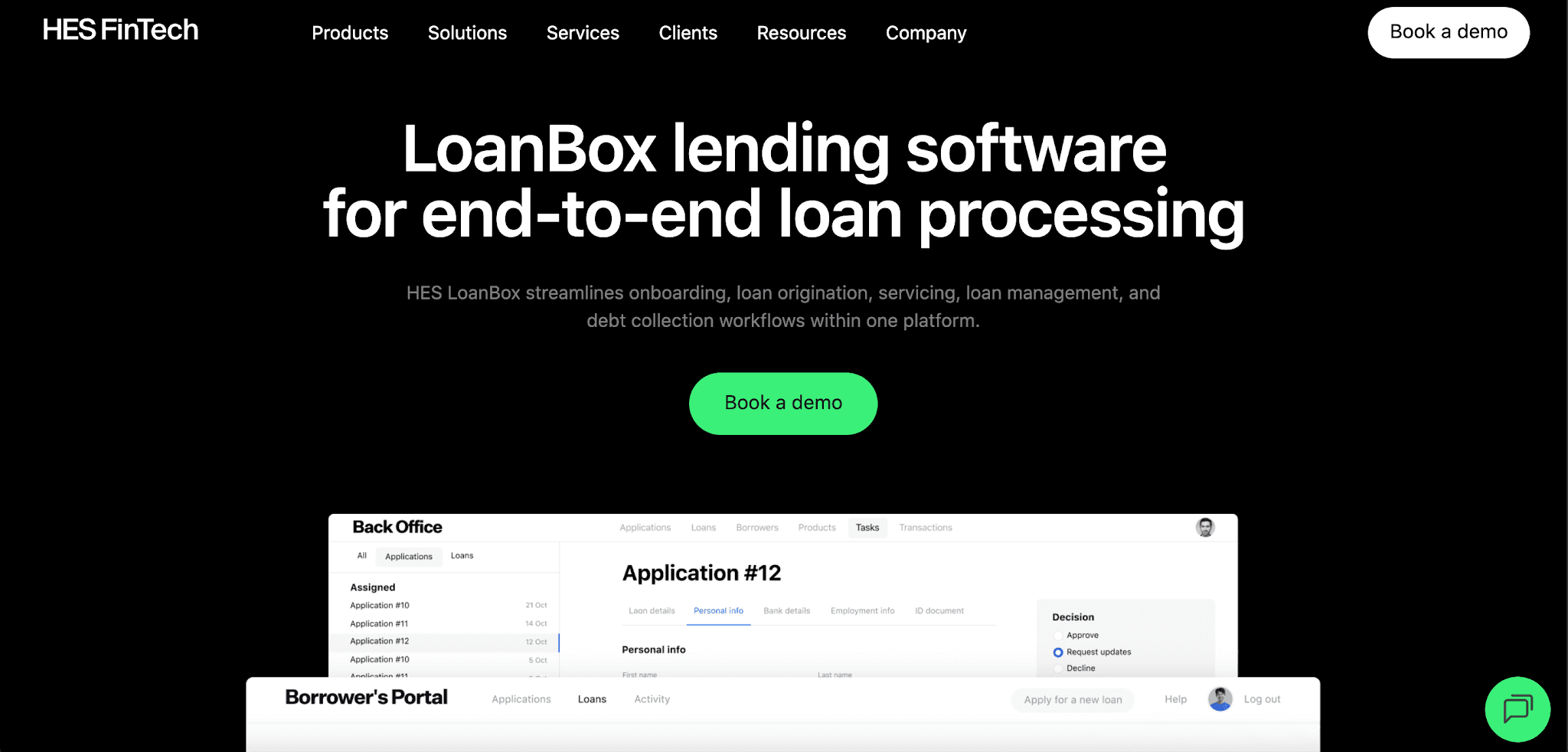
Image source: hesfintech.com
HES LoanBox is a configurable, API-first platform for mortgage servicing from repayment through collections and payoff. Its configurable workflows let lenders set account rules around mortgage products and coordinate related work in a single platform.
Key features include:
Configurable payment and allocation rules
Dynamic repayment schedules
Escrow administration
Borrower self-service portal
Automated collections
Compliance controls
Real-time dashboards
Open APIs
Cloud and on-premise deployment options
Payments and Escrow Administration
HES LoanBox lets lenders set how each borrower payment applies to principal, interest, fees, and penalties. Its rules engine also calculates fixed or floating interest according to the mortgage terms.
When repayment terms change, dynamic schedules recalculate the amounts due. Lenders can apply payment holidays, change installment dates, or restructure balances without recalculating each installment separately.
Payment rail integrations handle transactions through ACH and bank transfers. Automated matching reconciles those transactions with account balances, which cuts manual reconciliation after payments arrive.
Escrow tools handle property tax and insurance disbursements on the borrower’s behalf. The platform also handles escrow analysis and mortgage payoffs during ongoing account management.
Borrower Communication and Default Servicing
Borrowers can use the self-service portal to see repayment details, amortization schedules, and account status. SMS and email reminders alert them to upcoming or overdue payments.
Once a mortgage becomes delinquent, HES LoanBox tracks payment delays and days past due. Its AI tools use repayment behavior to help prioritize accounts and choose outreach timing and channels.
Loan servicers can offer repayment plans, forbearance, or modifications based on the account situation. The collections workflow also covers later recovery steps such as write-offs, charge-offs, and third-party debt sales.
Compliance, Reporting, and Integrations
HES LoanBox uses rule-based controls for lender, product, and regional requirements during daily servicing operations. It can block calculations that conflict with configured rules and retain calculation details for audit work.
Role-based permissions determine who can view, edit, or approve servicing actions. Audit trails record those changes, while collateral records track titles, insurance, ownership, and lien information.
Real-time dashboards and custom reports show balances, repayments, delinquency trends, and portfolio risk. This gives mortgage servicers a consolidated view of active loans without preparing a separate report for each metric.
HES LoanBox also connects with core banking, accounting, document management, and reporting tools through pre-built connectors and an open API. This helps lenders exchange information between multiple systems without re-entering the same account details.
4. The Mortgage Office
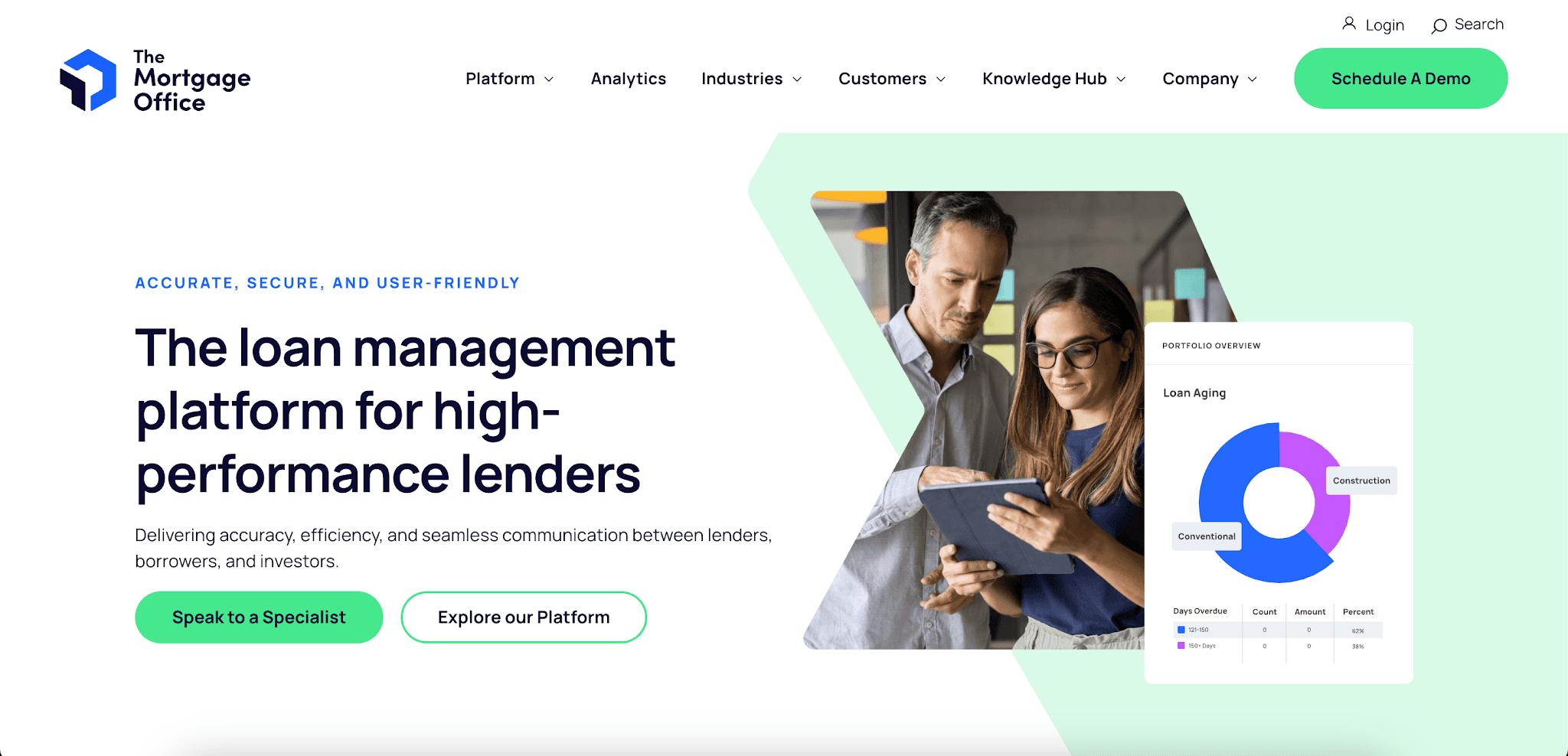
Image source: themortgageoffice.com
The Mortgage Office is a web-based servicing system for private mortgage lenders, nonprofits, and government agencies. Its servicing capabilities connect day-to-day account management with investor and private-lending workflows.
Key features include:
Automated payments
Escrow administration
ARM servicing
Borrower and investor portals
Construction draws
Fund management
Regulatory reporting
Portfolio analytics
Open APIs
Payments and Escrow Administration
The Mortgage Office automates payment processing and applies funds according to the terms set for each account. Its engine also calculates interest, late fees, and prepayment penalties when payments post.
For adjustable-rate mortgages (ARMs), the platform handles rate changes and recalculates payments based on the updated terms. This helps lenders manage loans whose payment amounts may change during repayment.
Escrow tools track property taxes and insurance alongside borrower payments. Administrators can follow those obligations and related disbursements without separating them from the mortgage account.
Borrower, Investor, and Delinquency Workflows
Borrowers get 24/7 portal access to account information, while investors use a separate portal for investment details. This improves the borrower experience by giving homeowners direct access to information without routine calls or emails.
The Mortgage Office also sends automatic payment notifications through email and SMS. These multiple channels, along with custom letters and stored communication records, give administrators a traceable history of borrower engagement.
When an account falls behind, delinquency tracking shows which mortgages require attention. Administrators can review prior outreach and account status before deciding what follow-up comes next.
For investor-funded mortgages, the investor portal gives funding partners access to information related to their investments. That keeps investor access separate from the borrower-facing side of the account.
Compliance, Reporting, and Integrations
The Mortgage Office includes regulatory reports, mortgage call reports, and Home Mortgage Disclosure Act (HMDA) reporting. It also prepares tax documents using information stored with the account.
Portfolio dashboards track loan performance and cash flow over time. Investor statements give firms a separate view of mortgages funded by outside capital.
QuickBooks and Salesforce integrations connect account information with accounting and customer-management tools. The open API extends those connections to other systems and improves operational efficiency by cutting duplicate data entry.
5. ICE Mortgage Technology (MSP)
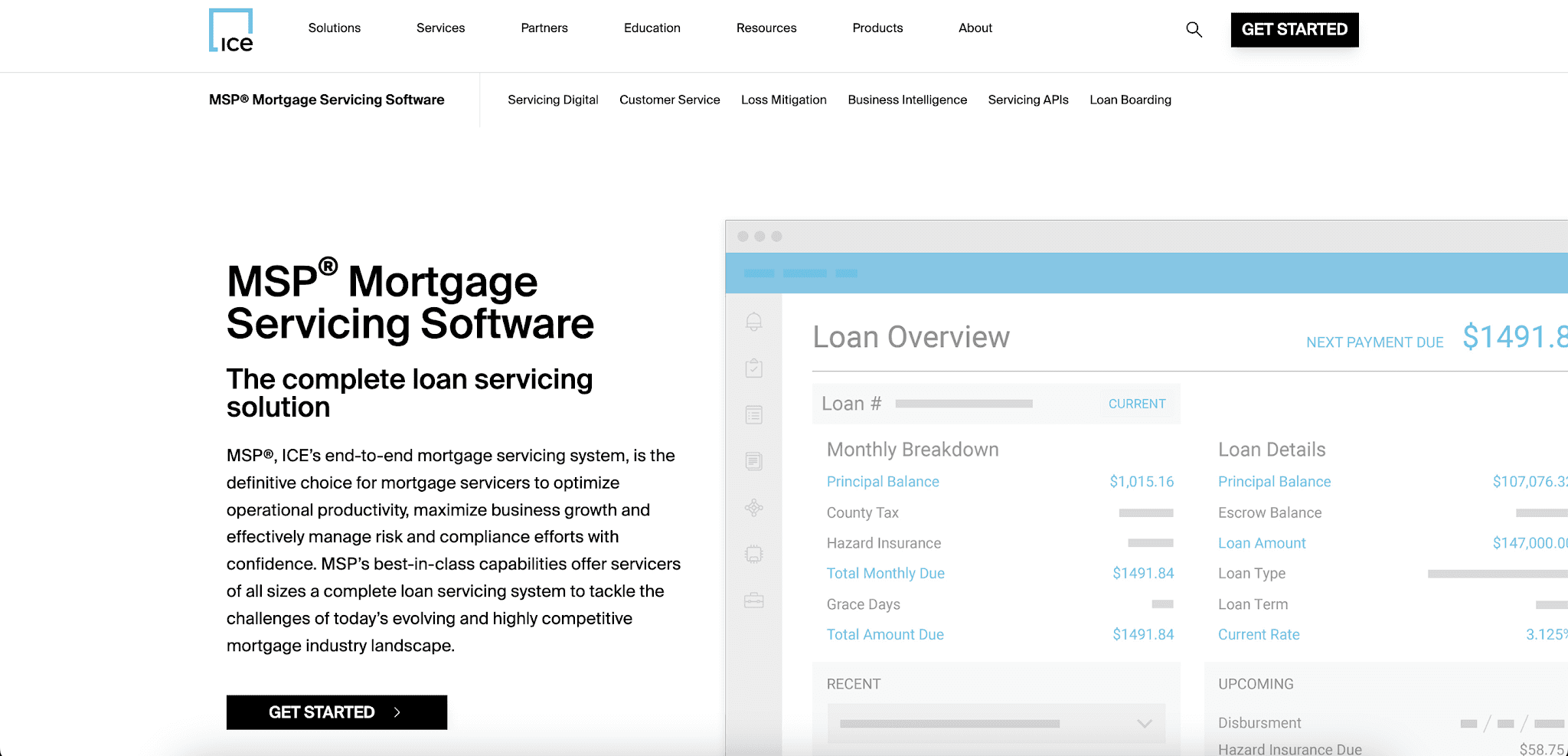
Image source: mortgagetech.ice.com
ICE MSP is an enterprise mortgage servicing system for institutional servicers managing high volumes and complex portfolios. Exception-based processing automates routine tasks and routes items that require manual attention to the appropriate users.
It supports several mortgage loan types, including conventional, government-backed, construction, and home equity loans. That range keeps different portfolio segments within the same core platform.
Key features include:
Payment processing
Borrower digital channels
Loan boarding
Default management
Loss mitigation
Regulatory servicing tools
Servicing APIs
ICE InterChange Services
Payments and Borrower Account Access
ICE MSP handles mortgage payments and connects with ICE Servicing Digital for borrower self-service. Borrowers can make payments and view their payment history through web and mobile channels.
The digital tools also show tax, insurance, home-value, and home-equity information. Text alerts give homeowners another way to receive account updates without relying on mailed notices.
ICE also supports auto-draft setup for recurring payments. This gives borrowers another way to manage scheduled payments without submitting each one separately.
Default and Loss Mitigation Workflows
ICE provides separate servicing workflows for collections and loss mitigation, along with dedicated bankruptcy and foreclosure processes. Servicer-defined rules automate steps within each case instead of routing every account through one manual sequence.
The loss mitigation application manages retention and liquidation workouts when borrowers can’t maintain scheduled payments. Collections tools focus on delinquent amounts and the work required to recover them.
Claims tools centralize claim information from different payers. Default invoicing handles related billing, while Credit Bureau Management helps teams investigate and correct credit disputes.
Servicing Events detects data changes in MSP and notifies connected systems in near real time. For example, a posted payment can stop unnecessary collection outreach before another contact occurs.
Those events can also flag a modification before foreclosure activity continues. This lets default workflows respond as account activity changes.
Compliance, Loan Boarding, and Enterprise Integrations
ICE monitors federal mortgage servicing requirements and incorporates related changes into MSP for daily account workflows.
Loan Boarding converts records from a previous servicer into MSP’s standard format. Teams can apply business rules, map source values, and validate records before adding them to MSP.
Recurring conversion runs automate boarding when new source files arrive regularly. This reduces repeated setup work for portfolios that add newly originated or acquired mortgages frequently.
Servicing APIs connect MSP with other applications that require account information or servicing functions. ICE InterChange Services extends that network to more than 400 providers.
Together, those connections let external systems exchange information with MSP without separate manual transfers.
How to Choose the Right Mortgage Servicing Software
Choosing mortgage servicing software comes down to how your organization handles funded accounts. Portfolio type, volume, reporting demands, and existing technology all factor into the decision.
Match the Platform to Your Servicing Model
Private lenders, nonprofits, and investor-backed lenders often manage specialized mortgage portfolios. These organizations may require investor accounting, flexible payment rules, or borrower workflows suited to private mortgage administration.
Banks, mortgage companies, and institutional servicers often coordinate larger portfolios among several teams and business units.
Portfolio size also affects the type of platform required. A private lender managing a focused portfolio may not need the same infrastructure as a national servicer.
These differences explain why servicing solutions aren’t interchangeable. A private-lending solution may combine mortgage and investor administration, while an enterprise system handles more complex institutional workflows.
Compare the Six Core Mortgage Servicing Capabilities
Feature names alone don’t reveal how much work a system can handle. Buyers need to look at what happens inside each workflow:
Payments: Look at allocation rules, auto-draft, fees, interest calculations, reversals, and transaction history.
Escrow: Examine tax and insurance tracking, disbursements, account analysis, and reconciliation.
Borrower communication: Compare portals, notices, statements, email, SMS, and stored communication records.
Defaults: Determine whether tools stop at collections or extend into loss mitigation, bankruptcy, and foreclosure.
Compliance: Examine audit trails, permissions, regulatory reporting, and controls for mortgage-specific requirements.
Reporting: Look at portfolio, investor, regulatory, operational, and custom reports relevant to the business.
The difference becomes important when two systems use the same feature label. Default management, for example, may cover simple past-due follow-up or full loss mitigation and foreclosure processes.
Escrow depth can vary just as much. Basic tracking records tax and insurance obligations, while deeper functionality may also handle disbursements, analysis, and reconciliation.
For financial institutions, reporting may extend beyond portfolio summaries into regulatory and operational reporting. Compare what teams can complete within each area, not just the feature name.
Review Integrations, Configuration, and Implementation
A servicing platform also has to work with the technology already used in mortgage operations. The loan origination system (LOS), accounting software, payment providers, and borrower applications may all exchange account information with it.
API-first systems give development teams more flexibility to build custom connections and account rules. Ready-made workflows may require less technical setup for organizations that don’t need extensive customization.
Deployment is another practical consideration. Vendors may offer cloud environments, on-premise installations, or both, depending on their platform architecture.
The handoff from origination deserves particular attention. During boarding, the transfer process moves required account information from the LOS into the servicing platform.
Examine which fields transfer automatically and how the receiving system maps and validates them before boarding. That process helps administrators catch missing or incorrect information before they manage the account.
How Addy Prepares Loans for Mortgage Servicing
Addy works earlier in the mortgage lifecycle, helping lenders prepare borrower files for underwriting and closing. Its role focuses on the information and conditions that need attention before funding.
Prepare Better Loan Files Before Servicing
Addy classifies mortgage documents and extracts information from 1003s, W-2s, pay stubs, bank statements, and tax forms. This gives loan processors information they can use during pre-underwriting without re-entering every field manually.
Its Processing Checklist compares file contents with automated underwriting system (AUS) results and lender guidelines. It identifies missing documents and open conditions, with results available in under five minutes.
Lenders can also access Addy’s mortgage-focused AI agents through ChatGPT for pre-underwriting and loan scenario analysis. This gives teams another way to use Addy before formal underwriting begins.
Addy’s AI agents can contact borrowers when the file still requires information. They can request outstanding items by call, text, or email before closing.
One benefit is a more complete file at boarding, which can mean fewer missing records or corrections for the servicing team.
Connect Addy With Pre-Closing Systems
Addy connects with LOS, customer relationship management (CRM) platforms, point-of-sale (POS) systems, email, and communication tools. These connections keep file information available within the systems used during origination.
Addy’s browser extension helps lenders operating several origination workflows work inside their existing LOS and CRM systems. Supported LOS connections can sync file information and reduce duplicate entry between connected systems.
Separate Pre-Closing AI From Post-Closing Servicing
Addy’s role comes before post-funding account management. It prepares the file and helps teams address issues before underwriting and closing.
After funding, servicing software takes over the ongoing borrower account. It records payment activity, manages escrow obligations, and handles default, compliance, and reporting work through repayment.
That division keeps Addy complementary to the post-closing system rather than duplicating its role.
Prepare More Complete Loan Files for Servicing With Addy
Choosing mortgage servicing software depends on how servicers manage funded accounts. Private lenders may prioritize flexible payments and investor workflows, while institutional servicers may require deeper default, compliance, and reporting capabilities.
No single solution fits every business in the mortgage industry. A modern platform should match the work the portfolio creates, from routine account activity to complex defaults and regulatory reporting.
The information entering that system matters too. Missing borrower records or unresolved conditions can lead to corrections during loan boarding and account setup.
FAQs About Mortgage Servicing Software
What is a mortgage servicing platform?
A mortgage servicing platform manages funded loans after closing. It handles payments, escrow, borrower accounts, defaults, compliance, and reporting throughout repayment.
What software do mortgage lenders use for servicing?
Mortgage lenders use dedicated servicing platforms to manage funded accounts after origination. Private lenders may favor configurable systems, while institutional servicers often require deeper default and compliance workflows.
Some platforms also manage consumer loans and other credit products alongside mortgages.
Can mortgage servicing software manage defaults and loss mitigation?
Yes. More advanced systems track delinquent accounts and manage repayment options, modifications, foreclosure, and other default cases.
Loss mitigation can improve borrower retention when eligible borrowers receive alternatives to foreclosure. Some enterprise platforms also connect with credit bureaus for reporting and dispute management.
Start closing more loans – Book your demo today
Stay ahead of the competition and discover how AI can accelerate your loan origination process, reduce manual work, and help you close more deals in less time. Book a demo today and start experiencing the future of lending.