Michael Vandi
A mortgage pipeline can look organized on Monday and turn into a scavenger hunt by Thursday. A missing bank statement, untouched condition, or buried borrower email can stall the whole file.
The right mortgage pipeline software helps lenders track loans from application to closing without losing track of the next task.
This guide covers six tools worth comparing in 2026, plus how Addy reviews files, spots missing items, and flags items that need attention.
Book a demo with Addy and bring AI into the file review process!
TL;DR
Here are seven mortgage pipeline software options worth considering in 2026.
Floify
nCino Mortgage Suite
LendingPad
Calyx
TurnKey Lender
LoanCirrus
Aidium
What Is Mortgage Pipeline Software?
Mortgage pipeline software helps lenders monitor active loans from application to closing. It shows loan status, borrower tasks, document collection, underwriting progress, open conditions, and target closing dates.
A mortgage file doesn’t belong to one person. Loan officers, processors, underwriters, closers, and managers all need the same view of the work ahead. Pipeline tracking helps the team catch missing items before they delay approval.
Most teams use a few tools for this work:
Point-of-sale (POS) platforms collect the borrower’s application and supporting documents.
A loan origination system (LOS) stores the loan file and guides processing, compliance, underwriting, and closing.
Customer relationship management (CRM) systems track leads, client data, referral partners, and task reminders.
AI reviews documents, checks conditions, searches guidelines, and flags missing items.
Together, these tools help lenders turn a busy pipeline into a more organized loan process.
How POS, LOS, and CRM Software Fit Into Mortgage Pipeline Management
A POS starts the borrower side of the mortgage process. Applicants use it to submit information, upload paperwork, check pricing, and message the lending team through a portal.
From there, the LOS becomes the system of record. This type of loan origination software keeps the official loan file. Processors, underwriters, and closers use it to review the application, track compliance steps, and prepare the file for funding.
A mortgage CRM system covers the relationship side of the pipeline. It helps loan officers remember who referred the borrower, what conversations occurred, and when the next follow-up should happen. That context makes client management easier after the first inquiry.
These systems cover different parts of the mortgage pipeline management. The seven tools below make more sense once you know where each one belongs in the workflow.
Top 7 Mortgage Pipeline Software Options in 2026
Mortgage pipeline software isn’t a single category. These seven options include software for borrower intake, loan file management, lending operations, and mortgage CRM.
1. Floify - Best for Borrower Applications and Document Uploads
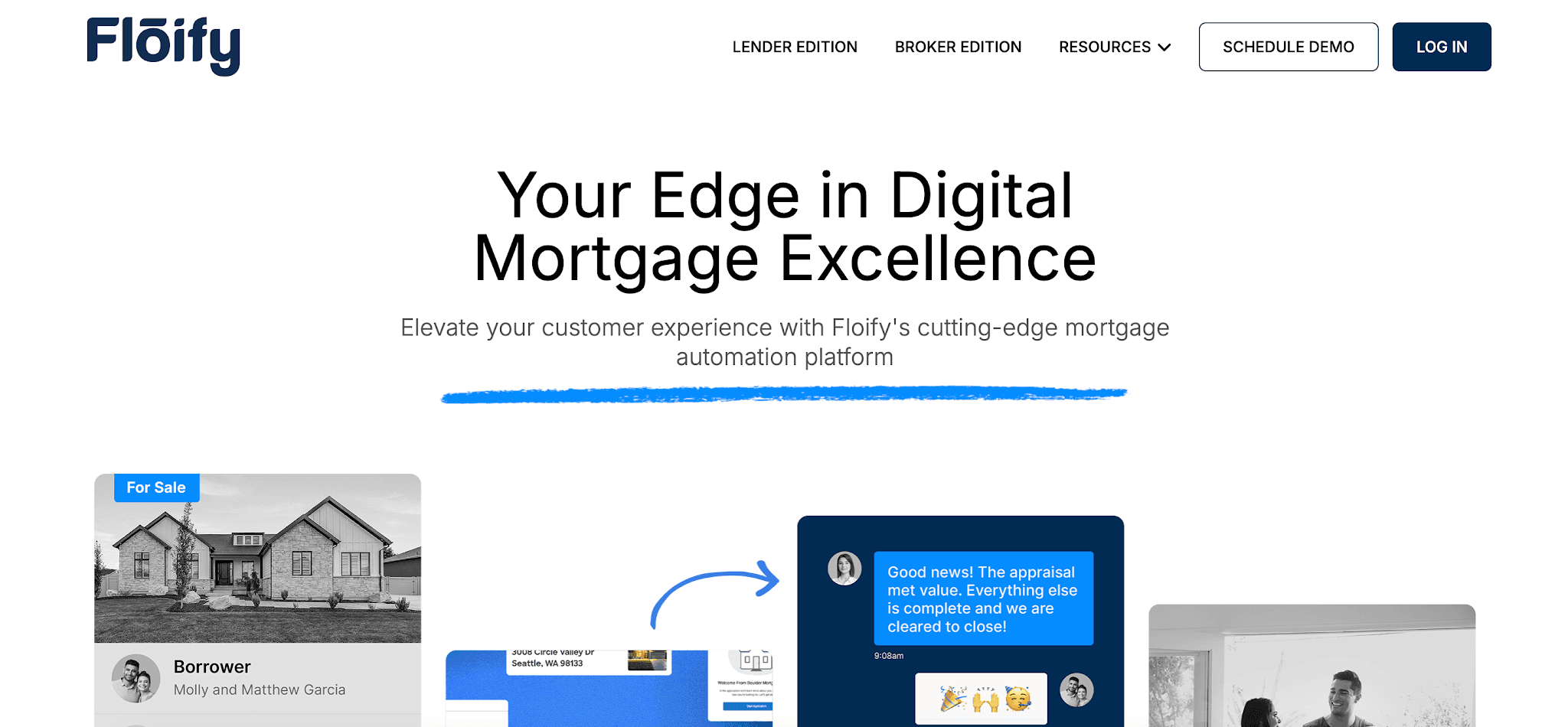
Image source: floify.com
Floify is best for frontend intake and document collection. Its POS gives applicants a secure place to apply, upload documents, e-sign authorizations, and check status from any device.
Lenders can customize flows by product, branch, or borrower type.
With Floify, users can launch home equity line of credit (HELOC), non-qualified mortgage (Non-QM), construction, and niche products without waiting on a developer queue.
Key Features
Portal for applications, uploads, e-sign authorizations, and status updates
Custom flows for different products, branches, and borrower types
Document management and automated disclosure workflows
AI-assisted data extraction from uploaded files to pre-fill applications
Automated borrower communications for broker workflows
Governance and security features
Integrations with more than 50 platforms, including credit, pricing, LendingPad, Jungo, and Surefire CRM
Application programming interfaces (APIs) and webhooks for deeper system control
Floify suits brokers and lenders seeking a better first touchpoint with borrowers. It’s useful when applications, uploads, disclosures, and status updates take too much time in separate tools.
Before adding Floify to a mortgage pipeline software stack, lenders should check how it connects with their LOS, CRM system, and disclosure process.
2. nCino Mortgage Suite - Best for Borrower Engagement and Loan Visibility
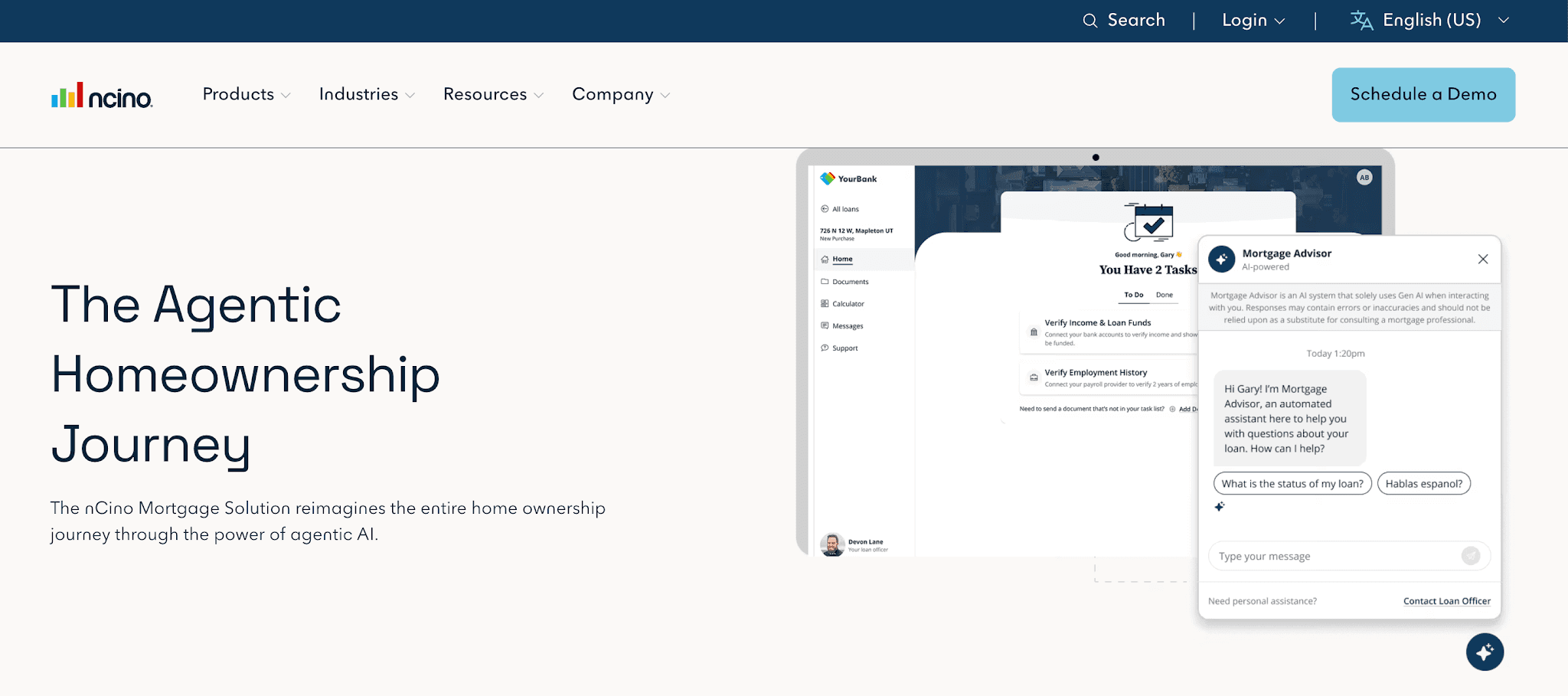
Image source: ncino.com
nCino Mortgage Suite combines borrower engagement, pricing, document review, loan visibility, mortgage analytics, and incentive compensation into a single frontend platform.
Mortgage Advisor gives applicants 24/7 multilingual help based on their loan data. It also shows real-time loan pricing and pre-qualification before they complete a full application.
Key Features
Mobile-native mortgage POS
Real-time loan pricing and pre-qualification
AI-powered Doc Validation for uploaded documents
Document classification and loan field population
Exception flags for human review
Automated milestone notifications
Dual automated underwriting system (AUS) integration
LOS integrations with real-time data sync
Mortgage Analytics for lead management, pipeline health, production scorecards, historical trends, and financials
Automated incentive compensation connected to loan milestones
nCino’s Doc Validation classifies uploaded documents, adds extracted data to loan fields, and flags exceptions for review.
The suite brings borrower communication, pricing, document validation, and real-time status tracking together in a single mortgage software platform for lending teams.
3. LendingPad - Best for LOS File Management and Multi-User Processing
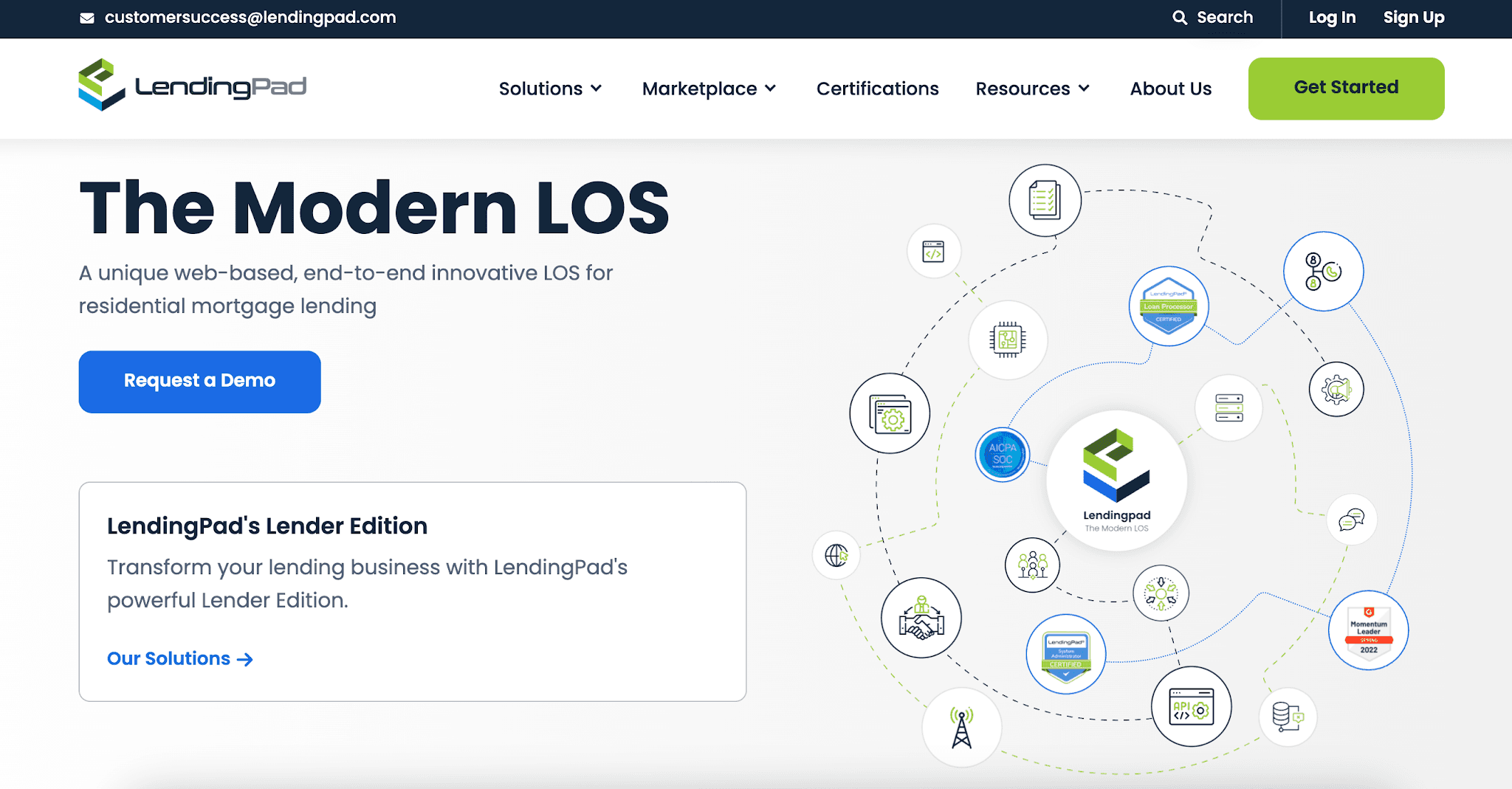
Image source: lendingpad.com
LendingPad is an LOS for lenders, brokers, banks, and credit unions. It gives mortgage lenders a single system to manage the file once the application enters the back office.
The platform helps departments work from the same file record. A processor can update a task, an underwriter can review the next item, and a closer can see what still needs attention before funding.
Key Features
Centralized file management for the lending process
Real-time notifications and pipeline monitoring
Multi-user processing for internal staff
Mortgage workflows and document management
Secondary, funding, quality control, closing, warehousing, and post-closing functions
Custom roles for processing, underwriting, closing, funding, post-closing, and quality control
Enterprise API for data exchange and workflows
Direct and third-party channel support for wholesale and correspondent lending
LendingPad suits mortgage companies that manage several roles within one LOS. It’s also useful for lenders who need different users to work on the same file without losing the latest update.
The platform includes reporting, analytics, compliance tools, and vendor integrations. Managers can use those features to review pipeline activity without asking every department for a separate update.
4. Calyx - Best for Broker Origination and Processing

Image source: calyxsoftware.com
Calyx offers mortgage origination and processing software for brokers, bankers, lenders, and credit unions. Its product line includes Calyx Point for broker LOS needs and Calyx Path for lenders that prefer a cloud-based setup.
Point helps users turn prospect files into borrower files. It also connects with outside providers for services used during processing and closing.
Path gives lenders browser-based access, pipeline alerts, and compliance tools. It also includes a built-in POS for collecting applications and supporting documents through a borrower portal.
Key Features
Calyx Point for broker origination and processing
Calyx Path for cloud-based LOS needs
Prospect database and pipeline
Document storage and electronic signatures
More than 200 vendor partner integrations
Compliance tools, audit trails, and rules engine capabilities
Built-in POS available with Calyx Path
API access for Calyx Path users
Calyx is worth reviewing for mortgage professionals who want established software for origination, file review, and partner connections.
It also gives teams a choice between a broker-focused LOS and a cloud-based platform with workflow automation tools for broader mortgage operations.
5. TurnKey Lender - Best for End-to-End Digital Lending Automation
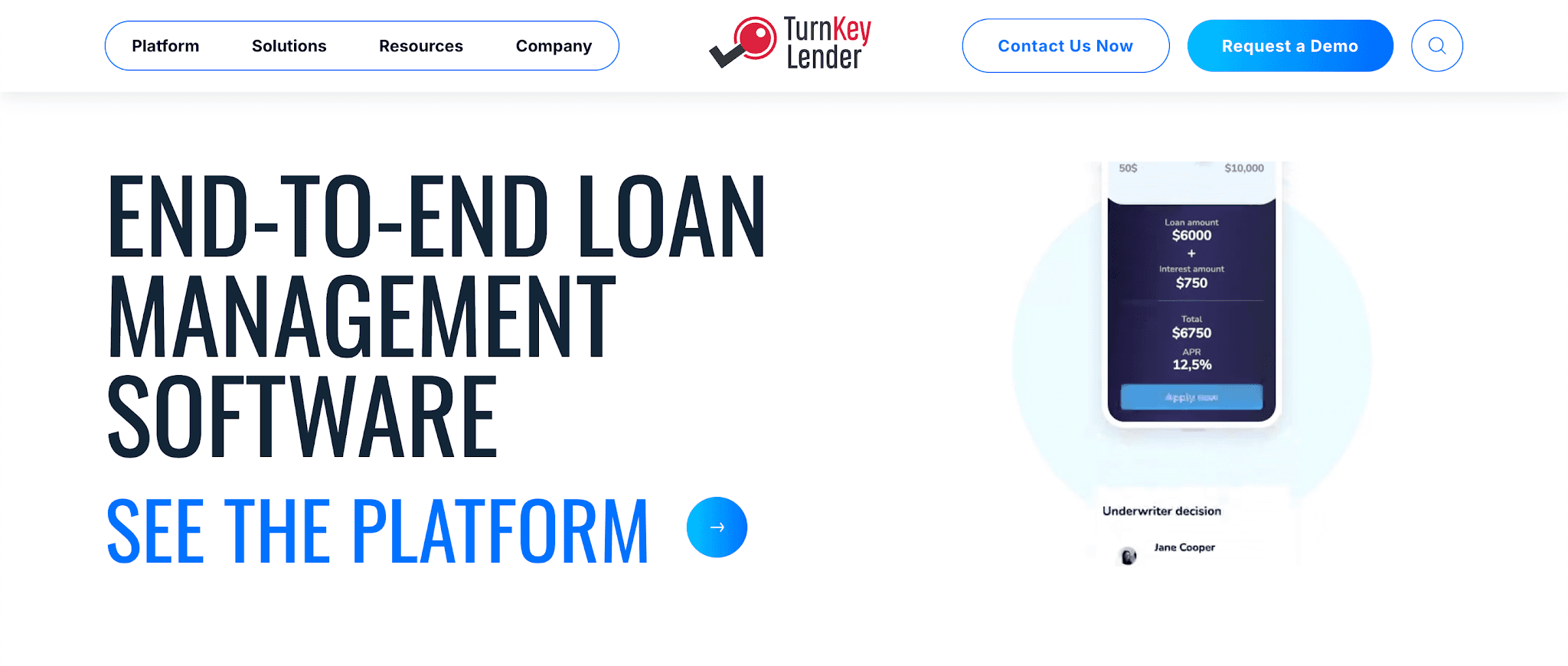
Image source: turnkey-lender.com
TurnKey Lender is a broader lending software tool for financial institutions, not a mortgage-only platform. It covers the loan lifecycle from origination through post-funding work, including servicing and collections.
Its Decision Engine reviews selected customer data and returns AI-supported credit decisions. It can check borrower identity, review bank information, and use fraud controls before a lender makes a decision.
Key Features
Configurable application flows and loan offers
AI-supported Decision Engine for credit decisions
Credit scoring and risk review
Underwriting, servicing, collections, archiving, and reporting
Web-based back-office interface
Third-party data provider integrations
AI-based collections scoring for delinquency review
Controls that can support automated compliance checks
TurnKey Lender may work for lending teams that need automated workflows after origination. The software also covers credit products outside of mortgages, including consumer lending and commercial lending.
For mortgage teams, the main question is whether the broader lending setup matches their file review, compliance, and investor requirements.
6. LoanCirrus - Best for Lending Workflow Orchestration
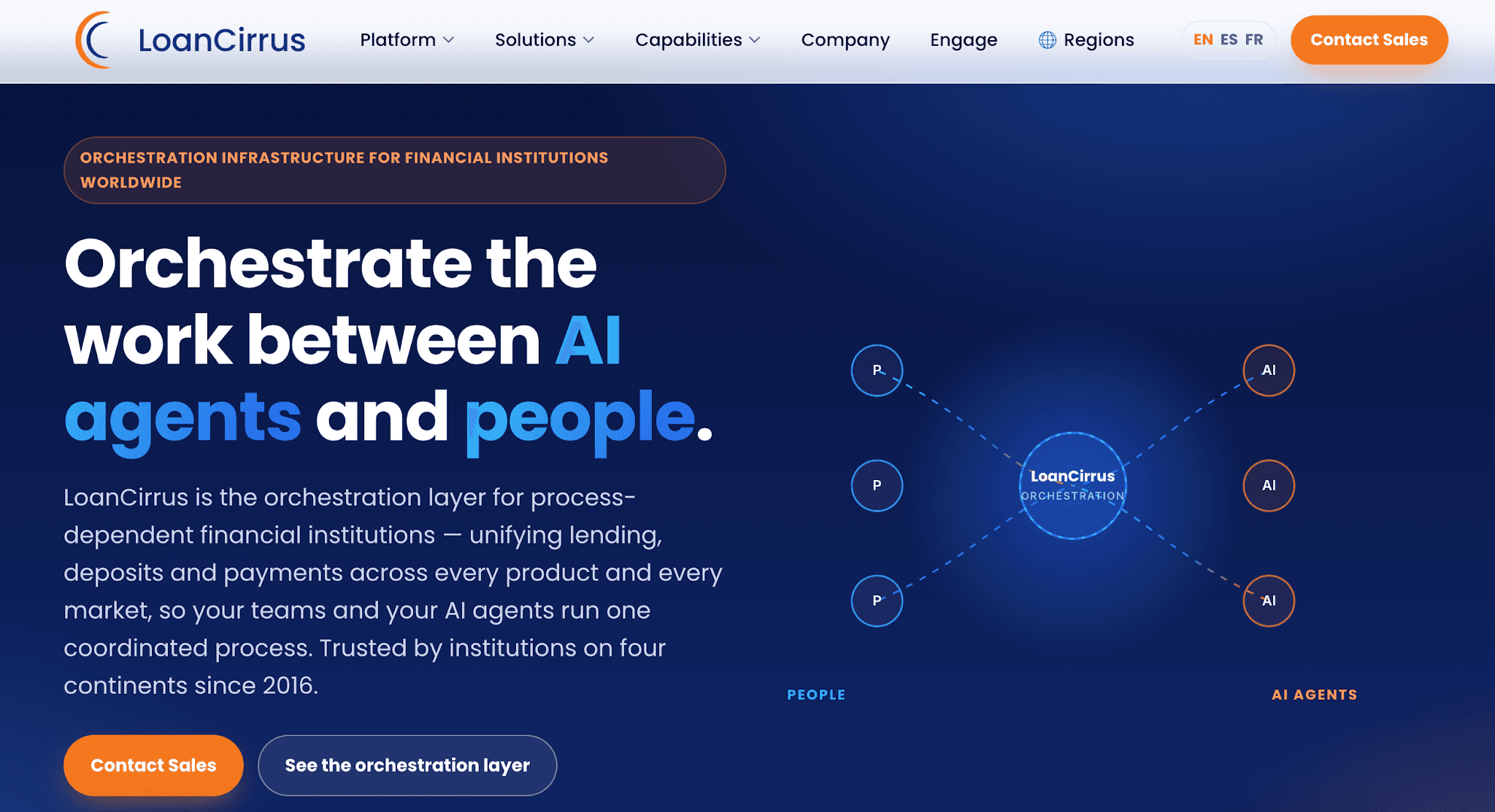
Image source: loancirrus.com
LoanCirrus is a loan management and orchestration platform for institutions that run lending, deposits, and payments.
It isn’t a traditional mortgage LOS. Its role is to coordinate people, AI agents, and process rules from intake through post-funding work.
For mortgage files, LoanCirrus helps applicants, brokers, underwriters, and officers follow the same workflow. When a file needs judgment, the system can send the exception to a person.
Key Features
Lending, deposits, and payments workflows
AI agents for selected steps in the process
Onboarding, application processing, servicing, collections, and analytics
Document classification, extraction, and verification
Know your customer (KYC), anti-money laundering (AML), disclosures, and compliance checks
Event-based email and SMS through multiple channels
Portfolio monitoring, risk alerts, and audit trails
Task automation for routine steps and human escalation for exceptions
LoanCirrus may fit lenders that need more control over handoffs, approvals, servicing activity, and agent-led work.
It can also help mortgage businesses assign work, escalate exceptions, and automate routine tasks without losing human review.
7. Aidium - Best for CRM Pipeline Views and Automated Follow-Up
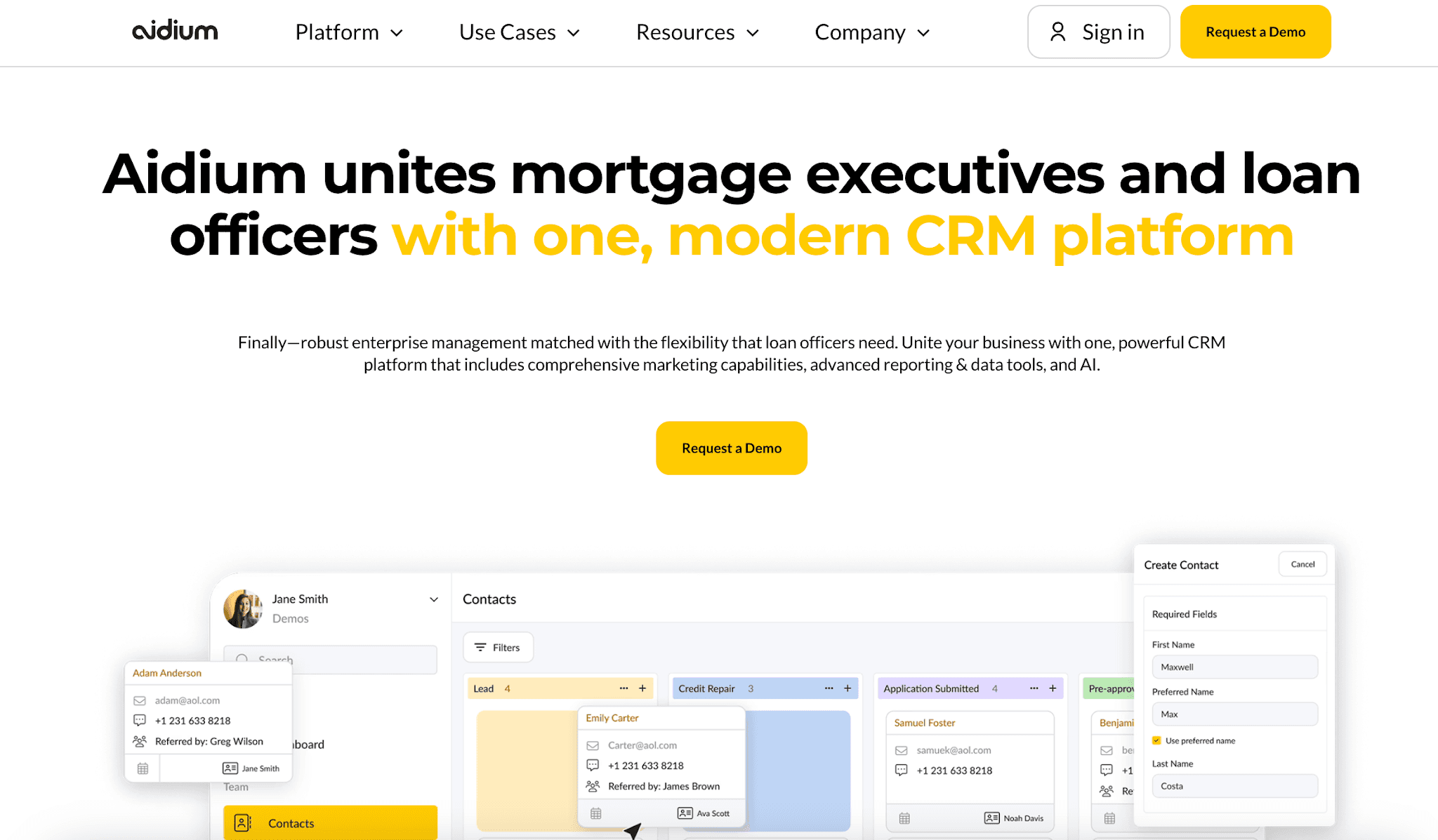
Image source: thinkaidium.com
Aidium provides the CRM side to mortgage pipeline management. It helps lending teams track prospects, borrowers, referral partners, and active transactions before a file reaches the LOS.
The pipeline view shows where each contact or transaction stands. Loan officers can click a card, review the record, and see what needs follow-up without searching through separate notes.
The mortgage broker CRM software also connects status updates to automation. When a user moves a card to a new stage, the platform can trigger CRM workflows, campaigns, or follow-up sequences.
Key Features
Custom contact and transaction pipelines
Clickable cards with full record details
Saved filters for borrower, prospect, and referral partner segments
Custom fields, statuses, and tags for contact management
No-code automation builder for approved users
Drag-and-drop status updates that trigger marketing automation
More than 80 pre-built playbooks for borrower lifecycle stages
AI Propensity Modeling to help prioritize leads for purchase or refinance
Enterprise controls with team-level customization
API, native mortgage integrations, and more than 100 connectors for LOS, POS, lead sources, and related systems
Aidium helps lenders manage the relationship side of the pipeline. It keeps client relationships, referral activity, borrower history, and follow-up connected in one CRM view.
Why Pipeline Visibility Doesn’t Always Move Files Forward
POS, LOS, and CRM solutions can organize a mortgage pipeline, but they can’t judge every detail in a loan package. A borrower may upload the correct document type, but the team still has to confirm whether it meets the condition.
That review often lands with loan officers, processors, or underwriters. They may compare documents, verify income, check investor rules, or find the issue keeping a file from advancing.
Here are some common reasons why loan files stall:
Reviewing borrower documents manually
Matching trailing documents to open conditions
Calculating complex income scenarios
Searching investor guidelines
Updating milestones and task management notes
Following up on missing items
Rechecking data from another system
Correcting errors from manual data entry
Pipeline software can show status, but it can’t always explain what needs attention. Lenders still need tools that can automate repetitive tasks without taking judgment away from the team.
Add Addy to Your Mortgage Pipeline for Faster File Review
A lender’s existing mortgage tech stack can stay in place. Addy works with POS, LOS, CRM, email, Slack, Microsoft Teams, and other tools lenders already use.
Borrower uploads usually start in the POS. The LOS stores the official record, while the CRM keeps relationship and follow-up details in view. Addy reviews the conditions, guideline questions, and missing items inside those workflows.
File Data Moves Into the LOS
Addy extracts borrower data from 1003s, 1040s, W-2s, bank statements, pay stubs, and other mortgage documents. It classifies each upload, links it to the correct loan, and sends structured data into the LOS.
That reduces duplicate typing when records arrive from borrowers' inboxes or LOS systems, which supports reducing manual data entry during processing.
Missing Items Get Follow-Up
Addy can identify missing documents and send requests by email, text, or phone. Follow-ups continue until the required items are submitted.
The outreach can follow lender-specific rules, so communication matches internal processes. That can improve customer satisfaction by keeping borrowers updated when the loan still needs information.
Conditions and Guidelines Stay Close to the File
Addy’s Processing Checklist integrates with the LOS, automatically categorizes documents, and applies product-specific rules, enabling loans to be prepared for final approval in just minutes.
Loan officers can also search for and compare mortgage lending guidelines, including those from Fannie Mae, Freddie Mac, and non-QM lenders. Addy can surface answers inside Microsoft Teams, Slack, the browser extension, or the lender’s existing workflow.
File Review Gets a Faster Next Step
Addy can review borrower documents, identify missing conditions, and prepare structured findings for lender review.
Addy has also brought this work into ChatGPT through its mortgage-focused AI agents, which can identify missing conditions and analyze loan scenarios for pre-underwriting preparation.
Loan data can move into the LOS or CRM pipeline without copying details from every document. That gives loan officers, processors, and underwriters a faster way to review remaining conditions before clear-to-close.
FAQs About Mortgage Pipeline Software
What is a mortgage pipeline?
A mortgage pipeline is the set of active loans moving from application to funding. Lenders use it to track loan status, missing items, open conditions, and closing timelines.
What is the best mortgage pipeline management software?
The best mortgage pipeline management software depends on how the lender manages applications, processing, underwriting, and closing. Most lenders need POS, LOS, CRM, and AI tools so each stage has the right system.
What is the best mortgage CRM software?
The best mortgage CRM software helps loan officers track potential clients, referral partners, borrower follow-up, and past customer relationships. It should also support the sales pipeline and help manage daily sales tasks.
Start closing more loans – Book your demo today
Stay ahead of the competition and discover how AI can accelerate your loan origination process, reduce manual work, and help you close more deals in less time. Book a demo today and start experiencing the future of lending.