Michael Vandi
Funding is only one part of the lending journey. After closing, lenders still manage payments, borrower updates, account changes, collections, and reporting.
Loan management software brings that work into one place, helping servicing teams keep active loans organized from boarding through payoff.
While mortgage software and lending software can cover many stages of mortgage lifecycle management, this guide focuses specifically on post-funding loan management.
It compares the core features used in daily servicing, including automation, integrations, reporting, and loan type support. By the end, it'll be easier to compare platforms based on how they handle active loans.
TL;DR
Here are five loan management software platforms to compare in 2026:
HES LoanBox
TurnKey Lender
Nortridge
LendFusion
Bryt Software
What Is Loan Management Software?
Loan management software helps lenders and servicers manage funded accounts from boarding through payoff. A loan management system keeps each account's history in one place instead of spreading it between spreadsheets and disconnected systems.
The system records servicing activity in real time:
When a borrower makes a payment, payment processing rules apply the funds and update the balance.
If a borrower misses a payment, the system triggers a reminder, fee, or collection task based on account rules.
When loan terms change, the system updates the account and recalculates future payments when required.
Financial institutions such as banks and credit unions use these systems alongside private lenders and fintechs. A platform serving multiple loan types applies different calculation methods. For example, installment and revolving accounts calculate payments and interest differently.
Some platforms also handle loan origination and underwriting. Others focus more heavily on loan servicing after funding.
How Does Loan Management Software Work After Funding?
After funding, the loan lifecycle shifts to maintaining the active account until payoff. Each new transaction changes what the borrower owes and what the servicer records.
Loan Boarding and Account Setup
Servicers board the account using the terms approved at closing. The system uses the opening balance, rate, fees, and payment schedules to calculate what comes due.
Accuracy matters here since an incorrect starting figure can affect later statements and payoff amounts. Careful setup gives future transactions the correct baseline.
Payment Processing and Balance Management
When money comes in, the system applies it according to the account rules. A regular payment might cover interest first, then principal, while escrow receives its required share.
Partial or returned payments follow different rules. Recording those exceptions correctly keeps the outstanding balance from drifting away from what the borrower actually owes.
Borrower Account and Document Management
Borrower management keeps contact details, prior communication, and account notes connected to one record. A servicer can answer questions without piecing together information from separate sources.
Document management keeps statements, notices, and servicing records with the account they belong to. This makes earlier correspondence easier to retrieve when questions arise.
Delinquency, Collections, and Loan Changes
When a payment goes past due, the account enters the appropriate delinquency stage. The system can apply late payment fees, send reminders, or assign collection work using configured rules.
Approved changes require separate account updates. If terms change, the platform revises future repayment schedules while preserving the earlier account history.
Reporting and Audit History
Each recorded transaction feeds reporting on payment behavior, delinquency, and portfolio performance. Managers can trace results back to individual account activity instead of rebuilding them from separate files.
Audit logs record who changed an account and when. That history gives servicing teams evidence for internal reviews and regulatory compliance work.
Payoff and Account Closure
At payoff, the servicer calculates remaining principal, accrued interest, and final charges. Once the borrower pays that amount, the system closes the active balance.
The account history remains available after closure, preserving earlier transactions and adjustments.
Key Criteria for Comparing Loan Management Software
When comparing loan management software, five criteria show how each platform handles day-to-day servicing operations after funding:
Servicing workflows: How the system handles payments, borrower records, account changes, delinquency, and collections.
Automation: Which recurring tasks run through rules, such as reminders, fees, notices, and collection steps.
Integrations: How the software exchanges information with payment providers, loan origination systems (LOS), APIs, and core banking platforms.
Reporting: How teams track account activity, portfolio trends, audit history, and other servicing results.
Loan types: Which loan products the system can service and how it handles different repayment structures.
Lenders should connect claimed efficiency gains to measurable results, such as fewer corrections, shorter reconciliation times, or less staff time per account. Those measures show whether the software improves operational efficiency in daily servicing.
Using the same framework for each vendor makes the differences easier to compare before choosing a platform.
5 Loan Management Software Platforms to Consider in 2026
The following platforms handle different types of post-funding work. Each one uses the same servicing, automation, integration, reporting, and loan-product criteria for comparison.
1. HES LoanBox
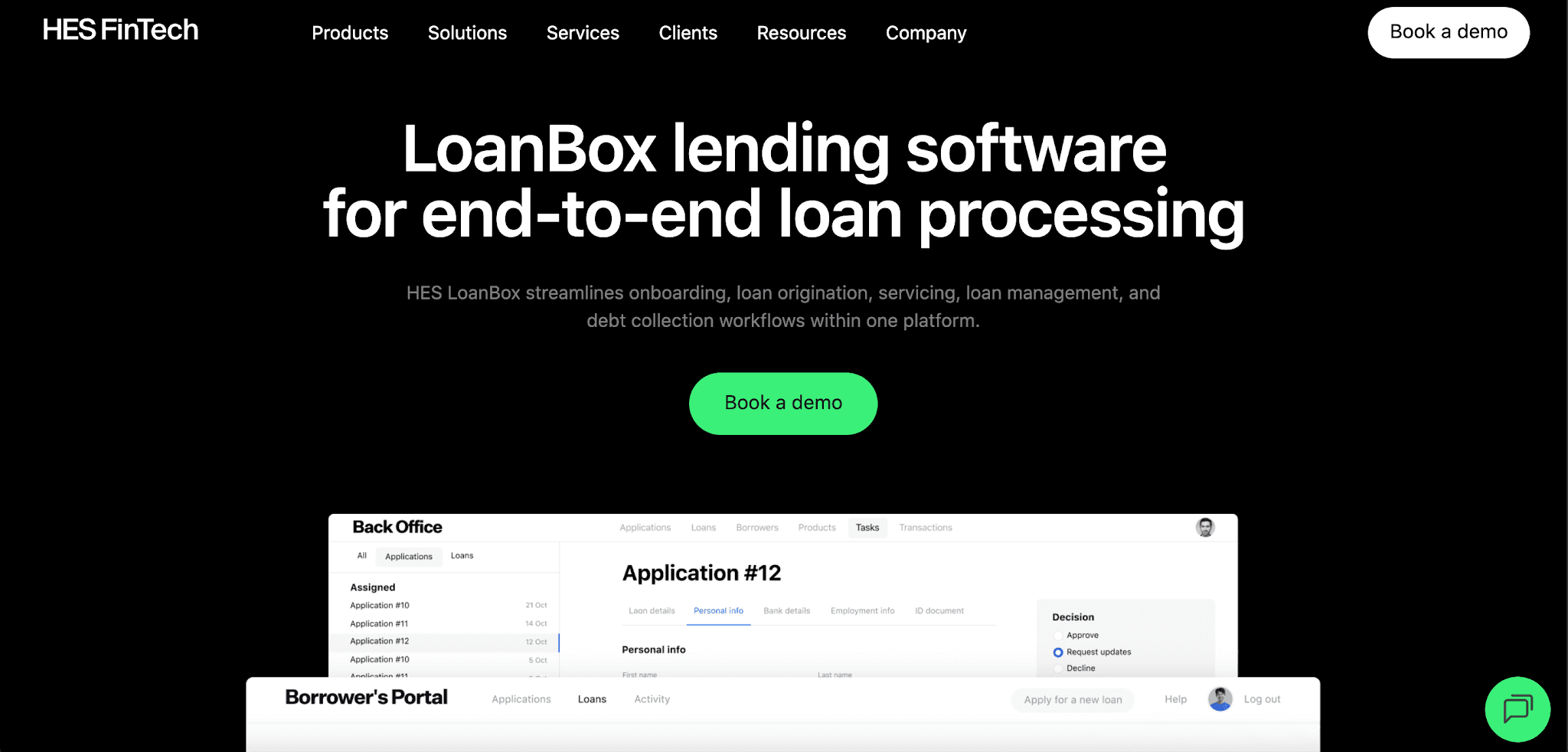
Image source: hesfintech.com
HES LoanBox combines origination, servicing, account administration, and debt collection in one modular platform. Its post-funding tools manage active accounts from disbursement through payoff.
Servicing and Automation
Servicers can configure how HES calculates accruals, penalties, write-offs, and scheduled payments. Different calculation rules also let the system handle credit lines, cash advances, and installment loans.
When repayment terms change, users can extend maturity dates, adjust interest rates, or add payment holidays. HES recalculates future payments using the revised terms.
Collection workflows run from pre-collection through legal collection. Scheduled reminders contact borrowers before due dates, while penalty rules address overdue accounts.
The optional GiniMachine integration uses historical collection information for risk assessment and recovery prioritization. It also has a separate debt collection product, HES CollectionAgent, which selects contact timing and communication channels for each debtor.
Key Features
Borrower self-service hub: Borrowers can view payment schedules, receive notifications, adjust schedules, and make transactions.
Automated task assignment: HES routes tasks by user role, manager assignment, or self-assignment.
Role-based access: Administrators set which system functions each user can access.
Flexible deployment: HES offers on-premises, public cloud, private cloud, and hybrid cloud options.
Developer license option: HES offers an optional developer license with source-code access for technical customization.
Integrations and Reporting
HES connects with multiple payment processors for online disbursements and repayments. Transaction APIs connect bank accounts, while the open API links other services to the platform.
Interactive dashboards provide portfolio monitoring based on active account performance. Users can also build custom reports, export information, and trace recorded activity through audit logs.
Loan Coverage
HES handles consumer lending products with different repayment structures, rates, and calculation rules. Its products include personal, payday, auto, home equity, student, and small and midsize enterprise (SME) lending.
HES Core handles commercial finance that requires deeper customization. Its modular architecture includes factoring, trade finance, working capital, bank loans, and peer-to-peer (P2P) lending.
HES includes home equity loans among its mortgage-related products. Mortgage lenders should confirm escrow, impound, and other mortgage-specific servicing functions before selection.
2. TurnKey Lender
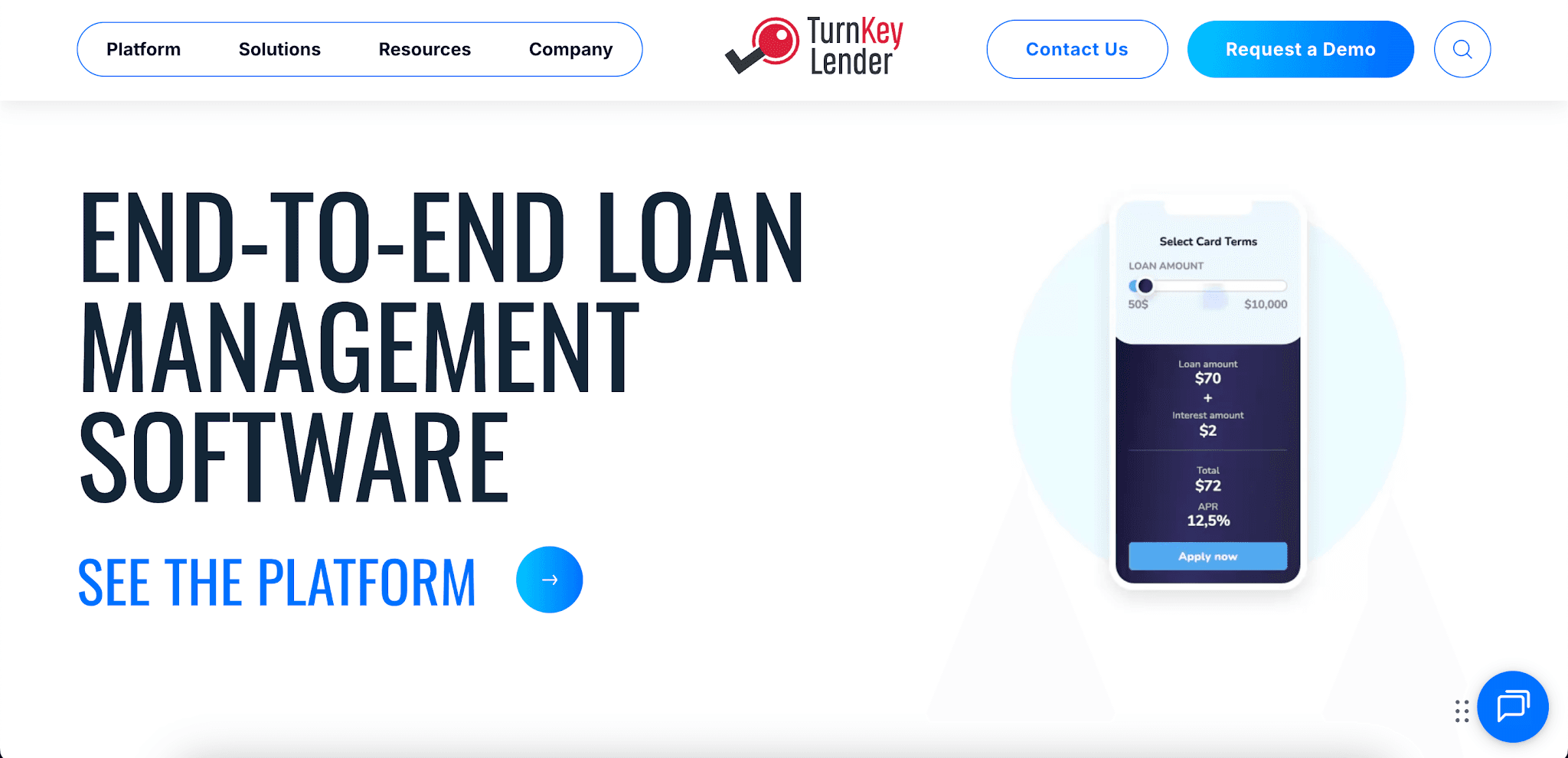
Image source: turnkey-lender.com
TurnKey Lender spans the full credit cycle, including servicing, collections, reporting, origination, and loan decisioning. This comparison centers on its loan servicing software and post-funding functions within the lending platform.
Servicing and Automation
Repayment schedules remain editable after funding. Users can restructure upcoming payments when account terms change.
Past-due accounts enter delinquency tickets and buckets based on factors such as overdue amount or duration. This classification helps collectors organize accounts and determine the next recovery step.
Promise-to-pay arrangements remain attached to the account record. Connected messaging handles follow-ups, while due-date reminders and automatic fees automate routine payment activity.
Key Features
Automatic statement generation: The platform generates account statements without manual preparation.
Permission-based access: Administrators can give servicing and collection roles separate workspaces and feature access.
Batch import and export: Users can transfer groups of records into or out of the platform.
Branch management: TurnKey Lender offers branch management for lending activity by location.
Flexible document management: Users can store and manage borrower files within the system.
Integrations and Reporting
APIs connect TurnKey Lender with web services and existing systems. Its Extract, Transform, Load (ETL) functions transfer information when connected systems use different message structures.
The collection product also integrates with more than 20 core banking systems. A sandbox gives users a place to test workflow and portal configurations before deployment.
More than 30 predefined reports cover debt, collections, debtor history, and portfolio activity. Managers can use that information for portfolio management without rebuilding the same analysis manually.
Loan Coverage
TurnKey Lender handles consumer loans and commercial credit through several product configurations. Its consumer configurations include personal, payday, nonprofit, embedded, leasing, and telecom finance.
P2P functions handle investor funding, tranches, payments, and potential return calculations. Separate offerings also address buy now, pay later (BNPL) and business lending.
TurnKey Lender also provides configurations for business loans, along with real estate finance such as mortgages and home equity. Its public materials don't detail escrow or impound servicing, so lenders should verify those functions separately.
3. Nortridge

Image source: nortridge.com
Nortridge centers post-funding account management on configurable rules rather than fixed processes. Lenders can adjust servicing workflows to match their lending operations without repeating the same setup manually.
Servicing and Automation
Nortridge accepts Automated Clearing House (ACH), checks, cards, cash, lockbox payments, and third-party payment channels. Custom waterfalls determine how each payment applies to principal, interest, and other balances.
Workflow rules automate ACH scheduling, fee assessments, and collection follow-ups. Recurring account activity then follows the lender’s configured process.
Mortgage servicing adds escrow management for property taxes and insurance. Users can manage several escrow accounts, process disbursements, and automate adjustments when required amounts change.
Nortridge also handles partial and effective-dated payments, along with participation distributions. Default management continues from early delinquency through non-accrual, charge-offs, bankruptcy, and final disposition.
Key Features
Customer information file (CIF): Stores borrower details, communication history, documents, and user-defined fields in one record.
Address validation: Users can verify addresses within the borrower profile.
Borrower communications: Servicers can send text, email, or paper messages and record each interaction.
Flexible hosting: Nortridge offers cloud hosting and self-hosting on-premises.
Integrations and Reporting
Nortridge's REST API framework connects payment processors, credit bureaus, and other business applications. Two-way connections exchange information between Nortridge and outside systems as activity occurs.
More than 150 standard reports track loan performance, borrower trends, and servicing activity. Users can also configure thousands of report variations for more specific operational questions.
Detailed audit trails timestamp changes and transactions with user IDs. That history helps servicing teams document account activity during internal and compliance reviews.
Loan Coverage
Nortridge handles revolving and installment structures alongside consumer, auto, real estate, and commercial credit. Its configurable setup gives commercial lending portfolios their own payment terms and account structures.
Nortridge also handles the full mortgage servicing lifecycle, including escrow and payment activity.
4. LendFusion
Image source: lendfusion.com
LendFusion keeps borrower, application, and loan data in one cloud-based solution hosted on Amazon Web Services (AWS). Its API-driven setup connects those records with outside services used throughout the lending business.
Servicing and Automation
After funding, LendFusion recalculates payment plans when servicers reschedule installments or change payment dates and amounts. This keeps the account schedule consistent with approved repayment changes.
Product settings determine how the system applies fees and penalties. Users can also freeze interest or write off an account when required.
Due-date alerts identify accounts that require attention. Servicers can assign tasks or add flags based on loan status, keeping follow-up with the account record.
Key Features
Borrower portal: Borrowers can update account details, communicate with the lender, sign documents, and review applications. This gives them another channel within the borrower experience.
Document templates: Users can prepare email, text, and document templates with variables for different communication needs.
User permissions: Administrators can assign individual permissions or group users into roles.
Security controls: LendFusion provides two-factor authentication, IP restrictions, and system backups.
AWS hosting: LendFusion hosts the platform on AWS and provides browser-based access.
Integrations and Reporting
Payment processors, credit bureaus, know your customer (KYC) providers, and open banking services connect through LendFusion’s APIs. These integrations link outside services to records stored within the lending stack.
API connections can cut down on manual data entry when information already exists in another connected service. Users don't have to enter the same details again in LendFusion.
Built-in reports address common reporting requirements without making users build each one from scratch. Analytics dashboards turn stored information into visual summaries for closer analysis.
Bank reconciliation compares transaction records with uploaded banking information. Users can also filter and export transactions by date, account ID, type, or payment channel.
Loan Coverage
Administrators can configure multiple loan products with separate amounts, terms, interest rates, fees, and repayment conditions. Each product can therefore follow its own calculation rules.
LendFusion handles both amortized and non-amortized structures. The selected structure determines how the system calculates scheduled payments over the account term.
5. Bryt Software

Image source: brytsoftware.com
Bryt Software gives servicers a cloud workspace for post-funding lending operations. Payments, account changes, borrower records, and reporting remain connected to the active account.
Servicing and Automation
Bryt records regular payments and exceptions against the account history. Partial payments, returns, and nonsufficient funds (NSF) remain documented, while account rules determine applicable late fees.
The Payment Wizard calculates payoff amounts and lets servicers revise schedules after approved changes. They can edit principal, rates, due dates, extensions, fees, and amortization terms.
Bryt recalculates the balance after those changes. Updated interest calculations reflect the revised terms rather than the original schedule.
Workflow automation triggers reminders, tasks, and approval steps from account activity. This keeps recurring work connected to the account rather than a separate tracker.
Batch processing handles work that applies to many accounts at once. Bryt can generate 1098 and 1099 forms, prepare IRS FIRE files, and process groups of borrower notices.
At higher loan volume, these batch jobs cut manual intervention. Servicers don't have to prepare the same notice or tax process one account at a time.
Key Features
Borrower records: Bryt keeps contact details, documents, notes, and communication history within the borrower profile.
Workflow reminders: Users can set tasks and reminders for servicing activity that requires follow-up.
Document generation: Templates help produce notices and other account documents from stored information.
Automated batching: Bryt can process recurring jobs such as borrower notices and tax-reporting tasks in batches.
Loan tracker: A dashboard gives users a view of active accounts and related servicing activity.
Integrations and Reporting
Bryt's Custom API Module connects payment processors, custom borrower portals, and other third-party applications with the servicing platform. This lets lenders connect outside services without building each function inside Bryt.
The report writer provides real-time insights into payments, delinquencies, and portfolio trends. PDF and Excel exports make those results available for audits or analysis outside the platform.
Transaction history provides account-level detail behind portfolio reports. Servicers can trace individual entries when a summary doesn't explain a balance or payment change.
Loan Coverage
Bryt can configure private, commercial, mortgage, consumer installment, microfinance, nonprofit, community development financial institution (CDFI), and payday programs.
Each program can carry its own rates, fees, schedules, and repayment terms. That separation prevents every financing model from using the same account structure.
What Should Mortgage Lenders Look for in Loan Management Software?
Not all loan management platforms provide the same depth of mortgage servicing. A vendor may offer mortgages or real estate financing without covering every post-closing event.
Choosing the right loan management software means looking closely at mortgage activity within the post-funding lending lifecycle. Escrow, exceptions, modifications, notices, and audit records deserve separate attention.
Escrow and Impound Management
Escrow requires separate accounting for money collected toward property taxes and insurance. The software should keep those balances apart from principal and interest, then record each disbursement.
Tax bills and insurance premiums can change during servicing. Configurable business rules determine how the system recalculates required amounts and applies adjustments to future payments.
Also verify how each vendor records escrow deposits, disbursements, adjustments, and related transaction history. These details say more than a general claim that the platform handles mortgage accounts.
Mortgage Payment Exceptions and Account Changes
Payment exceptions require more than recording whether money arrived. Partial payments, returns, and corrections can change how funds apply and what remains due.
Check how the software reverses transactions, corrects payment allocations, and applies late charges. The original transaction should remain available after a correction.
Payoff calculations also need accurate figures through a specific date. The final amount should account for remaining principal, accrued interest, fees, and transaction-level adjustments.
Loan Modifications and Servicing Events
A mortgage modification changes the contractual terms that determine future payments. When managing loans after funding, servicers need those changes to take effect from the approved date.
A loan management module should record rate changes, principal adjustments, extensions, and new due dates without replacing earlier payment history. Revised amortization should also reflect updated terms from the correct effective date.
The same principle applies to payment holidays and other restructuring arrangements. This separates a formal modification from a payment correction, which fixes an earlier transaction.
Mortgage Borrower Statements and Notices
Statements and notices should reflect the account information in effect when the communication goes out. An outdated balance or payment status can produce an incorrect message.
When comparing lending solutions, verify how each system generates payment and delinquency notices from servicing records. Automated messages should use the account information recorded at that point.
Communication logs add context when a borrower questions an earlier notice. Servicers should be able to identify what was sent, when, and which event prompted it.
Mortgage Reporting and Audit Records
Mortgage reporting should explain how an account reached its current balance or status. Payment, escrow, modification, and delinquency records provide the detail behind portfolio-level figures.
Audit histories identify who changed information and when. That record contributes to risk management by giving servicing teams evidence for internal controls and compliance reviews.
Exportable records also help lenders retain servicing history for reporting requirements within the lending industry. This level of detail reveals more about mortgage servicing depth than a product category alone.
Improve the Handoff to Loan Management Software With Addy
Addy isn't one of the loan management software solutions used to administer funded accounts. Its role comes earlier in the lending process, so it doesn't manage the entire loan lifecycle.
Build a More Complete Borrower Record
Addy extracts borrower information submitted with loan applications, including 1003s and supporting financial records. Tax returns, bank statements, and pay stubs contain income and asset details that loan processors otherwise need to locate manually.
Document classification identifies what each submitted file contains before the processor reviews the package. Addy also flags missing items, helping the processor address gaps while the file is still active.
Resolve Conditions Before Underwriting
Addy's Processing Checklist compares submitted records with automated underwriting system (AUS) findings, lender guidelines, and product-specific conditions. When evidence is missing, the checklist identifies the gap so the processor can request it.
The same process organizes income, asset, and credit information used during credit assessment and underwriting. Resolving discrepancies here gives the underwriter a more complete set of borrower information.
Addy's ChatGPT app extends this pre-underwriting work into another early-stage workflow. It analyzes borrower files and prepares pre-underwriting findings before formal underwriting.
Pass More Complete Records Into the Post-Funding System
During loan processing, Addy syncs reviewed borrower information with connected LOS and CRM platforms. The finalized file can reach account boarding with fewer unresolved information gaps.
That matters after funding since incorrect borrower details or missing records can require later corrections. Addy addresses those issues upstream, while loan management software takes over ongoing account administration.
FAQs About Loan Management Software
How do lenders choose the best loan management software?
No single system is the best fit for every lender. Community banks and other lenders can compare servicing workflows, integrations, automation, reporting, and mortgage-specific requirements.
Some platforms cover the full loan lifecycle, while others focus mainly on post-funding account management.
Can loan management software manage mortgage loans?
Yes, if the system includes mortgage-specific servicing functions. Confirm escrow, payment exceptions, modifications, payoff calculations, borrower notices, and delinquency management.
For collections, determine whether the platform includes those workflows or requires separate debt collection software.
How does loan management software integrate with a loan origination system?
The systems usually exchange borrower information, approved terms, and funding details through APIs or other integrations. The origination system handles loan requests and pre-closing work before passing the funded account to loan management software.
Credit scoring and credit risk assessment usually happen during origination before that handoff.
Start closing more loans – Book your demo today
Stay ahead of the competition and discover how AI can accelerate your loan origination process, reduce manual work, and help you close more deals in less time. Book a demo today and start experiencing the future of lending.