Michael Vandi
Choosing consumer lending software doesn’t have to mean comparing endless feature lists. Start with a simpler question: what kind of lending do you run, and which part of the process needs the most attention?
This guide compares five platforms for personal loans, auto lending, credit products, underwriting, and servicing. You’ll see what each platform does and which stage of the loan lifecycle it covers.
If you’re also evaluating broader lending software, this comparison can help you narrow your options and see where AI may add useful automation.
TL;DR
Here are five consumer lending software platforms worth comparing in 2026:
LoanPro
TurnKey Lender
HES LoanBox
Finastra
Nortridge
What Is Consumer Lending Software?
Consumer lending software helps financial institutions, fintechs, and online lenders manage credit products for individual borrowers. It gives users a system to process loan applications, run credit checks, collect documents, record approvals, and manage funded accounts through repayment.
Lenders commonly use these systems for:
Personal and installment consumer loans
Auto financing
Lines of credit
Credit cards and revolving credit
Point-of-sale (POS) and embedded credit
Specialty consumer financing
The software's exact role depends on the lender’s operating model and credit products. A platform focused on loan origination can help process applications and approvals, while servicing software manages payments, account activity, and collections after funding.
Other platforms combine both functions with document management, reporting, and regulatory compliance tools.
Top 5 Consumer Lending Software Platforms in 2026
The platforms below cover different parts of consumer lending, from credit decisions to account servicing. Comparing their main use cases can help lenders narrow the list based on how they operate.
1. LoanPro for API-First Loan Management
Image source: loanpro.io
LoanPro is a configurable lending and credit platform built on API-first infrastructure. It supports personal loans, installment financing, auto lending, lines of credit, credit cards, and other credit products.
Its Modern Lending Core gives lenders a central system for managing funded accounts and connecting other technology through application programming interfaces (APIs).
Key Features
API-first architecture: Connect payment processors, AI tools, and other lending technology without relying on a closed core.
Real-time ledger: Records transactions and account activity as they occur, including actions from integrations and AI.
Automation engine: Apply business rules to servicing actions, communications, and other account events.
Integrated payments: Handle AutoPay, payment routing, Nacha batching, and payment processor connections.
Reporting and access controls: Use Data on Demand, role-based permissions, and reporting tools for portfolio and regulatory reporting.
How Lenders Use LoanPro
LoanPro focuses heavily on post-funding servicing, especially when lenders manage multiple loan products with different repayment rules. Payment waterfalls let them control how each payment applies to principal, interest, and fees.
Lenders can also recast an account after an approved backdated adjustment. This recalculates the payment schedule based on the changed transaction, rather than requiring users to rebuild the account history.
For delinquent accounts, LoanPro provides collection queues, borrower communications, hardship programs, and collateral tracking. Borrowers can also use self-service tools for certain account actions and hardship enrollment.
These capabilities make LoanPro most applicable to the servicing stage of the consumer lending process, where detailed payment and account controls can improve operational efficiency.
2. TurnKey Lender for End-to-End Loan Management
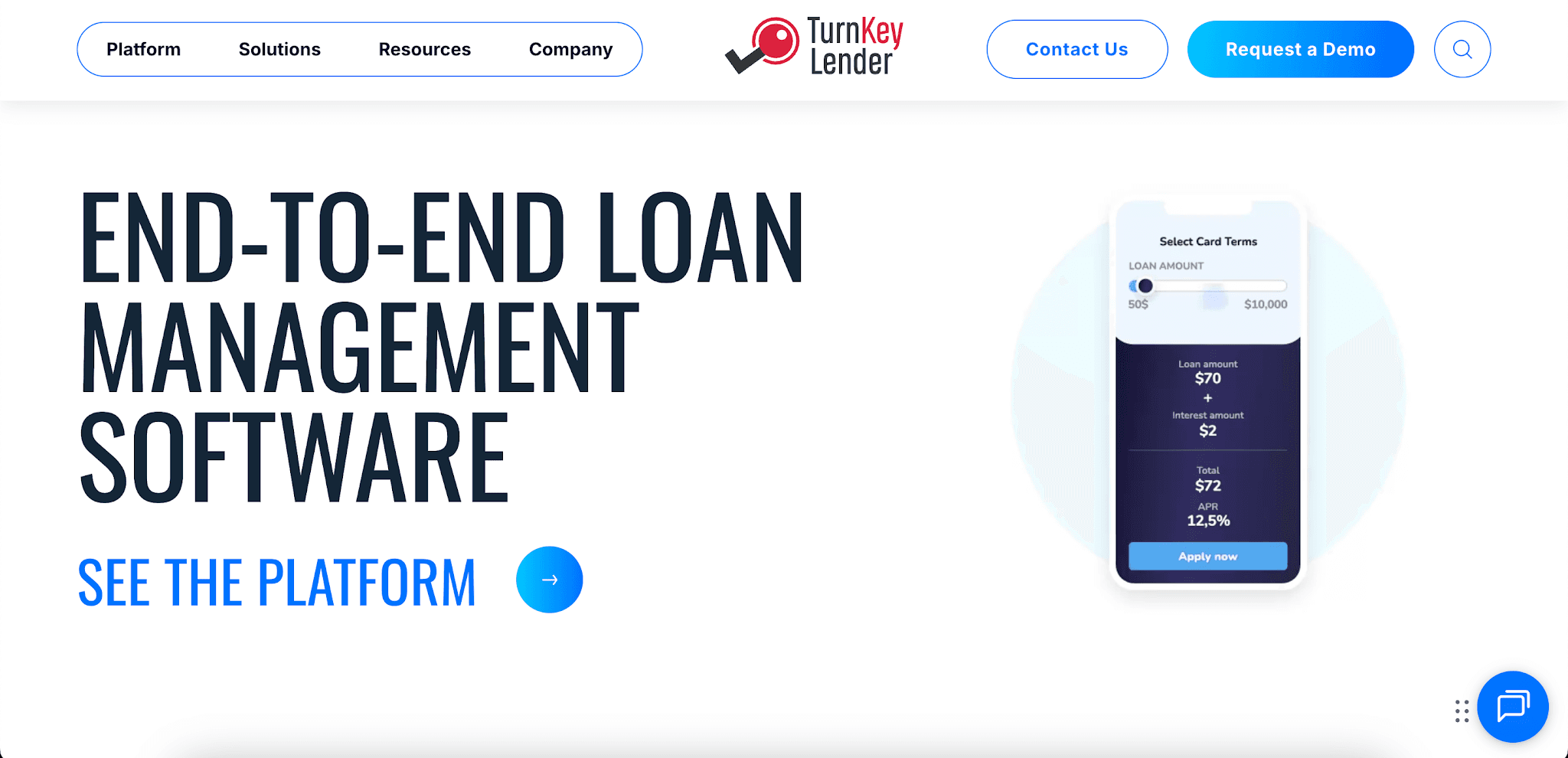
Image source: turnkey-lender.com
TurnKey Lender combines origination, credit decisions, servicing, and collections within one lending platform. It covers consumer, auto, point-of-sale, buy now, pay later (BNPL), and commercial finance.
Its decision engine uses traditional and alternative borrower data to assess applicants. Lenders can apply configurable rules to approvals and other underwriting workflows based on their credit policies.
Key Features
Digital applications: Borrowers can apply online, submit files, review terms, and e-sign agreements.
AI-powered credit scoring: The decision engine produces scoring reports that lenders can use during credit decisions.
Document management: Store and retrieve borrower files from the same platform used for credit processing.
Automated servicing: Generate repayment schedules, charge payments, apply fees, and send due-date reminders.
Collections tools: Track promises to pay, group delinquent accounts, restructure schedules, and record recovery activity.
Borrower portal and mobile app: Give borrowers digital access to payments, applications, files, and messages.
APIs and integrations: Connect TurnKey Lender with payment services, messaging tools, and core banking systems.
How Lenders Use TurnKey Lender
Lenders often use TurnKey Lender when they want origination and post-funding account management in the same system. After approval and disbursement, servicing tools manage payment schedules, fees, reminders, and account activity.
If an account becomes delinquent, collections tools continue from that existing account history. This gives lenders coverage for the entire lifecycle without relying on separate products for each stage.
3. HES LoanBox for Configurable Lending Workflows
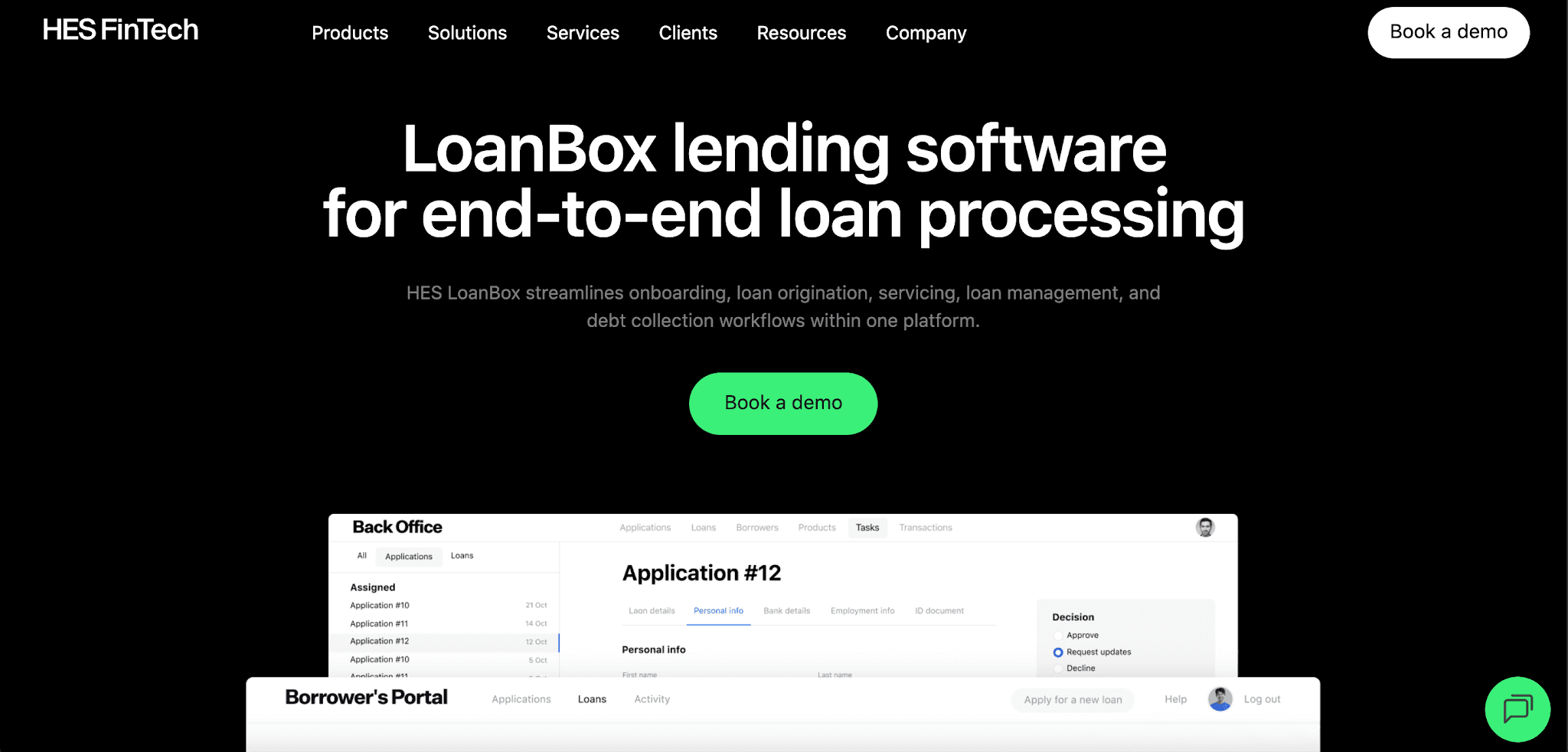
Image source: hesfintech.com
HES LoanBox combines loan origination software with servicing, account management, and collections modules. Banks and fintechs can use it for consumer credit and commercial lending.
Its modular structure lets users configure different products and approval paths within the same platform. Open APIs also help maintain seamless data flow between HES LoanBox and outside lending tools.
Key Features
Custom application flows: Adjust forms, required fields, borrower verification, and approval paths for different credit products.
GiniMachine AI decisioning: Combine AI scoring, business rules, and stop factors for manual, hybrid, or automated credit decisions.
Open banking and credit bureau integrations: Bring banking information and data from credit bureaus into applicant assessment.
Borrower portal: Applicants can submit documents, track approval status, and manage funded accounts.
Loan management: Configure disbursements, repayment schedules, accruals, write-offs, restructuring, and delinquency rules.
Reporting: Use dashboards and portfolio reports to monitor credit activity and collections.
Deployment options: Choose cloud or on-premises deployment based on infrastructure and data-residency requirements.
How Lenders Configure HES LoanBox
Lenders use HES LoanBox when different credit programs require different approval rules. Configurable workflows let financial institutions adjust scoring logic, user roles, calculation methods, and application paths by product.
GiniMachine also supports automated decisioning. Credit teams can set scoring thresholds and route higher-risk applications for additional review.
An optional developer license gives technical teams deeper control. Developers can extend platform functions, connect proprietary AI or machine learning models, and modify underwriting logic.
The borrower portal also improves the borrower experience by giving applicants a place to submit documents and track approval progress.
4. Finastra for Institutional Lending Infrastructure
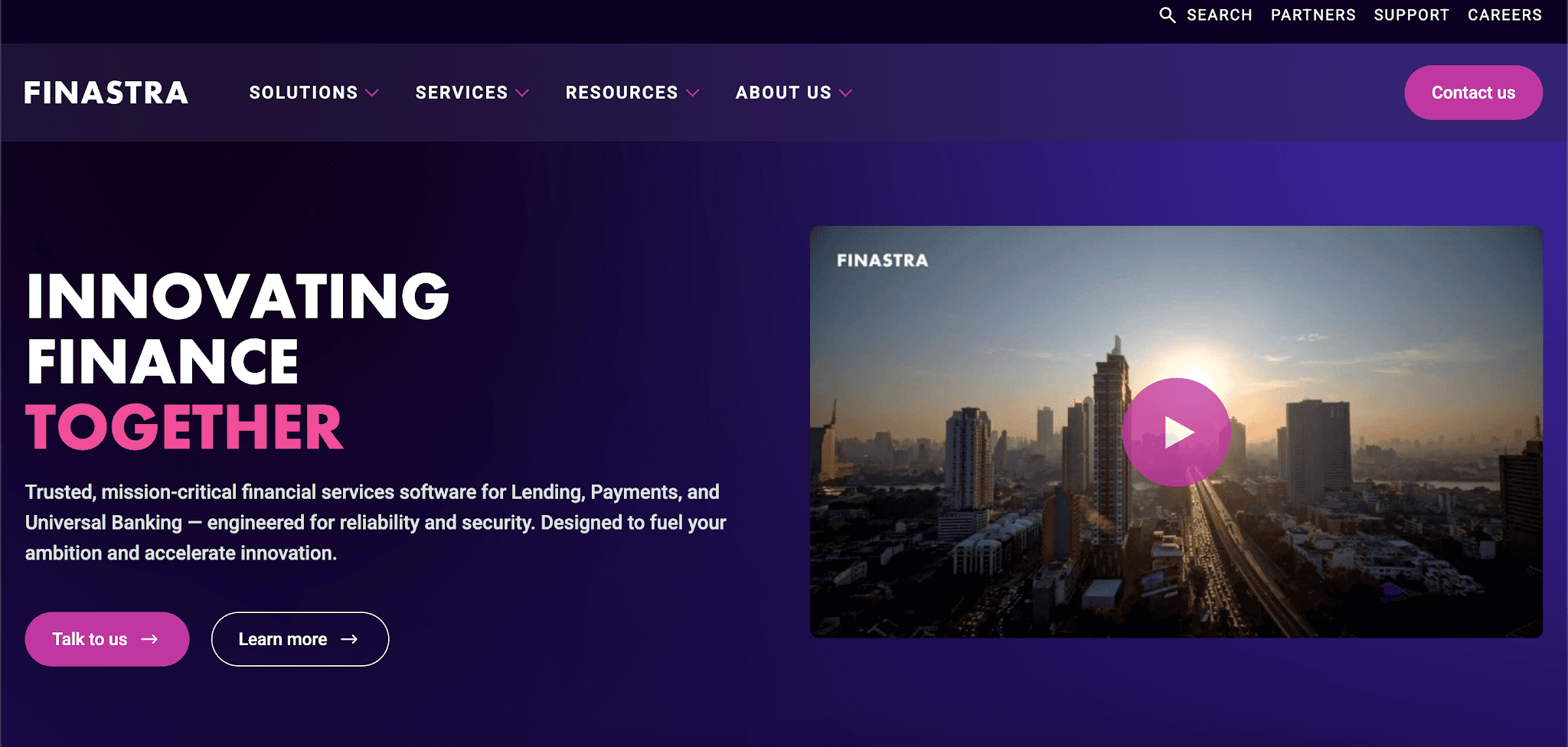
Image source: finastra.com
Finastra provides lending technology for banks and credit unions handling consumer, commercial, and mortgage credit. Its suite covers several stages of application processing, from borrower intake through credit decisions and closing.
The platform also gives borrowers a digital experience for submitting loan and deposit applications.
Key Features
DecisionPro: Applies configurable credit policies, scoring rules, and risk controls to direct and indirect consumer lending.
Originate: Provides digital application tools for loan and deposit products.
LaserPro: Generates closing documents using built-in regulatory content and jurisdiction-specific requirements.
Core integrations: Connects lending products with core systems and third-party data sources used by financial institutions.
How Financial Institutions Use Finastra
Banks and credit unions can connect Finastra’s lending products with their existing account and core infrastructure. This keeps origination activity connected to banking systems that already hold customer and account information.
Finastra updates LaserPro content as regulatory changes affect lending requirements. Institutions can use those updates to manage closing documents and reduce compliance risks without rewriting their own document libraries.
Finastra also handles higher loan volume and complex borrower or collateral structures. Automated decisioning and document generation can contribute to faster approvals by cutting routine processing time.
5. Nortridge for Servicing-First Loan Management

Image source: nortridge.com
Nortridge is a configurable loan management platform with integrated origination. It handles multiple loan types, including personal, installment, auto, specialty, and commercial loans.
That range gives lenders one servicing environment for accounts with different repayment structures. They can also connect an external loan origination system (LOS) when another platform already handles applications and approvals.
Key Features
Payment processing: Accept automated clearing house (ACH), debit cards, credit cards, and cash through supported payment services.
Payment waterfalls: Set how incoming funds apply to principal, interest, fees, escrow, or other account components.
Exception handling: Reverse transactions, defer billing periods, manage non-sufficient funds (NSF) returns, and handle suspense accounts.
Collections: Use automated workflows for overdue accounts, borrower follow-ups, and recovery activity.
Borrower records: Store contact information, documents, communication history, and user-defined fields in a single system.
Reporting: Access more than 150 standard reports, custom exports, and dashboards for portfolio and delinquency analysis.
Security controls: Use audit trails and role-based permissions to manage access and support compliance requirements.
Deployment and integrations: Choose cloud or self-hosted deployment and connect third-party tools through APIs.
How Lenders Use Nortridge
Nortridge gives lenders detailed control over repayment after funding. Payment rules determine how funds apply, while account tools handle reversals, skipped periods, and other exceptions.
Collections functions use the same account history when balances become overdue. Automated follow-ups and delinquency tracking reduce manual work during account recovery.
Reporting tools also show balances, delinquency trends, collection activity, and loan growth. Scheduled reports and dashboards give servicers direct access to portfolio activity without moving records into another reporting tool.
Nortridge falls primarily into the loan management and servicing category. Its origination capabilities extend the platform into earlier stages of the credit process.
How to Choose the Right Consumer Lending Software
Start with how your operation handles credit today. The right consumer lending software should address where processing takes too long or requires too much intervention.
Choose Based on Your Primary Lending Model
The credit products you offer can narrow the field before you compare detailed features. A fintech issuing revolving credit faces different operating demands than a credit union managing installment products.
Use your lending model to decide which capabilities deserve closer attention:
API-driven credit products: Look closely at integration options, product configuration, and account access.
End-to-end automation: Consider whether one platform can cover origination, decisions, servicing, and collections.
Highly customized operations: Prioritize configurable processes, deployment choices, and technical control.
Bank and credit union lending: Review credit policy controls, compliance tools, documentation, and connections with banking systems.
Servicing-heavy portfolios: Pay closer attention to payment rules, account changes, delinquency management, and reporting.
This gives you a practical first filter. From there, compare platforms against the parts of your operation that carry the most work or risk.
Identify Which Loan Stage Requires More Attention
Next, pinpoint where files spend the most time or require frequent intervention.
Origination starts with the application and continues through approval and funding preparation. Review how the platform handles intake, document collection, routing, and the customer experience during submission.
Underwriting covers credit decisions, risk policies, information sources, and exceptions. Look at how the software applies decision rules and sends complex cases to human reviewers.
Servicing begins after funding and continues through repayment. Payment processing, account changes, borrower communication, delinquency, collections, and reporting all affect how efficiently lenders manage active accounts.
A long feature list can hide weak spots in the workflow you care about most. Prioritize the stage where software can remove the most unnecessary handling.
Decide How the Platform Will Connect With Your Technology Stack
Map the new platform against the technology you already use before making a decision. For example, a connection with customer relationship management (CRM) software can keep borrower records available during sales and lending workflows.
Pay particular attention to:
API access and third-party integrations
Access to account and borrower information
Cloud or on-premises deployment
Security and permission controls
Regulatory oversight
Internal technical resources
Implementation timelines
Plans for specialized AI automation
Integration quality also affects how often users re-enter information. Reliable connections can reduce duplicate data entry when borrower or account records pass between applications.
Your core platform doesn’t have to perform every specialized task. Once the foundation is in place, AI can extend specific workflows that still require intensive file analysis or borrower communication.
Add an AI Layer to Your Consumer Lending Software Stack
Core consumer lending software manages structured records such as balances, payments, decisions, and servicing activity. AI can extend that foundation into unstructured file analysis and borrower communication.
For mortgage operations, Addy brings that automation into specific pre-underwriting and processing tasks.
Add AI Automation to Existing Mortgage Workflows
Addy acts as a mortgage-specific AI layer for file processing and pre-underwriting. Its Document AI reads borrower files, classifies them, and extracts information from 1003s, W-2s, 1040s, bank statements, and pay stubs.
Addy verifies extracted information to improve accuracy and flags missing or inconsistent items that can affect loan quality.
Addy checks automated underwriting system (AUS) findings, product conditions, and submitted files to identify missing items. The Processing Checklist organizes the results and can prepare findings in under five minutes.
When something is missing, AI agents can contact borrowers or brokers by email, text, or phone. Lenders can train those agents on internal rules, guidelines, rate sheets, and other information used in their workflow.
These lending solutions let mortgage teams add AI to specific tasks without moving their operation onto a new core platform.
Bring Mortgage Pre-Underwriting Into ChatGPT
Addy integrated with OpenAI to launch a ChatGPT app for mortgage pre-underwriting. It brings Addy’s mortgage-focused AI agents into ChatGPT for borrower pre-qualification and file preparation.
From the conversation, users can analyze loan scenarios and review income, assets, and credit. The app can also identify missing items and generate loan processing checklists in roughly five minutes.
This gives lenders another entry point for structured pre-underwriting work. A borrower question or loan officer request can start a workflow that produces findings for professional review.
Addy doesn’t make formal underwriting decisions or replace licensed mortgage professionals. It handles preparation and analysis that can help teams close more loans with less time spent on routine file work.
Increase Loan Processing Capacity With Addy
Once you’ve chosen your core lending platform, the next opportunity is increasing how much work your mortgage operation can process.
Addy gives loan officers deeper insights into file status, missing items, and borrower readiness. That visibility helps them identify which files require attention without spending as much time searching through records.
That added capacity can help lenders serve more customers as production expands. It can also contribute to revenue growth as loan officers handle higher volume.
FAQs About Consumer Lending Software
What does consumer lending software do?
Consumer lending software helps lenders manage applications, credit decisions, payments, servicing, collections, and reporting. Some providers combine these functions in a single platform.
What types of loans can consumer lending platforms manage?
These platforms often manage personal loans, auto loans, installment credit, lines of credit, and revolving credit. Some providers also offer separate tools for small business loans and other commercial products.
How does consumer lending software connect with CRM systems?
Consumer lending software connects with CRM systems through APIs or built-in integrations. These connections can sync borrower details and records for approved applications while reducing duplicate data entry.
Start closing more loans – Book your demo today
Stay ahead of the competition and discover how AI can accelerate your loan origination process, reduce manual work, and help you close more deals in less time. Book a demo today and start experiencing the future of lending.