Michael Vandi
Mortgage teams spend hours reviewing bank statements, checking figures, and flagging possible fraud before underwriting. Ocrolus and MoneyThumb shorten that work, but their capabilities differ.
Lenders researching MoneyThumb and Ocrolus competitors often compare document coverage, fraud detection, turnaround times, and system connections.
This comparison examines those areas and their limitations for mortgage processing. It also looks at Addy as an alternative for borrower follow-ups, condition review, and loan preparation.
TL;DR
The Ocrolus vs MoneyThumb comparison comes down mainly to scope and mortgage workflow coverage.
Ocrolus reviews more lending records, including income, assets, applications, credit, and collateral.
MoneyThumb emphasizes statement conversion, transaction analysis, accounting exports, and fraud scoring.
Both platforms connect with lending software, but neither provides complete borrower outreach or file preparation.
Addy adds broader document automation, condition review, borrower communication, and underwriting preparation.
Ocrolus Overview
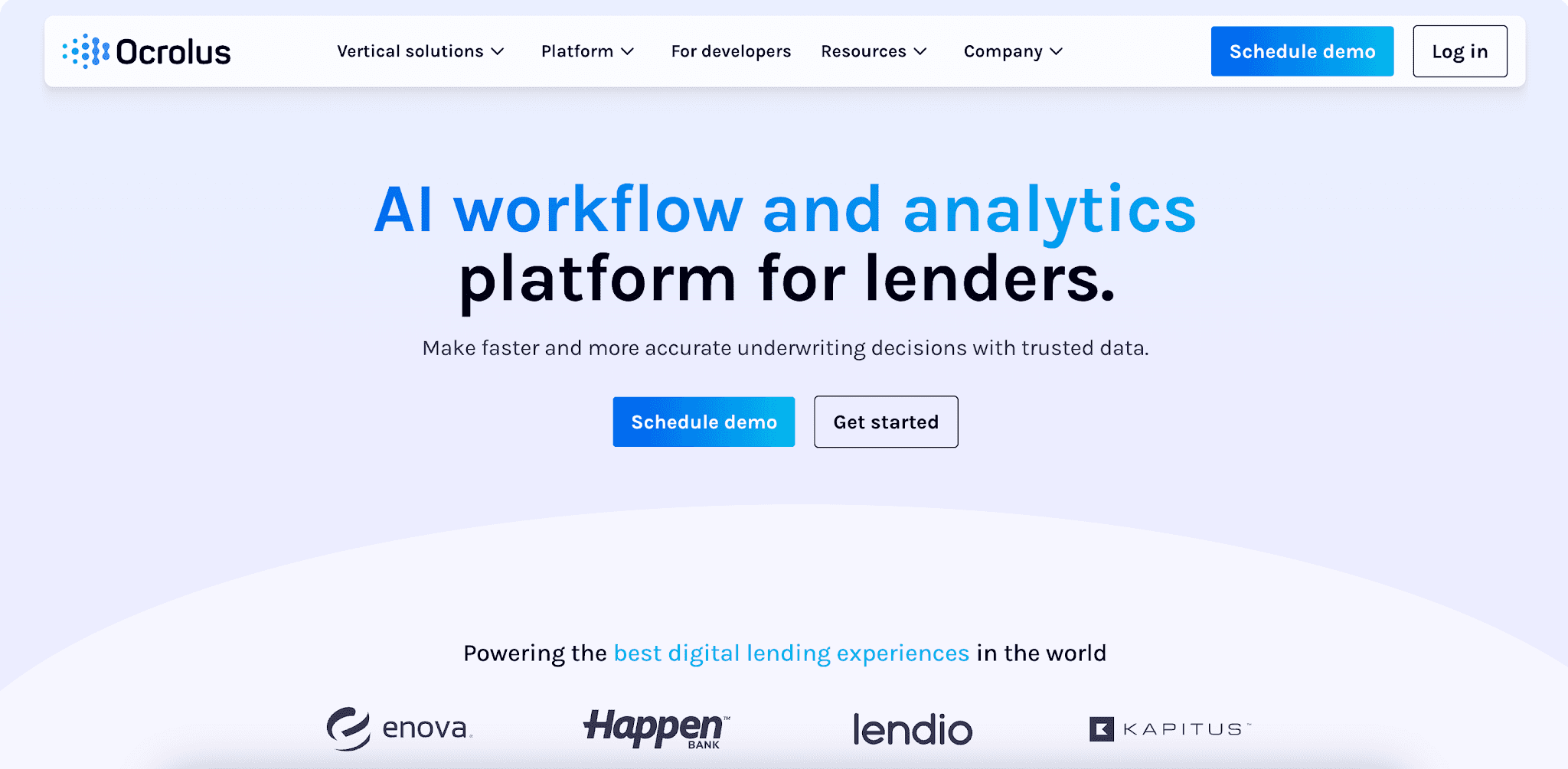
Image source: ocrolus.com
Ocrolus is a financial document processing platform used in mortgage, small-business, and consumer lending. It classifies submitted files and converts key fields into structured data for loan decisions.
Its fraud detection checks supported files for tampering, missing details, invalid dates, unusual fonts, and formatting inconsistencies.
Ocrolus uses a human-in-the-loop process for low-confidence results. Verification agents assess uncertain findings before Ocrolus Data Professionals examine difficult cases. This review may extend turnaround times for high-risk submissions.
The platform includes the following features:
Indexes more than 2,000 document types, including income, asset, tax, and application records
Extracts details from bank statements, pay stubs, and tax forms, cutting manual data entry
Calculates borrower income and assets while providing cash flow analysis
Examines credit, collateral, loan conditions, and automated underwriting findings
Compares borrower records with Encompass 1003 application data to flag discrepancies
Logs processing activity for audits
Sends results to existing systems through an application programming interface (API)
These capabilities extend Ocrolus into underwriting review, although difficult files may require additional verification.
MoneyThumb Overview
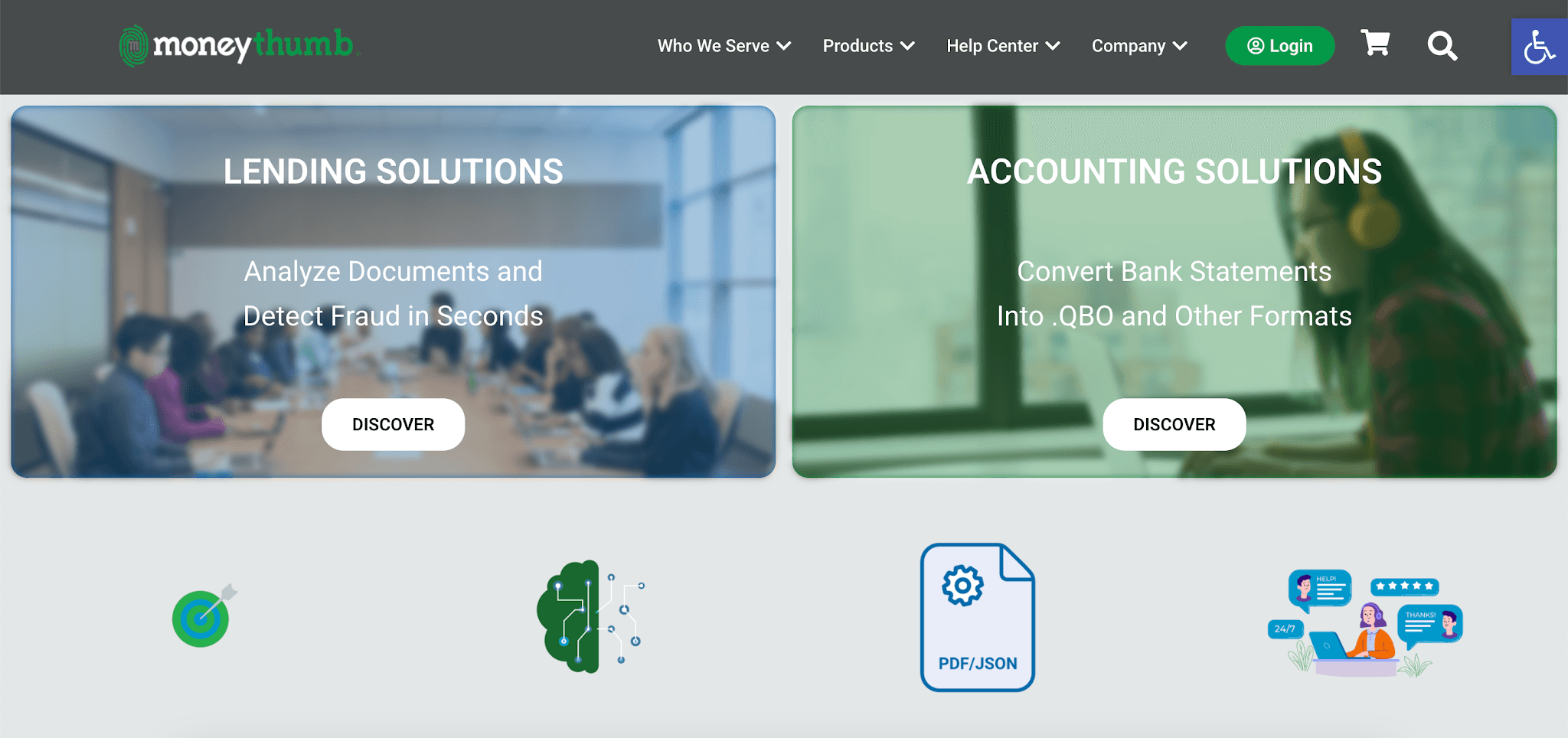
Image source: moneythumb.com
MoneyThumb converts bank and credit card statements into transaction files used by lenders and accounting firms. It reads digital PDFs, scans, faxes, and image-based files.
PDF Insights reviews up to 24 months of account activity and summarizes how money enters and leaves an account. Thumbprint adds fraud detection by checking calculations and document formatting against profiles from thousands of financial institutions.
Users can upload files through the web app or send them through its REST API. Connected systems receive the analysis and scorecards in JSON format.
The platform includes the following features:
Exports transactions to CSV, Excel, and accounting software, avoiding repeated entry
Calculates account balances, cash flow, and true revenue for credit review
Flags overdrafts, insufficient funds, debt payments, and low-balance days that may affect risk
Excludes loans and transfers from revenue totals through adjustments and addbacks
Reconciles transaction totals with statement summaries to find calculation errors
Detects missing pages, altered formatting, and possible document tampering
Automates data extraction to reduce manual entry
MoneyThumb keeps a narrower scope, with most functions centered on statement conversion, transaction review, and authentication.
Key Differences Between Ocrolus and MoneyThumb
Ocrolus and MoneyThumb take different approaches to document handling in lending workflows. The comparison below covers document scope, financial analysis, fraud checks, processing times, and mortgage system integrations.
Document Processing and Coverage
Ocrolus can process complex financial documents used for income verification, application checks, and underwriting review. Its broader document coverage gives mortgage lenders more records to examine before making a credit decision.
MoneyThumb accepts several file categories, yet its main role remains bank and credit card statement analysis. Its narrower data-capture process suits organizations that handle large volumes of statements.
Data Extraction and Financial Analysis
MoneyThumb converts account activity into extracted data for revenue, balance, and transaction review. Its financial analysis focuses on cash flow and payment activity.
Ocrolus draws financial data from more parts of the borrower file. Underwriters can examine income, assets, credit, collateral, and application discrepancies through the same review process.
Fraud Detection and Document Verification
Ocrolus compares submitted records, borrower activity, and captured fields. It flags invalid values, mismatches, and low-confidence findings that may require manual review.
MoneyThumb checks statement layouts and calculations against profiles from thousands of financial institutions. It then assigns an authenticity score for risk assessment.
Processing Times
MoneyThumb claims PDF Insights and Thumbprint return results in under five seconds for many submissions. That timeframe applies to its statement analysis and fraud scoring products.
Ocrolus automates much of the review but sends uncertain items to verification agents or Data Professionals. This added check may extend the turnaround before users receive the results.
Mortgage System Integrations
Ocrolus connects directly with Encompass and offers API access. Its dashboard gives non-technical users an easier way to review findings without reading raw system data.
MoneyThumb also offers a web app alongside its REST API. Connected software can receive scorecards and analysis in JSON format.
Both platforms send results into existing systems, but their automation stops after document review. Staff still need separate software for borrower outreach, guideline research, condition management, and file preparation.
Ocrolus and MoneyThumb Limitations for Mortgage Teams
Extracting information from financial records shows reviewers what the submitted documents contain. It doesn’t confirm whether those details match loan applications, resolve underwriting findings, or meet compliance requirements.
When income or asset evidence is missing, staff identify the required record and contact the borrower or broker. They then log the response and update the loan origination system (LOS). Unsynced client data can result in repeated entry, missed conditions, or an incomplete submission.
Mortgage teams need automation that continues after document review. Addy uses artificial intelligence to compare file contents with conditions and lender guidelines. Its agents request missing records, update file information, and prepare submissions for underwriting teams.
Book a demo with Addy to see how mortgage automation can cover more than document review.
Addy: A Mortgage-Focused Alternative to MoneyThumb and Ocrolus
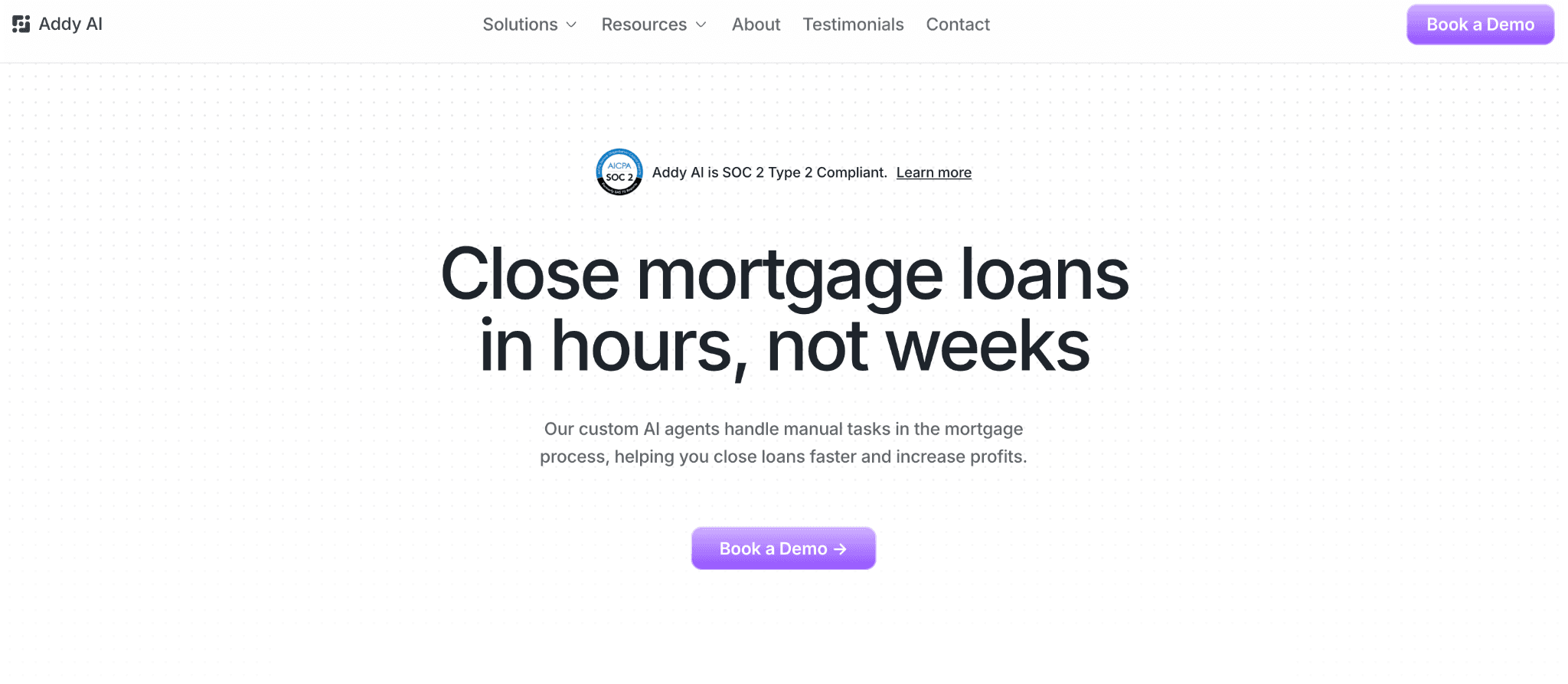
Addy is a mortgage-specific AI platform for document review, condition management, borrower contact, and file preparation. It connects these tasks within the same lending process.
Review and Organize Borrower Documents
Addy can process financial documents, including 1003s, tax returns, bank statements, and pay stubs. Its document AI reads unstructured documents and assigns incoming files to the correct application.
Computer vision and AI models help Addy extract data accurately from varied layouts. The platform also flags incomplete or conflicting information before submission.
Addy performs accurate bank statement extraction, giving processors key account details without repeated entry. This can lower the risk of human error during file preparation.
Users can search large files through natural language queries (NLQ). Addy returns details such as an interest rate or authorized signer without requiring a page-by-page review.
Check Guidelines and Prepare Loan Files
The Processing Checklist compares file contents with automated underwriting findings, product conditions, and lender rules. Pending and completed requirements show processors what still needs attention.
Users can search Fannie Mae, Freddie Mac, non-qualified mortgage, and lender-specific guidelines. The results provide relevant criteria for decision-making during file review.
Addy also offers pre-underwriting through ChatGPT. Mortgage professionals can assess loan scenarios, identify missing documents, and generate processing checklists from the conversation.
Resolve Conditions Through Borrower and Partner Outreach
When Addy finds an outstanding record, an agent can contact the borrower or broker by email, text, or phone. Follow-ups reflect the file status and lender instructions.
Agents can also update title representatives and real estate partners when their input is required. Those updates reach the people responsible for clearing open conditions.
Mortgage companies in financial services can use these functions to process high volumes of loan files without repeating the same coordination tasks.
Automate More of the Mortgage Process With Addy
MoneyThumb centers on statement conversion, accounting exports, fraud scoring, and cash flow analytics. Ocrolus covers more document categories and adds income, asset, condition, and underwriting review.
Mortgage financial operations continue after the software extracts the information. Addy checks file contents against guidelines, identifies unresolved conditions, requests missing records, and updates the LOS.
It also prepares submissions for underwriting and contacts borrowers during document collection. These functions save financial professionals valuable time on follow-ups, file updates, and submission preparation.
Addy gives lenders broader automation when bank statement analysis alone doesn’t cover their processing needs.
FAQs About Ocrolus vs MoneyThumb
Is Ocrolus better than MoneyThumb for mortgage lenders?
Ocrolus covers more document types and underwriting tasks than MoneyThumb. MoneyThumb focuses on statement conversion, transaction analysis, and fraud scoring. Ocrolus may route uncertain submissions to human review.
Does MoneyThumb analyze documents other than bank statements?
Yes. MoneyThumb can analyze credit card statements, tax documents, pay stubs, W-2s, and related records. Its recognition software doesn’t rely on fixed templates for U.S. bank statement formats.
What is the best alternative to Ocrolus and MoneyThumb?
Among MoneyThumb and Ocrolus alternatives, Addy covers a wider set of mortgage tasks. It includes guideline checks, condition review, borrower outreach, and underwriting preparation.
Start closing more loans – Book your demo today
Stay ahead of the competition and discover how AI can accelerate your loan origination process, reduce manual work, and help you close more deals in less time. Book a demo today and start experiencing the future of lending.