Michael Vandi
The final stages of a mortgage don’t have to be complicated. Mortgage closing software helps lenders prepare documents, collect signatures, coordinate closing tasks, and keep the process organized.
These tools work alongside broader mortgage and lending software used throughout the origination process. This article compares five leading options and explains how Addy works earlier in the process to review files and resolve conditions.
TL;DR
Here are the top five mortgage closing software options for lenders in 2026:
DocMagic
Stavvy
ICE Mortgage Technology
Blend Close
nCino Mortgage Suite
What Is Mortgage Closing Software?
Mortgage closing software manages the digital work required to finalize a home financing transaction. It centralizes settlement details, signatures, and transaction records within one workflow.
These platforms swap out paper tasks for electronic files, e-signatures, secure sharing, and digital recordkeeping. Broader options also connect lenders with settlement agents and carry records into the post-closing period.
Platform features vary considerably. Basic tools often handle signatures, while more full-featured platforms also cover settlement coordination, recording, and electronic asset management.
Mortgage Closing Software vs. Loan Origination Software
Loan origination software manages the wider mortgage origination process, from application through processing and approval. Closing technology takes over near the end, when teams prepare the transaction for signing and settlement.
Most closing platforms link to a loan origination system (LOS) rather than replace it. This connection passes required information into the final stages without asking users to enter the same details again.
Mortgage Closing Software vs. E-Closing Software
An e-closing platform focuses on completing the signing portion of a transaction electronically. Depending on the setup, that may include e-signatures and remote online notarization.
Mortgage closing software may cover more than just the signing event. Capabilities can include disclosures, settlement coordination, recording, e-notes, e-vaults, and final record delivery.
Top 5 Mortgage Closing Software Platforms in 2026
The following platforms handle different parts of mortgage closings, from disclosures and execution to settlement coordination and electronic asset management.
1. DocMagic for Mortgage Disclosures and Compliance
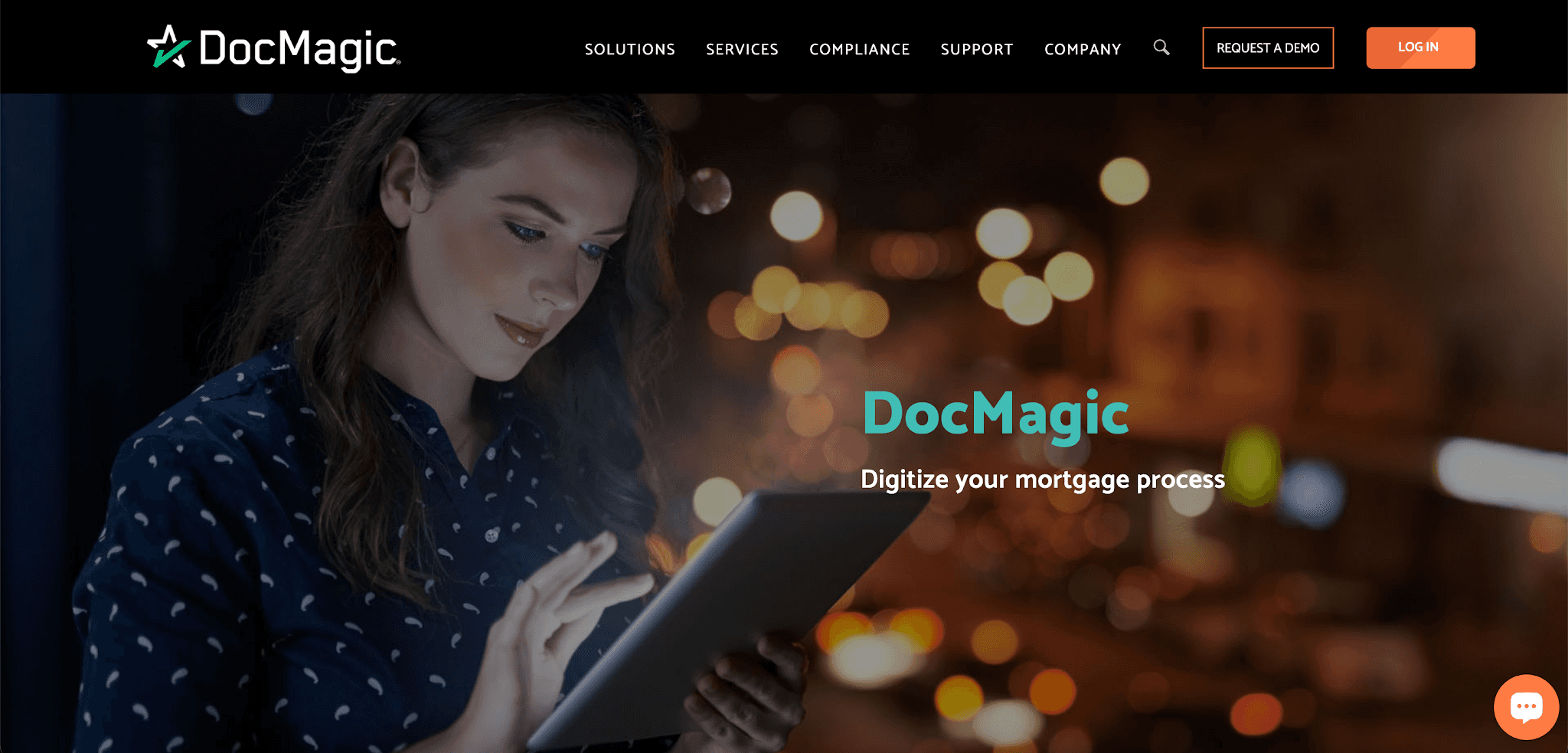
Image source: docmagic.com
DocMagic helps mortgage lenders prepare and execute digital closing files through connected signing, notarization, and appraisal delivery tools. ClickSign shows signer status and records each signature event with date and time stamps, giving users a documented audit trail.
Key features include:
ClickSign e-signature: Shows who has signed, tracks outstanding signatures, and records each completed step.
E-notary: Supports remote online notarization and in-person electronic notarization (IPEN) for eligible transactions.
Appraisal e-delivery: Records consent and delivery activity for electronic appraisal delivery under the Equal Credit Opportunity Act (ECOA) Valuations Rule.
SmartCLOSE: Gives lenders and settlement providers a secure workspace to exchange fees, closing information, and updates before signing.
TRID tolerance monitoring: Compares changed values so users can identify fee differences that require attention.
LOS integrations: Provides bidirectional connections with supported loan origination systems.
Automated event logging: Uses automation to record activity throughout the transaction.
SmartCLOSE brings lender and settlement-provider communication into a shared workspace before signing. Users can review fee updates and closing details within the same transaction record rather than tracing separate email threads.
Bidirectional LOS integrations transfer closing information between DocMagic and supported origination systems. This can streamline the handoff as the original file progresses toward settlement.
2. Stavvy for Digital Signatures and Hybrid eClosing
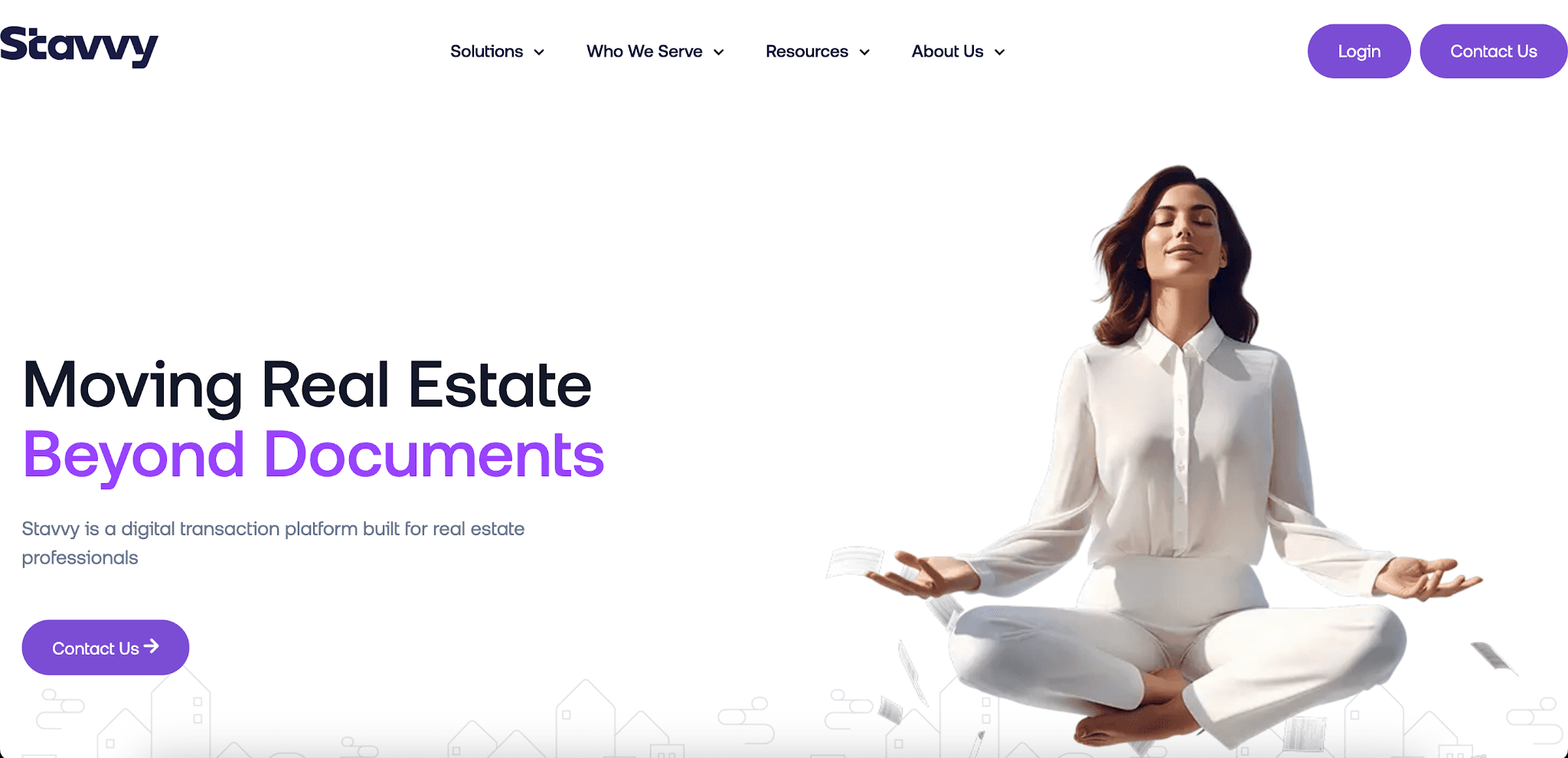
Image source: stavvy.com
Stavvy provides several electronic closing methods for lenders handling different signing and notarization requirements. Transactions can remain partly paper-based or move fully online when local rules permit.
Its Eligibility Engine checks whether electronic notarization and recording options apply to a property. Closing teams can use those results before preparing the signing appointment, rather than researching county and state requirements separately.
Key features include:
Hybrid and full e-closing: Handles transactions that combine paper and electronic steps or move fully online.
E-sign: Records signer consent, completed signatures, and execution history.
Remote online notarization (RON): Uses identity verification, video conferencing, and digital signatures for remote notarizations.
IPEN: Lets signers and notaries execute eligible files electronically at the closing table.
E-note: Supports electronic promissory notes for qualifying transactions.
Eligibility Engine: Checks RON, IPEN, and e-recording availability for individual real estate transactions or portfolios.
API access: Lets lenders, servicers, and title companies bring eligibility results into existing systems.
This setup connects eligibility checks with document execution so teams know which digital closing methods are permitted before selecting how the transaction will be signed and notarized.
3. ICE Mortgage Technology for Closing and Settlement Coordination
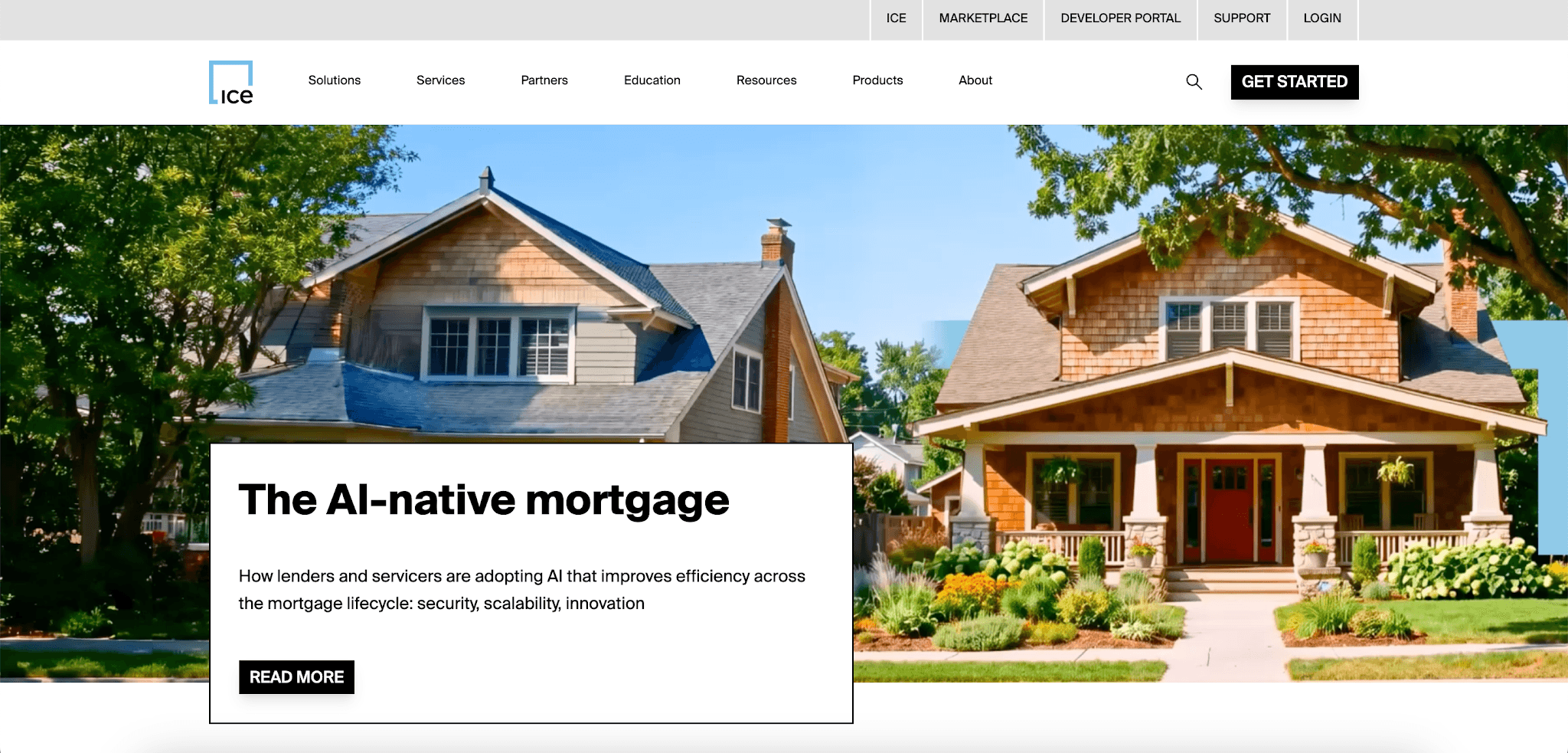
Image source: mortgagetech.ice
ICE Mortgage Technology connects closing activity through Encompass eClose and Simplifile. Encompass eClose carries files from document draw through signing, while Simplifile handles settlement coordination, recording, and final record delivery.
For real estate closings, that connection gives lenders and settlement agents a more streamlined process without switching between unrelated systems.
Key features include:
Closing document ordering: Encompass eClose prepares files inside Encompass, keeping origination details connected to the closing record.
Multiple closing types: Uses the same Encompass workflow for ink, hybrid, and e-note transactions.
E-signatures: Gives borrowers electronic access to eligible forms before or during closing.
Settlement collaboration: Simplifile gives the parties involved a shared space to exchange files, discuss fees, and track updates.
Closing Disclosure fee coordination: Lenders and settlement agents compare fee information and address errors before finalizing disclosures.
E-notary and e-recording eligibility: Provides county-level guidance on whether electronically notarized records qualify for recording.
E-recording: Sends eligible land records directly to participating county offices without relying on print copies or courier delivery.
Post-closing delivery: Returns trailing records, final fees, recorded files, and title policies electronically, which can shorten post-settlement cycle times.
Together, Encompass eClose and Simplifile connect origination, settlement, recording, and post-closing activity within ICE’s mortgage technology ecosystem.
4. Blend Close for Borrower-Facing Digital Closings
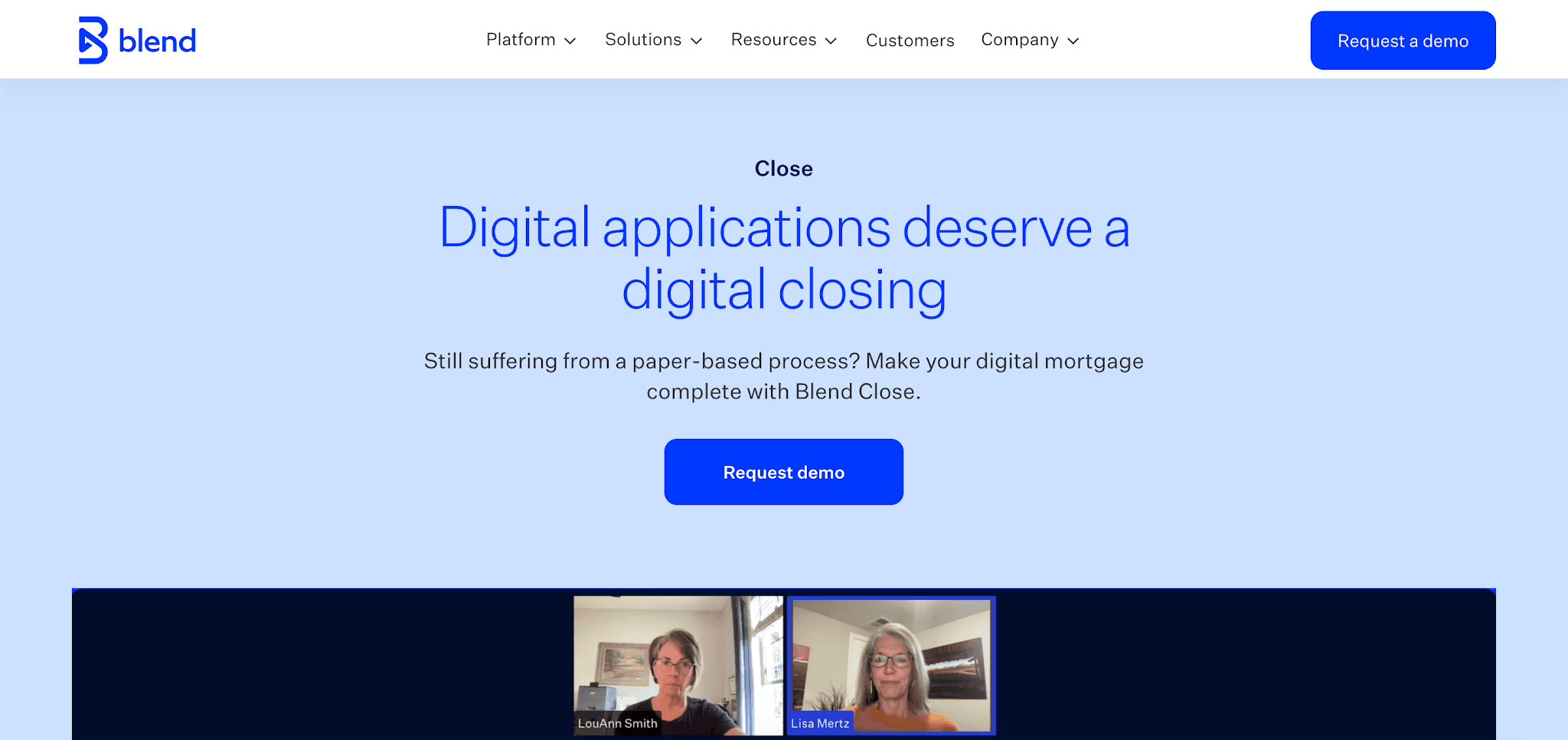
Image source: blend.com
Blend Close carries Blend’s borrower experience into the final signing stage. Banks, independent mortgage banks, and credit unions can use traditional, hybrid, e-note, or remote online notarization closings.
Borrowers can review eligible forms before the appointment, which reduces paperwork and shortens time spent signing in person. Loan officers receive status guidance, while settlement agents use a dedicated workspace to exchange closing information.
Key features include:
Traditional closings: Keeps wet-sign workflows available when electronic execution isn’t used.
Hybrid closings: Moves eligible forms to e-sign before the appointment, helping borrowers close faster with fewer wet-sign pages.
Hybrid with e-note: Adds an electronic promissory note, which can shorten delivery to the secondary market.
RON: Adds convenience by letting eligible signers complete notarization online from another location.
Borrower review and e-sign: Gives borrowers early access to eligible forms and records completed signatures before closing.
Settlement Agent Workspace: Gives settlement partners access to closing files, tasks, and lender communication during preparation.
Secure file management: Stores records and tracks activity during execution.
LOS integrations: Transfers closing data between Blend Close and supported origination systems, reducing duplicate entry during the handoff.
These functions connect borrower signing with settlement preparation through the final closing stage.
5. nCino Mortgage Suite for Digital Closing and eMortgage Management
Image source: ncino.com
nCino Mortgage Suite connects borrower access, settlement coordination, and e-mortgage asset management in one platform. Single sign-on keeps borrowers in the same account from application through closing.
The Closing Portal gives lenders and settlement agents a shared space for files, tasks, and transaction updates during pre-closing and execution. After signing, nCino carries e-notes through its e-vault and MERS e-registry connections for storage, registration, and transfer.
Key features include:
Single sign-on: Keeps borrowers in one account as the transaction progresses from application to closing.
E-signatures and disclosure tracking: Records acceptance, completion status, and activity for disclosures and closing forms.
Closing Portal: Gives lenders and settlement agents shared access to files, tasks, and status updates.
RON: Enables eligible signers to complete notarization remotely.
E-note: Generates a tamper-sealed electronic promissory note after signing.
E-vault: Protects the authoritative e-note and prepares it for an efficient transfer to the secondary market.
MERS e-registry: Registers the e-note and tracks transfers between authorized parties.
Digital asset management: Carries electronic records from closing into servicing and secondary-market delivery, which reduces costs associated with paper storage and shipping.
nCino extends its closing workflow into the management and transfer of electronic mortgage assets after execution.
What to Look for in Mortgage Closing Software
A comprehensive comparison starts with the challenges the technology has to solve during an actual transaction. Consider signing methods, integrations, compliance controls, settlement coordination, and final delivery.
Closing Types and E-Signature Options
For mortgage closings in multiple jurisdictions, confirm which formats the platform can support. Traditional, hybrid, IPEN, RON, e-note, and fully digital closings follow different notarization and recording rules.
Eligibility checks matter before the appointment is scheduled. They tell closers which signing method the property allows, so the correct package can be prepared in advance.
Mortgage Document and Disclosure Capabilities
Assess how the software prepares, delivers, and tracks disclosures before execution. Version controls need to identify which copy went to the borrower and which one received signatures.
E-delivery and e-signature tracking create an accurate history of consent, delivery, and completion dates. That record helps when fees change, or a disclosure requires another delivery before closing.
LOS and Mortgage Technology Integrations
Check how information travels between the platform and the lender’s LOS, POS, pricing engine, title technology, servicing system, and document provider. The main question is whether updates flow both ways or stop after the initial import.
Two-way synchronization can improve productivity when fees, borrower details, or statuses change late in the process. Users won't have to enter the same update in multiple systems.
Settlement and Title Collaboration
Lenders, settlement agents, title partners, and other real estate professionals require different information before settlement. Role-based access can simplify communication by giving each participant the files, instructions, and tasks connected to their responsibilities.
Status tracking provides insights into unsigned forms, fee changes, and unresolved items. Recorded updates also give the parties a transaction history when questions arise before signing.
Compliance and Transaction Security
Security goes beyond encrypting stored files. Identity verification confirms the signer, electronic consent records agreement, and tamper controls reveal changes after execution.
Audit trails add another layer by recording who completed each action and when. Compliance teams can use that history to investigate exceptions or document an audit response.
Post-Closing Capabilities
Pay attention to what happens after everyone signs. E-recording allows lenders to submit eligible instruments electronically and monitor county acceptance, recording status, or rejection reasons.
For e-notes, verify how the platform protects the authoritative copy and records ownership transfers. You should also check how recorded files and final title policies reach investors or servicing systems after settlement.
How Addy Helps Prepare Mortgage Files Before Closing
Addy handles processing work before a file reaches closing and connects with the lender’s existing technology. Its benefits include earlier issue detection and less repeated work before the closing handoff.
Review Mortgage Documents Before Closing
Addy’s Document AI reads unstructured mortgage files and converts their contents into structured loan data. It extracts and verifies borrower information from 1003s, tax forms, pay stubs, bank statements, and similar records.
The system classifies incoming files and assigns them to the correct loan. It also flags items that warrant attention, such as a significant deposit on a bank statement, so loan processors know where to look.
Extracted information syncs with connected LOS, CRM, and POS platforms. This seamless integration can increase productivity by reducing duplicate entry and manual matching between incoming files and loan records.
Find Missing Documents and Unresolved Loan Conditions
Addy compares the file with automated underwriting system (AUS) findings, lender guidelines, and product-specific conditions. This comparison shows processors which requirements remain unresolved before the file advances.
The Processing Checklist organizes findings by status and can return results in under five minutes. Processors can identify missing items, resolve open conditions, and prepare the file for underwriting or closing.
That earlier review reduces the chance that a closer discovers an outstanding processing issue near the end of the transaction.
Automate Borrower and Broker Follow-Ups
Addy’s AI agents contact mortgage customers or brokers when the file still requires information. Requests can go through email, text, or phone based on file status, and follow-ups continue until the requested item arrives.
Agent training can incorporate lender guidelines, rate sheets, internal rules, and communication requirements. Lenders can configure outreach around the processes their business already follows.
This leaves loan officers more time for exceptions, complex files, and borrower service while automated requests handle routine follow-up.
Use Addy for Mortgage Pre-Underwriting in ChatGPT
Addy brings its AI agents into ChatGPT for pre-underwriting. A loan officer can use the app for borrower pre-qualification, income and asset analysis, credit review, and scenario analysis.
The app turns that information into structured pre-underwriting findings in roughly five minutes. Mortgage teams can use those findings to assess the file before it enters formal underwriting.
Addy assists with preparation and analysis. Licensed professionals remain responsible for lending decisions and formal underwriting.
Get More Loan Files to Closing With Addy
Dedicated mortgage closing software manages execution and settlement once a file enters the final stage. Addy works earlier, giving lenders the ability to address essential file requirements before that handoff.
Fewer missing items and open conditions reach the final handoff. Teams handling the final stages can concentrate on signing, settlement coordination, and final delivery rather than tracing unresolved processing issues.
FAQs About Mortgage Closing Software
What is the three-day rule for mortgage closing?
Lenders generally provide the Closing Disclosure form at least three business days before consummation. This gives buyers time to compare final terms and costs with the Loan Estimate.
Can mortgage closing be done electronically?
Yes. An e-closing allows some or all closing paperwork to be accessed and signed electronically, including through hybrid transactions.
Electronic notarization and recording requirements vary by jurisdiction. The workflow also has to account for real estate attorneys, title companies, or law firms already involved in settlement.
Does e-closing improve the borrower experience?
It can. Electronic closings give consumers more time to review paperwork beforehand and can shorten the signing process. Remote options also let eligible borrowers complete notarization without traveling to an in-person appointment.
What software do mortgage underwriters use?
Mortgage underwriters commonly use automated underwriting systems alongside loan origination and verification tools. Fannie Mae’s Desktop Underwriter and Freddie Mac’s Loan Product Advisor are two widely used AUS options.
Start closing more loans – Book your demo today
Stay ahead of the competition and discover how AI can accelerate your loan origination process, reduce manual work, and help you close more deals in less time. Book a demo today and start experiencing the future of lending.