Michael Vandi
A mortgage file can stall before anyone reviews it. Missing information, late document requests, and weak communication can stretch closing timelines and frustrate borrowers.
Lenders can’t afford that in 2026. According to Intel Market Research, more than 72% of lenders prioritize digital lending systems.
In this article, we’ll explore loan origination best practices lenders can apply from application intake through closing preparation.
TL;DR
Loan origination best practices improve file quality through consistent intake, review, compliance, and borrower communication.
Policy-based approvals and standardized intake prevent incomplete or ineligible applications from reaching underwriting.
Automated stipulations and exception routing keep conditions visible and send complex files to qualified reviewers.
File tracking, connected systems, and performance reporting reveal stalled applications, channel results, and staffing needs.
Addy can review documents, identify missing items, contact borrowers, and sync verified information with lending platforms.
1. Apply Policy-Driven Loan Approval Rules
A loan origination system (LOS) checks a loan application against preset approval criteria when it arrives. Its credit-scoring rules compare the applicant’s score to the program threshold.
The system also checks whether monthly debt obligations meet the program’s debt-to-income (DTI) limit. Together, these checks confirm whether the applicant meets basic product requirements.
Applications that meet those criteria can proceed to document verification without a full underwriter evaluation. Files with income discrepancies, unusual credit history, or policy exceptions require underwriter evaluation.
Lenders should update the criteria whenever agency, investor, or internal lending policies change. They should compare approval results with repayment performance and defect findings to monitor portfolio quality.
This method keeps routine decisions consistent without holding standard files in underwriting queues.
2. Standardize Mortgage Application Intake
A consistent application process asks for the right information before review starts. Required fields should match the borrower’s income source and selected program.
Salaried borrowers may submit recent pay stubs, and self-employed borrowers may need tax returns and business records. These records give reviewers the income evidence required for the selected program.
Set document collection rules before submission, so applicants know which records qualify. State the required date range and accepted file format for every request.
Use validation checks to catch missing identity, employment, or property details. Applicants can correct incomplete entries before the file reaches processing.
Better data quality gives reviewers enough information for the first pass. After intake is complete, lenders can generate conditions from the submitted file.
3. Automate Stipulations and Condition Tracking
After intake, loan origination software can turn product requirements into file-specific stipulations. The checklist should explain what the reviewer needs and why.
As records arrive, the system matches each supporting document to its open condition. Expired, unreadable, incomplete, or conflicting records remain unresolved.
A status field tells processors whether they can resolve an item or need another record. This protects data accuracy before the underwriting process.
A mortgage AI platform such as Addy can perform these checks. Its Processing Checklist applies product-specific conditions and identifies unresolved findings.
For income review, Addy reads pay stubs, W-2s, tax returns, and bank statements. It compares those figures with the information reported on the 1003.
Once standard conditions are resolved, policy exceptions need reviewers with the right expertise.
4. Route Exceptions to Qualified Reviewers
Applications outside routine criteria require manual underwriting. Route the exception according to the decision it requires.
Credit staff can complete a credit assessment for high debt ratios and review compensating factors. Unexplained deposits require asset verification to confirm their source and ownership.
Collateral reviewers should examine property concerns. Fraud specialists should verify identity details and document authenticity.
Guideline and non-qualified mortgage (non-QM) questions need reviewers familiar with the applicable program. Include the trigger, relevant records, and policy reference.
Assign an owner and a deadline based on severity and the expected closing date. Record the final decision and its reason.
That record strengthens risk management and prevents another reviewer from repeating the analysis.
5. Keep File Status and Ownership Updated
A shared file view should show the stage, owner, pending task, and latest activity. Lending teams can then see who needs to respond next.
Place rate-lock dates, open conditions, and closing deadlines beside the assigned task. Flag overdue work before it affects turnaround time or the closing date.
Record every handoff among loan officers, processors, and underwriters. The activity history shows who completed prior work and who owns the next task.
Managers should review inactive files in the loan pipeline. They can reassign overdue tasks when workloads prevent progress.
Accurate status records depend on connected platforms that update the same file information.
6. Connect the Mortgage Origination Technology Stack
Connect the loan origination, customer relationship management (CRM), and point-of-sale (POS) platforms. Borrower updates should appear in every authorized record without repeated entry.
Verification providers should return findings to the correct application. Linking these data sources keeps staff from copying results between platforms.
Credit and income services should send verification results to the matching application. Title and appraisal platforms should record completed work in the file history.
When implemented correctly, integrations preserve the source and date of every update. Connected automated systems also reduce operational costs from duplicate entry and corrections.
Addy can send extracted borrower details to the appropriate record within existing lending operations.
Book a demo with Addy to see how its integrations sync loan information between your systems.
7. Monitor the Mortgage Origination Pipeline
During digital loan origination, real-time dashboards should show applications by stage, branch, product, and submission date. Managers can identify where review volume exceeds available staffing.
Financial institutions, including banks and credit unions, should compare queue sizes and cycle times between locations. A busy branch may need temporary processor coverage before closing dates slip.
Track time from submission through initial review, underwriting, approval, and closing. Compare those results with internal targets and completed files per processor.
Record why applications withdraw, expire, receive denials, or fail to close. Data analytics can show whether workload, qualification, or communication caused the loss.
Pipeline results reveal internal production issues. Channel analysis shows which sources deliver fundable applications.
8. Track Origination Performance by Channel
Compare referral partners, branches, digital campaigns, and direct inquiries by funding and conversion rates. These figures show how often submitted applications reach closing.
Review completeness and eligibility at submission, then record recurring issues by source. A partner that omits income records may need revised instructions.
Compare results by loan type, since a source may perform better with specific programs. Pair funded results with portfolio performance and early payment concerns.
With enough historical records, predictive analytics can flag potential risks within a channel. Compare those estimates with actual results before changing spending.
Set channel investment according to business goals, file quality, and funded results. Prioritize sources that send workable applications and help lenders close more loans.
9. Embed Identity, Fraud, and Compliance Checks
Verify identity before the application advances. Cross-check personal details with trusted databases and credit bureaus to catch mismatches early.
Follow Customer Identification Program rules and the Bank Secrecy Act where applicable. These checks also address anti-money laundering (AML) requirements during origination.
Fraud screening should examine altered records and conflicting employment information. Unusual account activity may also require a formal risk assessment.
Send credible concerns to trained investigators and document their findings. Maintain audit trails that show completed checks, decisions, and corrective actions.
Apply regulatory requirements during review, approval, and closing preparation. Before funding, complete a pre-funding quality check in accordance with the lender’s control plan.
Review approval findings, documentation, and unresolved concerns before loan disbursement. After those reviews, lenders should keep borrowers informed until the loan closes.
10. Improve Borrower Communication and Follow-Up
Borrowers need timely updates throughout origination. Confirm receipt, explain the next action, and provide an expected response date.
Make every document request specific. State what’s needed, which period it should cover, and how the applicant should submit it.
Explain why a replacement is required when the first submission can’t be accepted. Precise instructions prevent incorrect uploads and improve the borrower experience.
Automated reminders can cover repetitive tasks when records remain outstanding. Borrower replies should appear in the same system used for the application.
Addy can send file-based requests via email, text, or phone under the lender's rules. Licensed professionals should answer questions about pricing, qualifications, and sensitive financial information.
Timely contact improves the customer experience and lowers the chance of applicants leaving before closing.
Take Loan Files From Intake to Underwriting With Addy
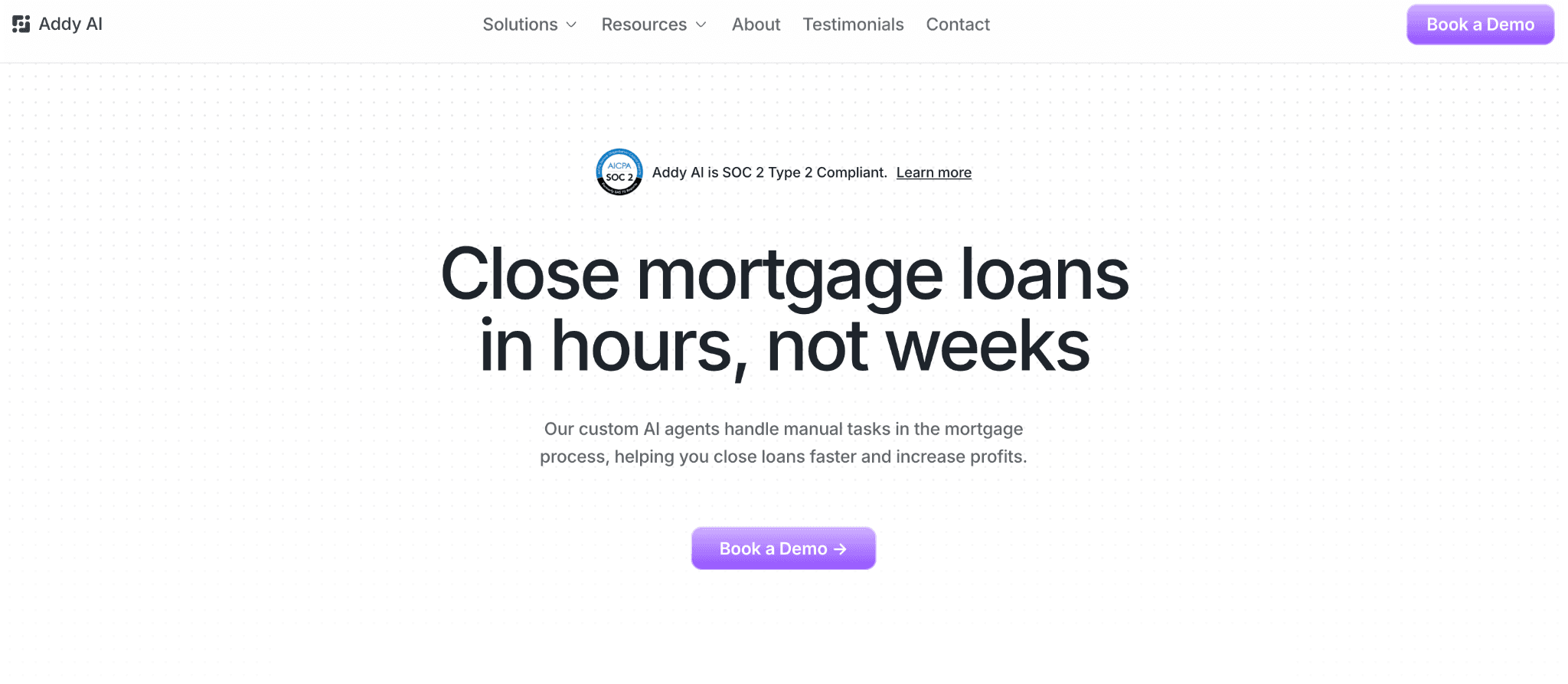
Putting these practices into daily use requires technology that reviews files, tracks conditions, contacts borrowers, and connects systems. Addy gives lenders, brokers, loan officers, and processors AI tools for those tasks.
Review Documents and Prepare Files
Addy uses machine learning to read varied document formats and classify incoming records. It extracts borrower details from 1003s, tax forms, pay stubs, and bank statements.
When a bank statement contains a large deposit, Addy flags the transaction for lender review. Staff receive relevant transaction data before underwriting.
The Processing Checklist applies product-specific conditions and identifies missing items. Document validation also compares submitted information with compliance requirements.
Connect Borrower Follow-Up With File Records
Addy can send document requests by email, text, or phone under lender rules. It syncs borrower information with loan origination, CRM, POS, email, and communication platforms.
Connected records give staff the information needed for credit analysis and borrower follow-up.
Review Files Inside Existing Systems and ChatGPT
The browser extension lets staff review files, search guidelines, and compare scenarios inside their existing systems.
In ChatGPT, Addy can pre-qualify borrowers and pre-underwrite mortgage loans in under five minutes. It reviews income, assets, and credit, then identifies missing records and generates processing checklists.
The findings provide context about a borrower’s financial health without replacing licensed professionals or formal underwriting decisions.
Book a demo with Addy to see how its AI agents can strengthen your mortgage origination stack.
FAQs About Loan Origination Best Practices
How can lenders improve the loan origination process?
Lenders can standardize application intake, automate routine checks, connect platforms, and track files by stage. Successful implementation also requires updated policies, staff training, and regular reviews of credit decisioning rules.
What are loan origination responsibilities?
Loan origination staff collect applications, verify documents, review the credit report, and prepare files for underwriting. They also assess the borrower’s creditworthiness, resolve conditions, and coordinate communication through closing preparation.
How does AI improve mortgage loan origination?
AI classifies documents, extracts borrower details, checks for missing items, and sends follow-up requests. Many lenders use these tools to prepare checklists and sync verified information with their existing systems.
Start closing more loans – Book your demo today
Stay ahead of the competition and discover how AI can accelerate your loan origination process, reduce manual work, and help you close more deals in less time. Book a demo today and start experiencing the future of lending.