Michael Vandi
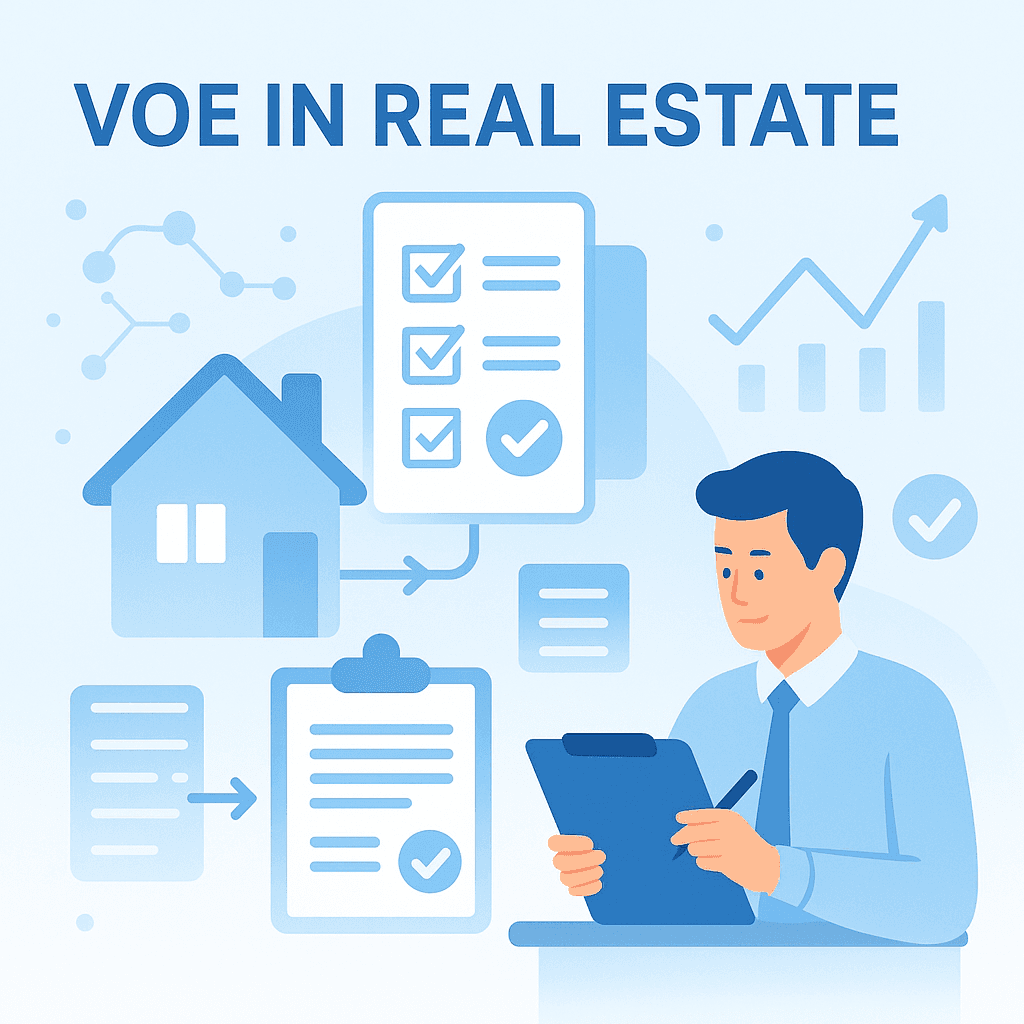
Verification of employment, also known as VOE, is the process lenders use to confirm a borrower’s job status and income. It's one of the most important checkpoints that takes place during the mortgage process.
Before a lender can move forward with an official approval, they need to be sure the borrower has steady income and dependable employment.
VOE helps underwriters review the file more carefully and compare employment details with other financial documents.
In this guide, you’ll learn how VOE works, when it happens, and what borrowers can expect during the process.
TL;DR
VOE in real estate is the process by which a lender reviews a borrower’s employment history, income, and job stability.
It helps confirm that the income listed on the application matches employer and payroll records.
VOE can happen through employer contact, written forms, verbal calls, payroll databases, or income records.
Borrowers can prepare by checking employer details and gathering pay stubs, W-2s, tax returns, and bank statements.
Addy helps teams find missing VOE items, review income details, and prepare files faster.
Why Lenders Verify Employment Before Approval
By double-checking income and job stability, lenders confirm whether applicants can afford the mortgage loan they’re applying for.
Over time, VOE can help clients avoid late payments, financial strain, and even the risk of foreclosure. Skipping or failing VOE can stall an application and sometimes stop the process entirely.
When loan officers review a mortgage application, they check the borrower’s current employment status and income first. Accurate information gives mortgage lenders confidence that the borrower can meet monthly payments.
How VOE Protects Borrowers and Lenders
VOE protects both borrowers and lenders by confirming that income details match the loan file. It helps them review employment before they move the application forward.
The verification process also supports regulatory compliance. Lenders verify employment and earnings for borrowers who rely on job income to qualify for mortgages backed by Fannie Mae or Freddie Mac.
Accurate records help lenders confirm the information provided, stay compliant, and keep the application easier to review.
How Lenders Verify Employment for a Mortgage Application
Lenders usually verify employment through the employer, supporting documents, or a third-party service.
Employer contact: The lender may call the borrower’s human resources (HR) department or send a written request so the employer confirms employment status, job title, and income.
Pay stubs and documentation: Borrowers are often asked to provide recent pay stubs, W-2 forms, tax returns, bank statements, or other written documentation to support their application.
Third-party services: Lenders may use outside verification services or payroll databases to confirm employment details and earnings.
Loan officer oversight: A loan officer reviews the documents, checks them against the application, and sends the file to underwriting once the details are complete.
Additional information may be needed if employment, income, or document details don’t match the application.
Common Types of Employment Verification
Since borrower situations vary, not every VOE will look the same. Lenders may use one or more of these approaches:
1. Written Verification
Written verification is a standard form completed by the borrower’s employer. It confirms job status, job title, income, and whether the applicant has steady earnings to repay the loan.
This method helps underwriters review pay that changes from month to month, such as overtime, bonuses, or commission.
2. Verbal Verification
Near closing, the lender calls to confirm the applicant is still employed. For Fannie Mae loans, lenders usually complete verbal verification within 10 business days before the note date. This applies when the borrower uses employment income to qualify.
During the call, the lender uses reliable employer contact info and records who verified the details. If the applicant changes jobs before closing, the file may need another review.
3. Third-Party or Automated Verification
Platforms such as payroll integrations or The Work Number can confirm employment data for employees. This alternative can save time when the source is reliable and the information is up to date.
Automated verification can help with large employers that use payroll databases. It also gives the file another source of support when direct employer contact takes longer.
Lenders may use more than one method when they need to confirm employment details, satisfy investors, or give the file a final review before closing.
VOE Challenges Borrowers May Face
While VOE is a standard part of getting a mortgage, it can also be one of the more stressful steps for borrowers.
Self-employed applicants may need tax returns, profit and loss statements, bank records, or a letter from a Certified Public Accountant (CPA).
Employment history gaps can raise questions during loan review, especially when dates don’t line up. A recent job change can also trigger another verification before the lender can approve the file.
Delays may happen when the borrower’s employer doesn’t answer calls or return the lender’s request on time. Missing income details, unclear deductions, or limited records can also delay loan approval.
Borrower Checklist for Faster VOE
Borrowers can prepare in advance to avoid delays. This checklist can help them get the right details ready before the lender verifies employment.
Gather recent pay stubs, W-2s, or other income documents the lender may request.
Confirm employer contact details are accurate on the loan application.
Notify HR or a supervisor that a verification request may arrive.
If you’re self-employed, organize tax returns, bank statements, and business records before the process starts.
If the lender needs to review assets, have account statements ready to show available money for the down payment, closing costs, or reserves.
Be transparent about additional income, such as bonuses or freelance work.
Following these steps can make verification easier for both the applicant and the lender.
How Technology Speeds Up Employment Verification
The mortgage industry now uses technology to verify employment faster and with fewer manual checks. Automated platforms can pull income and job data directly from payroll providers, so teams don’t have to sort through as many uploaded documents.
These tools can also reduce errors. Payroll data confirms current income, job title, and employment status without relying only on outdated files.
Verification software can create records of who accessed the data and when. That record helps during loan review and can prevent costly backtracking.
Mortgage teams need tools that review documents, check income details, and flag missing items before the file reaches the next reviewer. That’s where platforms like Addy can help.
Complete Employment and Income Review Faster With Addy
Addy helps mortgage teams check whether VOE has been collected and completed before the file moves forward.
Its Processing Checklist reviews borrower documents, extracts key details, and flags missing items so loan officers can see which documents or conditions are missing.
Teams can use Addy to review pay stubs, bank statements, tax forms, W-2s, and 1003s. The platform sends extracted data into the loan origination system (LOS), so teams don’t have to type the same details from each document.
Addy also reviews loan conditions, compares lending guidelines, and helps request missing documents from borrowers or brokers. For files that need income, asset, or credit review, Addy flags missing or inconsistent details that can affect approval.
Addy’s ChatGPT app can also help with pre-underwriting by reviewing borrower files, identifying missing conditions, and summarizing findings in minutes.
FAQs About VOE in Real Estate
Who can fill out a verification of employment?
A VOE is usually completed by an HR representative, payroll employee, or authorized supervisor. The person should be able to confirm the borrower’s job title, income, and employment history.
What does a written VOE look like?
A written VOE is usually a form sent to the employer by the lender. It may ask for job status, hire date, income, benefits, and other details needed for loan review.
How many times will a lender verify employment?
A lender may verify employment more than once during the mortgage process. They may review documents early, then confirm employment again near closing.
Do self-employed people need a verbal VOE?
Self-employed borrowers may still need income verification, but the process can look different. Lenders often review tax returns, business records, bank statements, or CPA paperwork to confirm income.
Start closing more loans – Book your demo today
Stay ahead of the competition and discover how AI can accelerate your loan origination process, reduce manual work, and help you close more deals in less time. Book a demo today and start experiencing the future of lending.