Michael Vandi
Lenders often compare Casca and Ocrolus when borrower files take too long to review. Incomplete documents, scattered customer records, and unanswered underwriting questions can hold up the file.
Casca helps manage business loan intake and related business processes. Ocrolus reads financial documents, reviews bank data, and checks borrower information.
In this Casca vs Ocrolus review, we’ll look at what each platform does and why Addy may be the better option for mortgage teams.
TL;DR
Casca and Ocrolus cover different parts of lending, so the right option depends on the workflow.
Casca is mainly used for business intake, borrower portals, AI-assisted communication, and cash flow review.
Ocrolus is mainly used for document AI, income analysis, fraud checks, and data validation.
Both platforms serve the financial sector, but neither covers full mortgage pre-underwriting.
Addy adds condition review, borrower follow-up, guideline checks, and fast processing speed before underwriting.
What Is Casca?
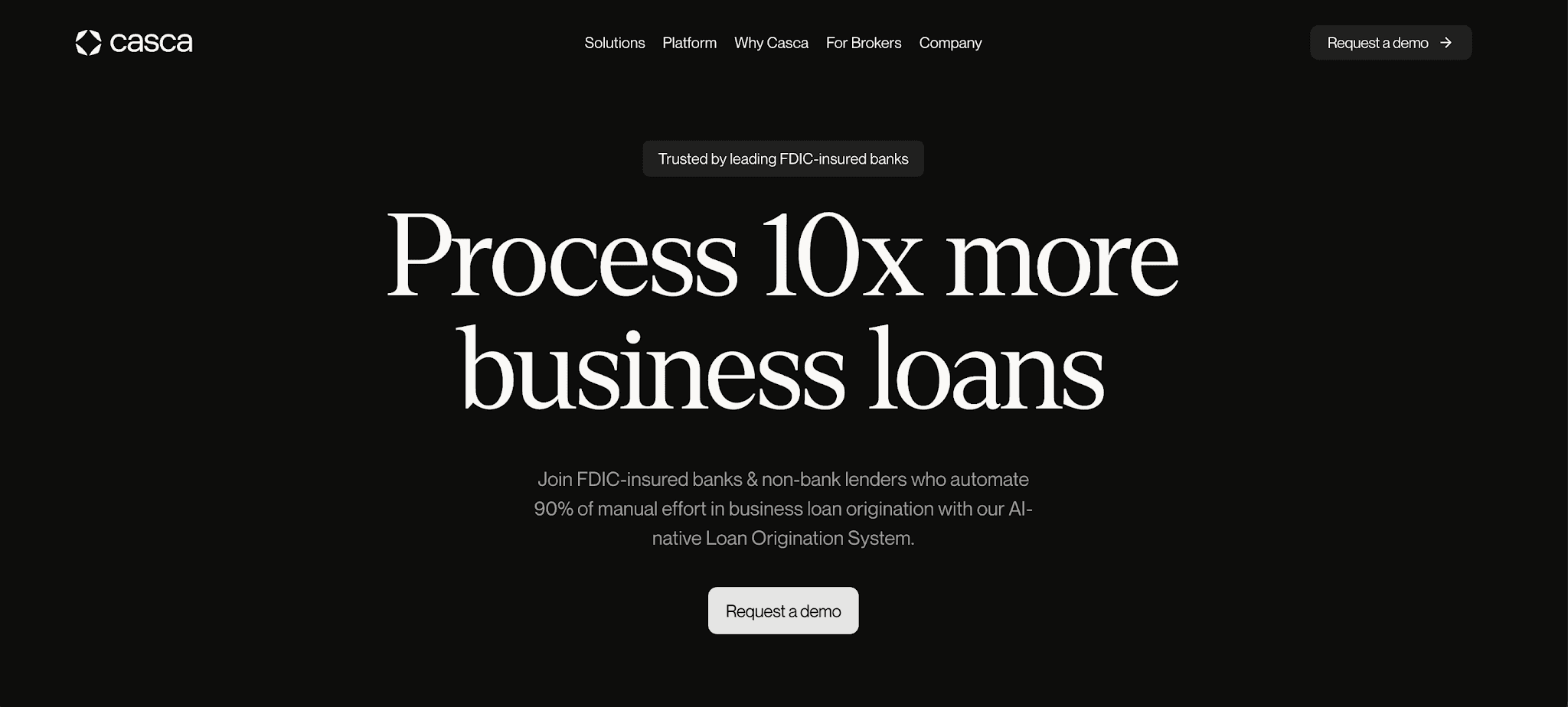
Image source: cascading.ai
Cascading AI, also known as Casca, is an AI-native loan origination system (LOS) for small business lending.
It’s designed for banks, credit unions, and non-bank lenders. Casca replaces PDF-based applications with an online process where borrowers can enter details, upload documents, and track their status.
The platform also uses AI to answer application questions, collect borrower records, and read financial documents that lenders use to assess business income and cash flow.
Key Features
Online loan applications with automatic applicant pre-fill
White-labeled applicant portal
AI Loan Assistant for applicant questions
Automated document collection
Secure document storage with encryption
Application status tracking
Know Your Business (KYB) checks
Credit analysis
Business loan officer dashboard
AI phone call notes and email follow-ups
Debt service coverage ratio (DSCR) calculations
Cash flow-based underwriting
Audit logs and access management
Casca can analyze tax returns, bank statements, financial statements, and rent rolls. Lenders use that data to check income, cash flow, and credit details beyond what borrowers enter in the application.
It's mainly used in business loan origination for financial institutions that need digital applications, borrower portals, and AI-assisted document review.
What Is Ocrolus?
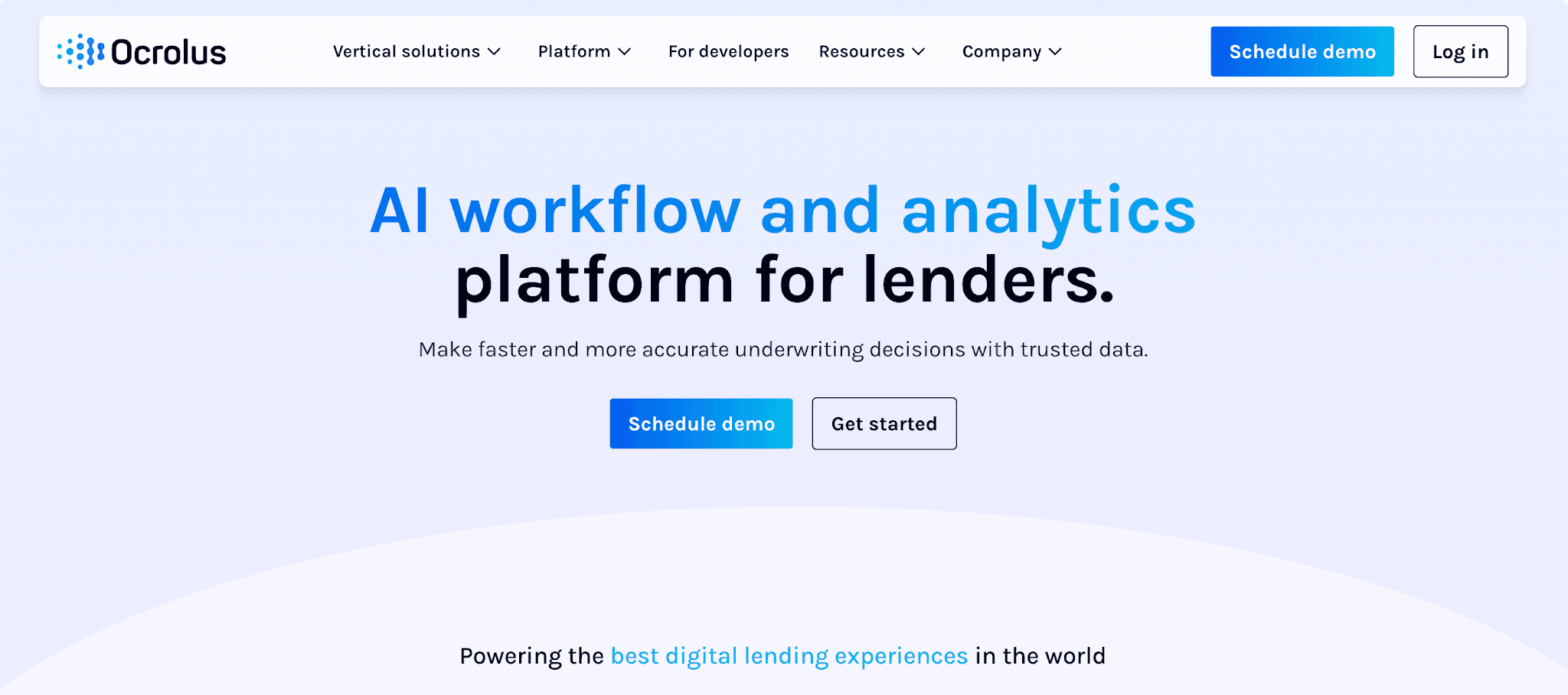
Image source: ocrolus.com
Ocrolus is a document automation platform for lenders that review borrower records after submission.
The platform reads bank statements, pay stubs, tax forms, identity records, and similar files. It uses machine learning and AI models to classify uploads, extract fields, validate data, and return structured results.
Ocrolus also checks for altered files, mismatched fields, unusual borrower activity, and possible malformed data. Human-in-the-loop verification can help lenders review flagged items before acting on possible false positives.
Key Features
Document classification for many file types
Data extraction from bank statements, pay stubs, and tax forms
Income calculations for W-2, 1099, gig, self-employed, and rental income
Asset analysis
Fraud and tampering detection
Data-level fraud signals, including mismatches and inconsistencies
Human-in-the-loop review for edge cases
Underwriting dashboard
Conditions management
Credit, collateral, and automated underwriting system (AUS) review
Encompass integration
Ocrolus API for document workflows
Ocrolus follows four main steps. First, it identifies the file type. Then it captures fields, checks for suspicious activity, and analyzes income or cash flow.
That process can help lenders prepare submitted records for underwriting. Ocrolus can read and verify financial data, but it doesn’t manage borrower follow-up, guideline checks, or full mortgage file preparation.
Casca vs Ocrolus: Core Feature Comparison for Lending Teams
Casca and Ocrolus serve different parts of the lending process. Casca starts with application intake. Ocrolus starts after the borrower files come in.
That difference affects financial teams comparing lending software. Before underwriting can make a decision, a file may still need follow-up, condition review, and credit guideline checks.
Loan Origination Workflow
Casca gives lenders an online application, an applicant portal, and an AI Loan Assistant for business loan intake. Borrowers can enter details, upload records, track status, and ask questions through the portal.
Ocrolus doesn’t act as the application entry point. It reviews submitted files and prepares information for underwriting.
For mortgage lenders, origination also includes missing item requests, condition tracking, and LOS updates. Those tasks usually extend beyond intake platforms and document engines.
Automated Document Processing
Casca includes document intake within its business lending workflow. It can read tax returns, bank statements, financial statements, and rent rolls.
Ocrolus goes deeper into mortgage document processing. It classifies files, extracts fields, validates borrower information, and flags possible fraud.
The difference is timing and depth. Casca connects records to the application process, while Ocrolus turns submitted files into structured data for review.
Borrower and Applicant Communication
Casca includes an AI assistant for applicant questions. It can also prepare phone call notes and email follow-ups for business lending.
Ocrolus doesn’t emphasize front-end borrower communication. It’s mainly used to review documents and find discrepancies.
Mortgage files often need follow-ups for missing records, open conditions, and status updates. Document review software alone won’t cover that communication work.
Underwriting Support
Casca includes KYB checks, credit analysis, debt service coverage ratio calculations, and cash flow-based underwriting. Those features apply mainly to business loan review.
Ocrolus helps underwriters assess income, assets, fraud signals, and discrepancies. It also includes credit, collateral, and AUS review in its mortgage features.
Mortgage underwriting still needs guideline checks, condition review, and file preparation. Intake platforms and data extraction alone don’t finish that work.
Integrations and Daily Use
Casca mentions more than 30 native integrations with data providers. It also gives loan officers a dashboard for business, client, communication, and loan details.
Ocrolus offers an API for document workflows. It also connects with Encompass for the mortgage file and underwriting review.
Before choosing either platform, lenders should look at daily use. The software needs to connect with existing systems, including the LOS, CRM, POS, email, and borrower communication tools.
Those connections can help lenders optimize performance during review, follow-up, and underwriting preparation.
Why Mortgage Teams Look for Casca and Ocrolus Alternatives
Casca is built around business loan applications, so its workflow doesn’t fully match mortgage condition review. A mortgage file needs to be checked against agency rules, non-QM guidelines, AUS findings, and lender conditions before it can move forward.
Ocrolus works after borrowers submit records. It can handle unstructured documents, process financial records, and identify mortgage red flags, but it doesn’t contact borrowers for missing items or explain what the file needs next.
That work still falls to processors and loan officers. They have to review the file, confirm open conditions, check program requirements, and send the next request to the borrower or broker.
Addy’s mortgage-specific AI agents can take more of that work off the queue. They review the file, compare requirements, and turn missing items into borrower requests.
When comparing Casca and Ocrolus, the bigger question is how much work remains outside the software.
Addy gives mortgage teams a better way to handle follow-up, guideline checks, and condition review.
Addy: The Best Alternative to Casca and Ocrolus
Casca and Ocrolus can help with parts of lending operations, but mortgage files need more than intake and document review.
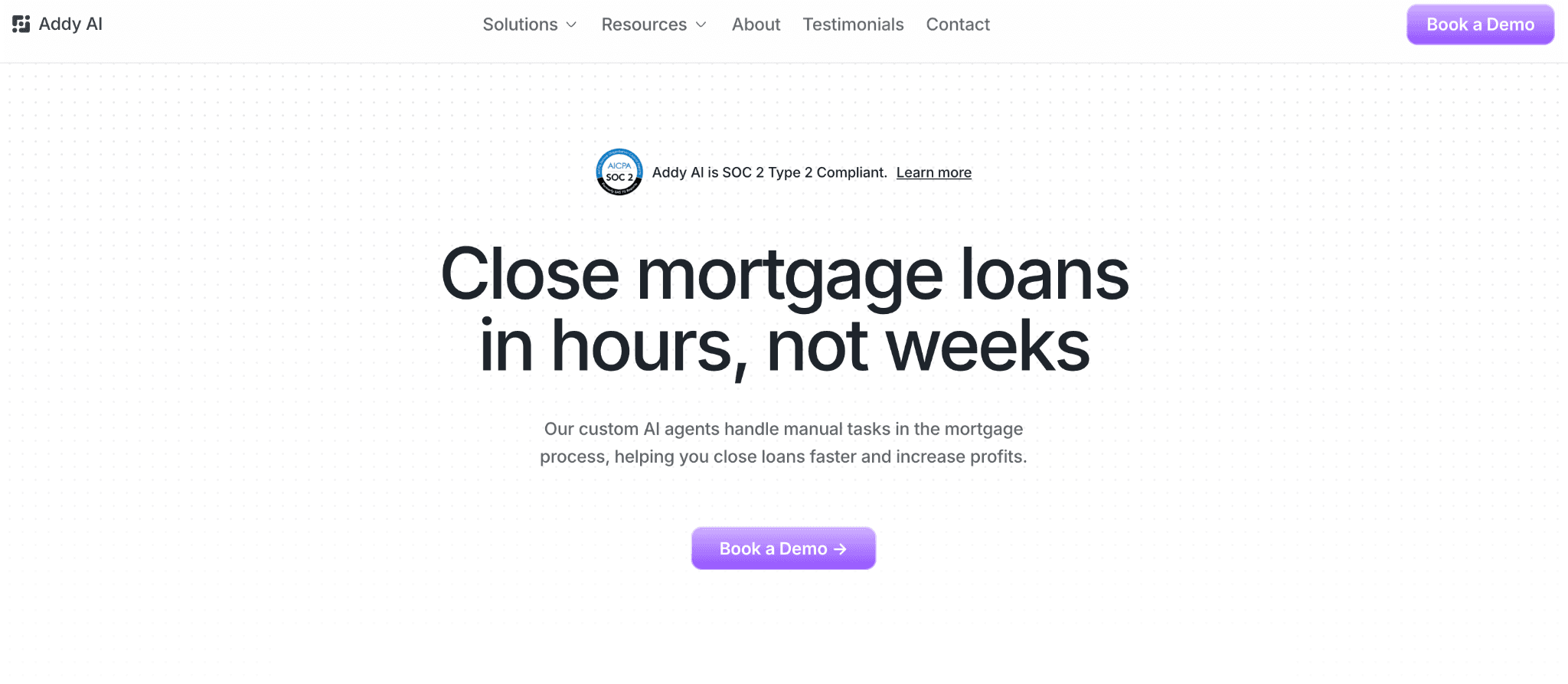
Addy gives lenders a mortgage-specific layer for document review, condition checks, borrower follow-up, and guideline questions. That makes it the right platform for preparing underwriting files.
Mortgage Documents Become Usable Loan Data
Addy reads 1003s, 1040s, W-2s, pay stubs, bank statements, tax forms, borrower emails, and broker communication.
The platform uses computer vision and optical character recognition (OCR) to read borrower documents in varied formats. It classifies each record, links it to the correct loan, and sends borrower details into the LOS to reduce manual entry.
Addy also creates loan summaries from documents and communication. If a bank statement shows a large deposit, the system flags it for a loan officer to review.
Conditions Are Checked Before Underwriting
Addy reviews loan conditions and AUS findings to show what the file still needs. The Processing Checklist checks records already in the file and runs product-specific conditions.
This can improve accuracy during condition review and reduce risk before the file reaches underwriting. Processors and loan officers can see open items sooner and request missing records before underwriting.
Borrower Follow-Up Uses File Status
Addy sends document requests through email, text, or phone based on the file’s status. Follow-ups continue until the required items are submitted.
Its AI agents can follow lender-specific rules, guidelines, rate sheets, and custom rules. That keeps borrower outreach close to the lender’s process.
Guidelines and Systems Stay Connected
Addy gives users access to Fannie Mae, Freddie Mac, and non-QM lending guidelines. Loan officers and processors can ask questions in natural language, compare requirements, and strengthen compliance before submission.
Those checks can give lenders a better context for loan decisions before a file reaches underwriting. Addy also connects with LOS, CRM, POS, Gmail, Outlook, Slack, Microsoft Teams, browser workflows, and ChatGPT workflows.
Its ChatGPT app brings pre-underwriting work into the same conversational flow. Lenders can use it to review borrower documents, analyze loan scenarios, identify missing conditions, and generate findings in about five minutes.
Catch Missing Conditions Before Underwriting With Addy
Casca is built for business loan origination. Ocrolus is built for document AI, income analysis, fraud checks, and data validation.
Mortgage files need more than intake or extracted data. A processor still has to check guidelines, open conditions, and borrower documents before underwriting.
Addy helps catch those issues earlier. It reviews documents, checks AUS findings, runs product-specific conditions, and shows what the file is missing.
This cuts down on manual review before the file reaches the underwriting stage. Addy also sends borrower requests and syncs loan data with the systems lenders already use to reduce manual data entry.
Mortgage lenders in financial services also need records that support audit trails. Addy keeps file activity connected to document review, condition checks, and borrower follow-up.
FAQs About Casca vs Ocrolus
What is the main difference between Casca and Ocrolus?
Casca helps lenders manage business loan applications and borrower intake. Ocrolus focuses on document review, income analysis, fraud detection, and borrower data checks.
Can Casca extract data from financial documents?
Yes, Casca can analyze records such as tax returns, bank statements, and financial statements. Its financial document processing features help lenders review business income and cash flow.
Is Ocrolus an intelligent document automation platform?
Yes, Ocrolus is an intelligent document automation platform for lenders. It classifies documents, extracts borrower data, and uses human review when files need added verification.
How much do Casca and Ocrolus cost?
Casca doesn’t publicly list standard pricing. Ocrolus uses custom pricing based on each client’s financial workflows and document processing needs.
Start closing more loans – Book your demo today
Stay ahead of the competition and discover how AI can accelerate your loan origination process, reduce manual work, and help you close more deals in less time. Book a demo today and start experiencing the future of lending.